Showing posts with label real. Show all posts

Friday, September 9, 2016

Team Fortress 2 Level 3 Sentry Gun

Ahh, the level 3 sentry gun. The holy grail of Team Fortress 2 props. It only took me about a decade to get around to....

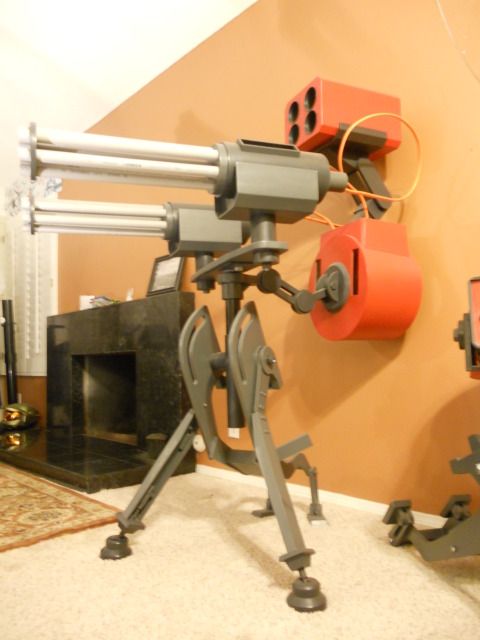
Immediately after finishing the "level 1" sentry gun (I use "level one loosely as I look back on it somewhat unsatisfied with the proportions and scale, but more on that in another post) I went to work on the level three, which looks like this: 
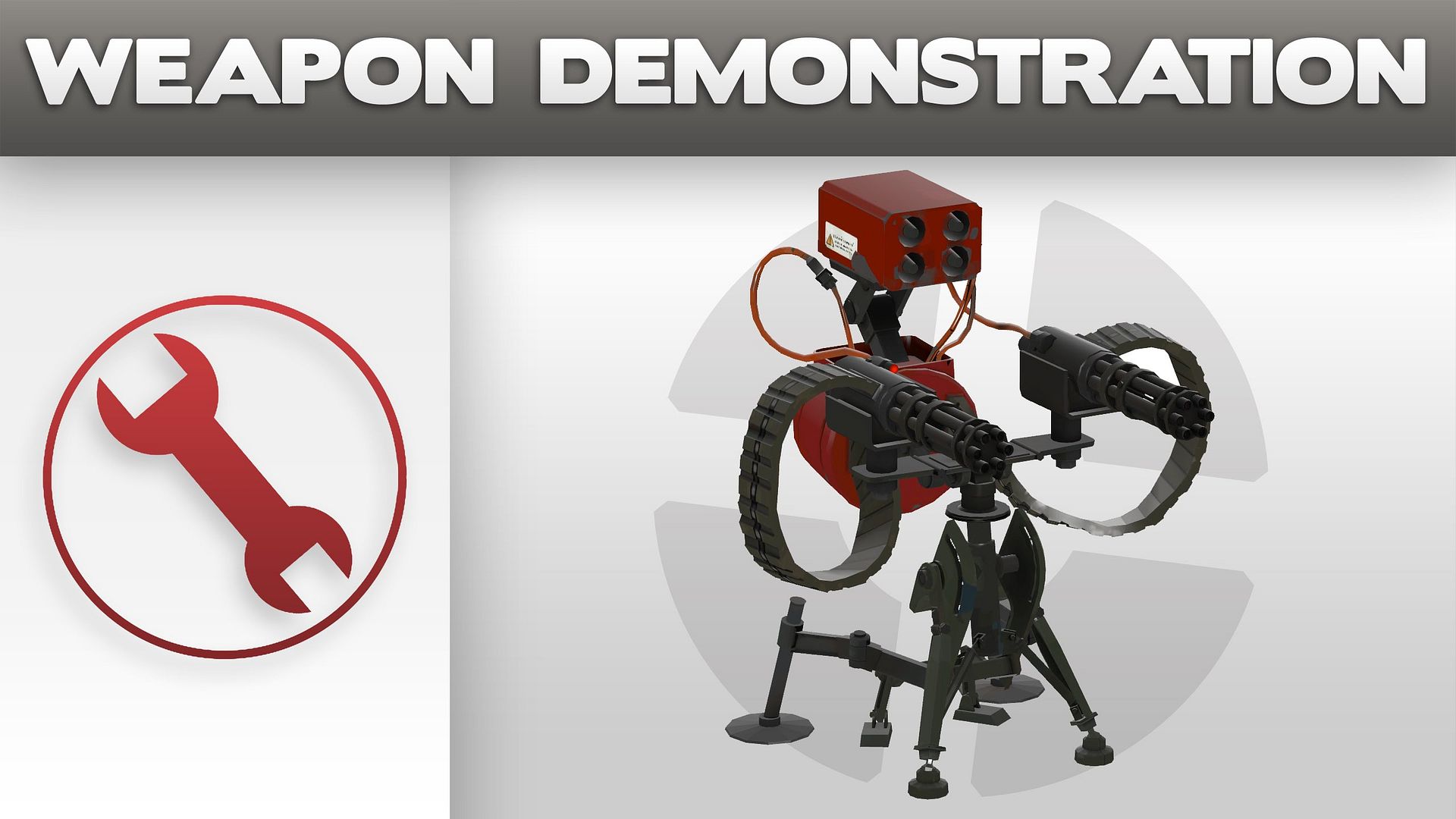


I paid slightly more attention to scale and proportions, but like my first version, ultimately didn't make any blueprints or anything. I just eyeballed it from a few screen shots.

I also didn't think 8 years ago people would be reading my blogs, so my photos are horrid on this project and are taken with a flip phone in a messy garage and/or bedroom up until a certain point. This sentry gun survived (Mostly) 5 moving trips during my time in college and right after. I refused to let it go, and was adamant about finishing it one day. When I say I'm going to do something, I do it. It might take me 8 years, but I do it dammit!

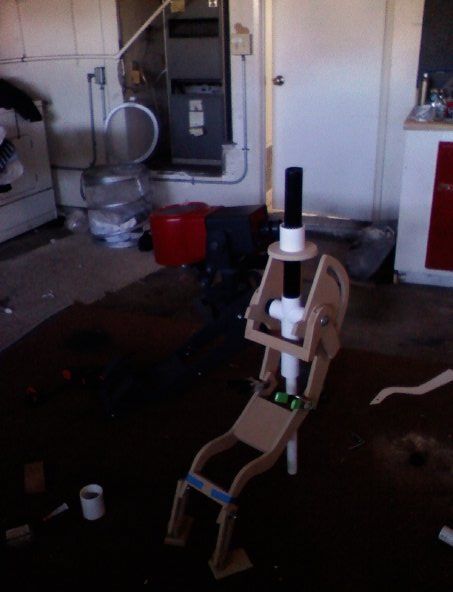
21 year old me started on the base, using the same materials and techniques as the previous sentry.

I made the miniguns out of an MDF frame with lots of supports, and a thin wrap of styrene for the skin. Then the well for the ammo belt feed and other details and layering were made. I skimped on photos here. That, or they got lost long ago. 
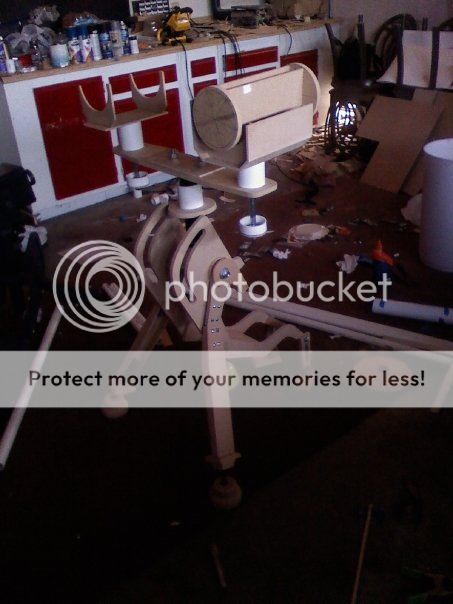


It started looking imposing at this point, especially at low angles. TMI. 
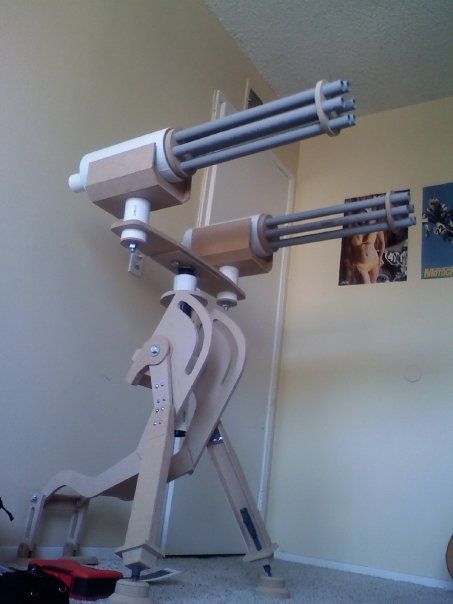


Like the previous build, the canister was made out of a polypropylene trash can. Glue and paint doesn't stick to it particularly well, so it needed a lot of sanding and reinforcements to bite the paint and glue. 
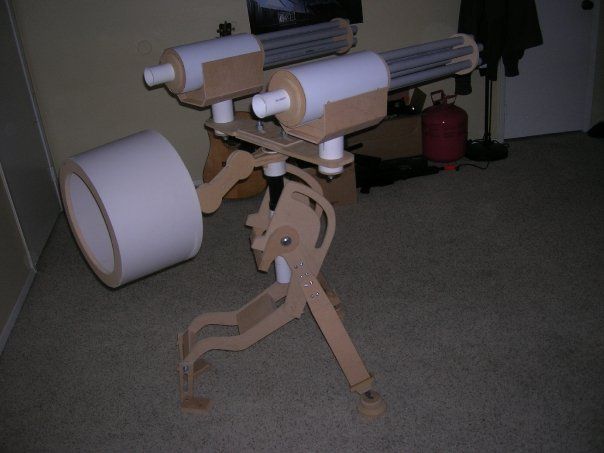


The missile pod was made from sheet styrene, as well as the support arms and shroud around the canister. This all had to be as light as humanly possible as the design is not only back heavy, but that little support arm is made from MDF... not the strongest stuff in the world. Not to mention it would later be supporting thick cables, a few layers of sealing and paint, plus the giant ammo belts that plug into the back end. The "holes" for the missiles are solo cups. I wasn't exactly the worlds wealthiest 21 year old, and this whole project only cost me around 100-200 bucks in the end in raw materials. That's about $2.08 in sentry gun monthly payments over 8 years. I can live with that. People do dumber things with their coin....
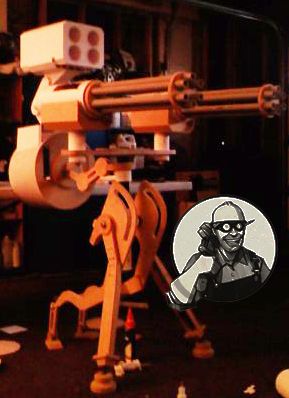


Getting a little bit ahead of myself, I began to seal and paint everything. Which, could have been worse since it sat like this for years. 

Then after school I found myself on the move quite a bit. During one of the last moves, I left the miniguns in my hatchback during the summer. They baked in the car and were in direct sunlight for at least a day. Styrene as you might know is a thermoplastic, and warps considerably in high temperatures. One of the skins on the cannons became warped to high heaven. the other less so, but noticeable still. I ripped the un-salvageable one apart. 
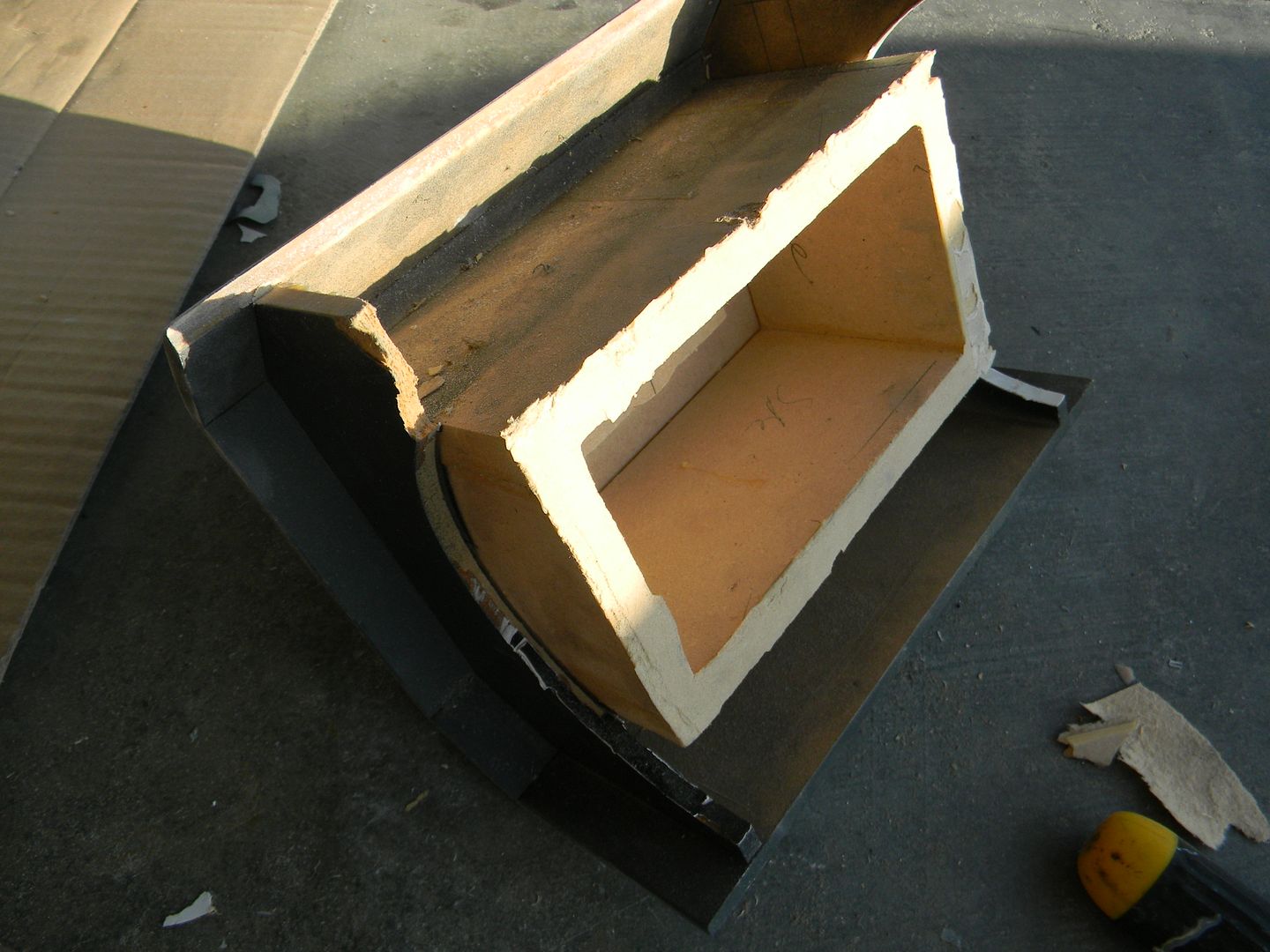


I had forgotten how tough I made these. It didn't just de-laminate at the frame like I was hoping. The parts supporting the styrene were everywhere, and as a result everything broke to some degree when taking it off. 
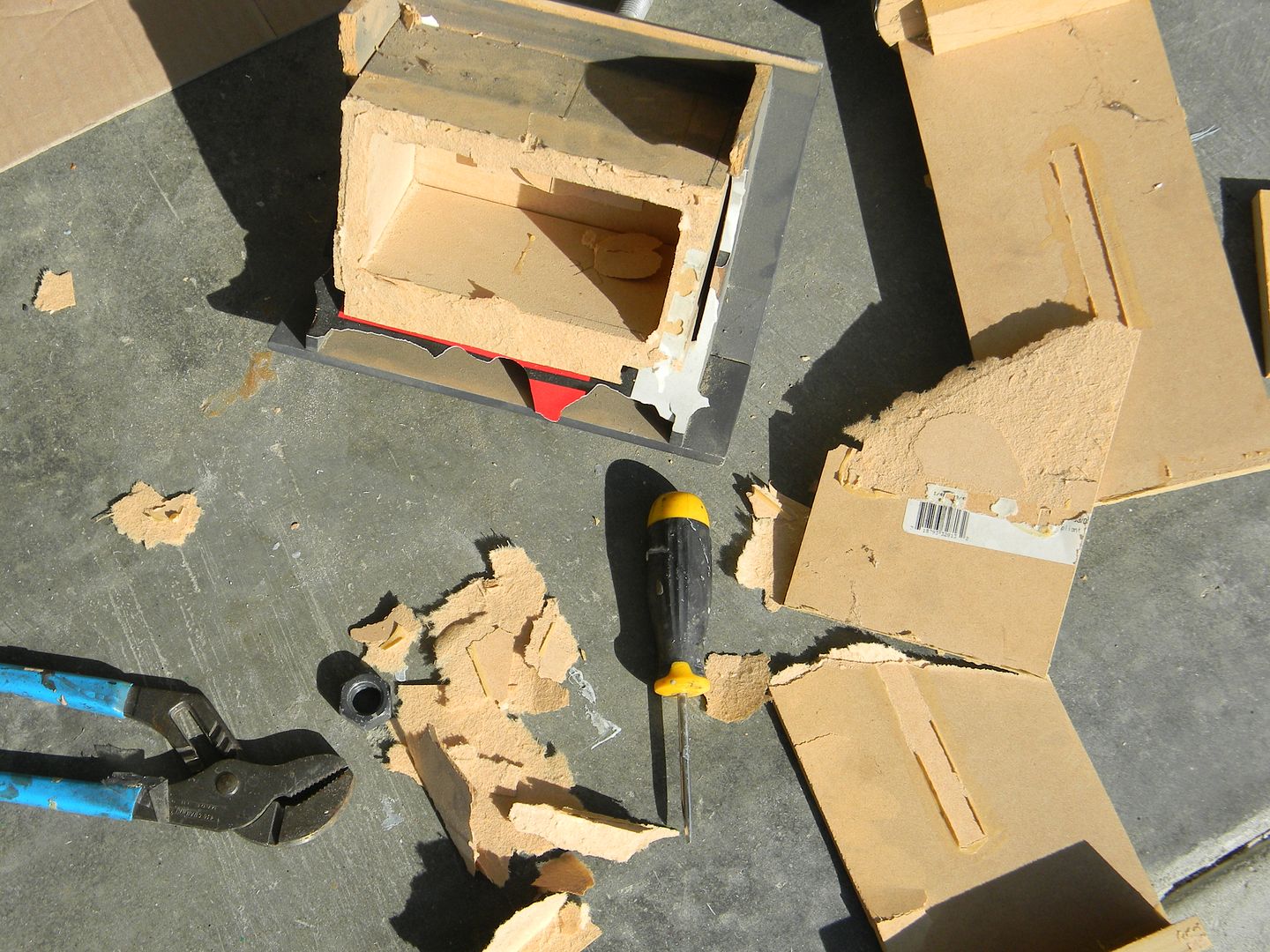


Even though it wasn't as bad as it looks, it still took me half a day to salvage what I could without remaking the whole thing, which I was quite happy with considering if one of those supports was off or the circles weren't concentric, the whole thing would wrap together nicely and be structurally or cosmetically sound enough. 
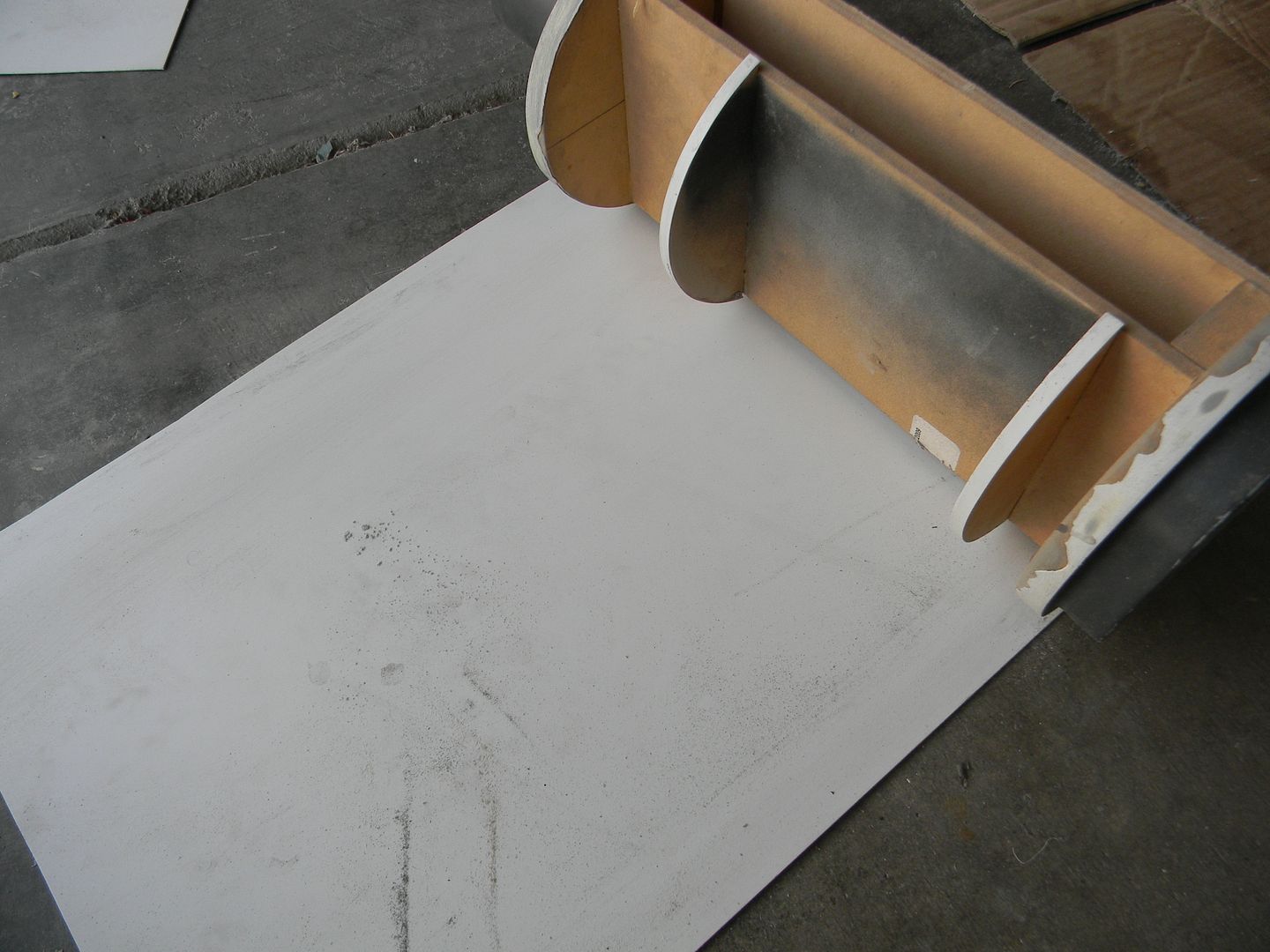


I used thicker styrene this time, so the heat wouldn't distort it. At least in my state's temperature range. A bit more fussy to do, but worth the peace of mind. I taped it in place and let the glue dry. 
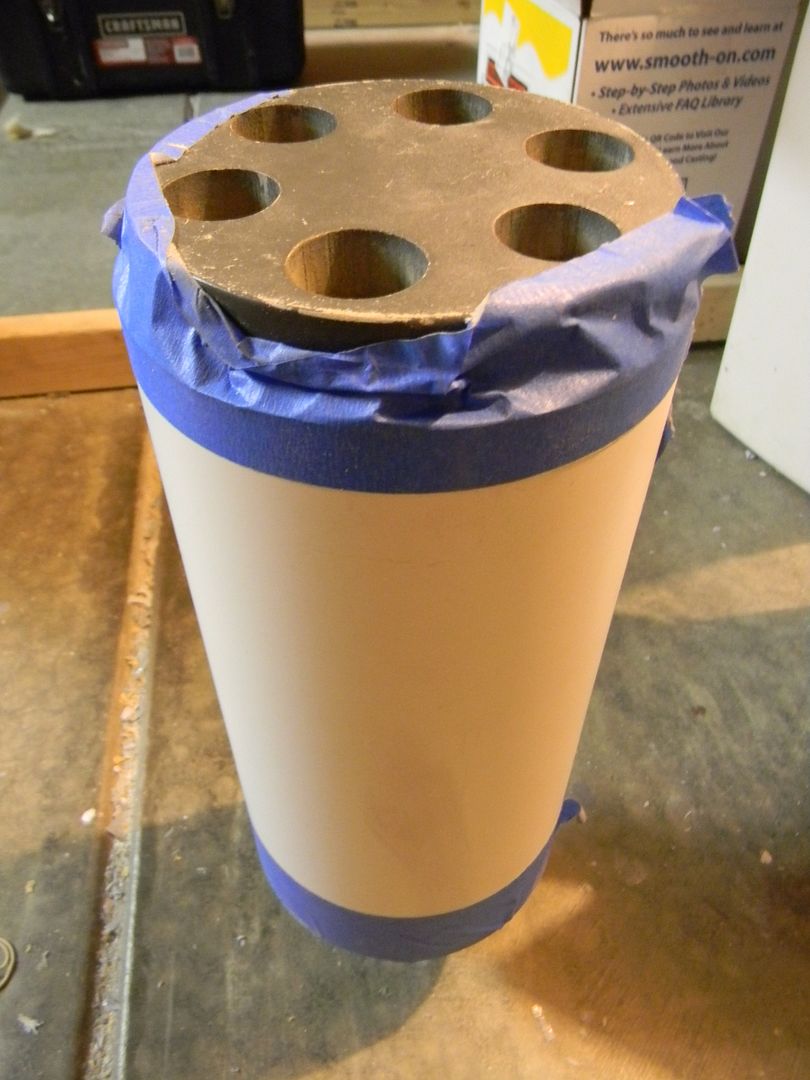


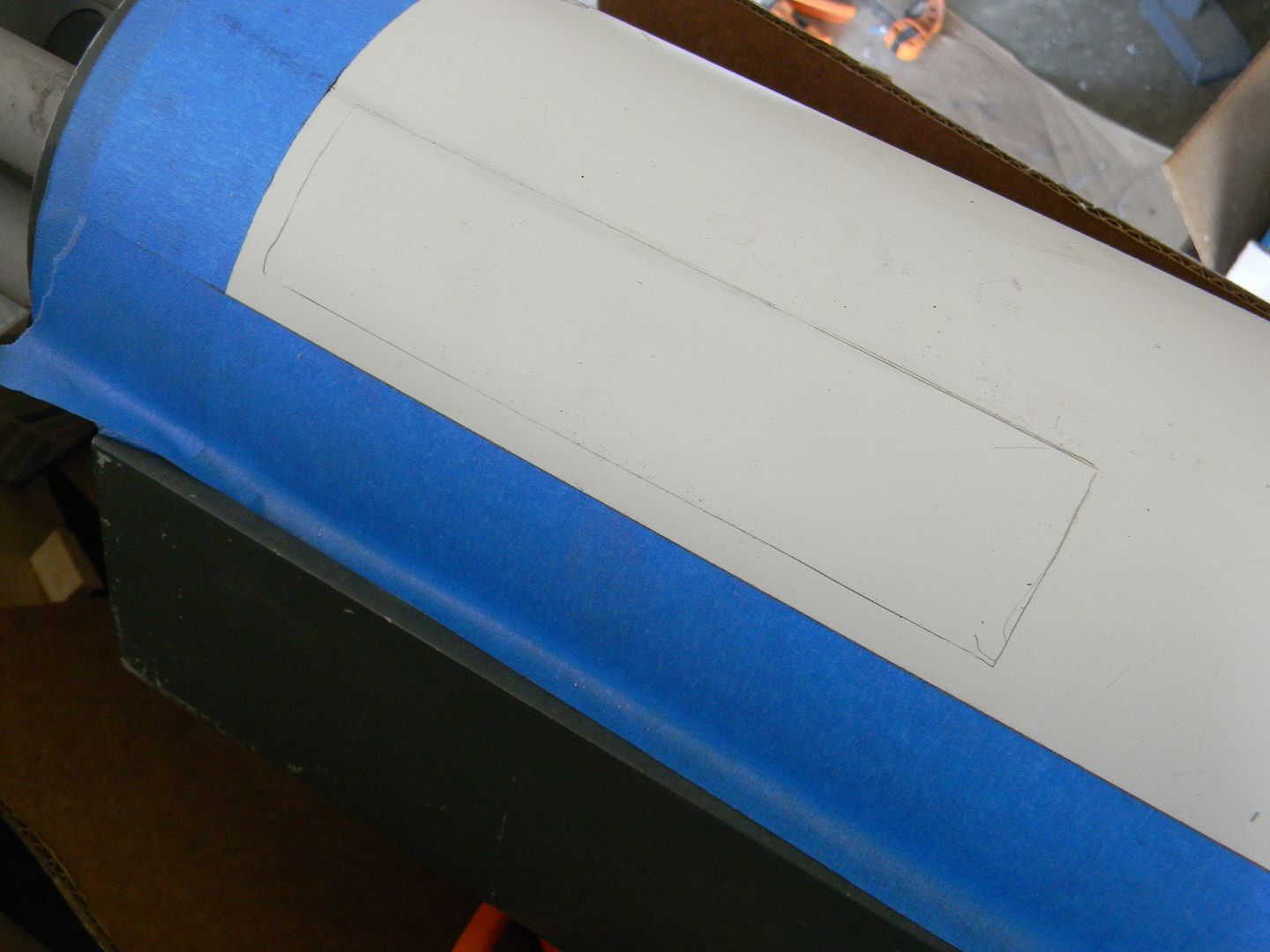
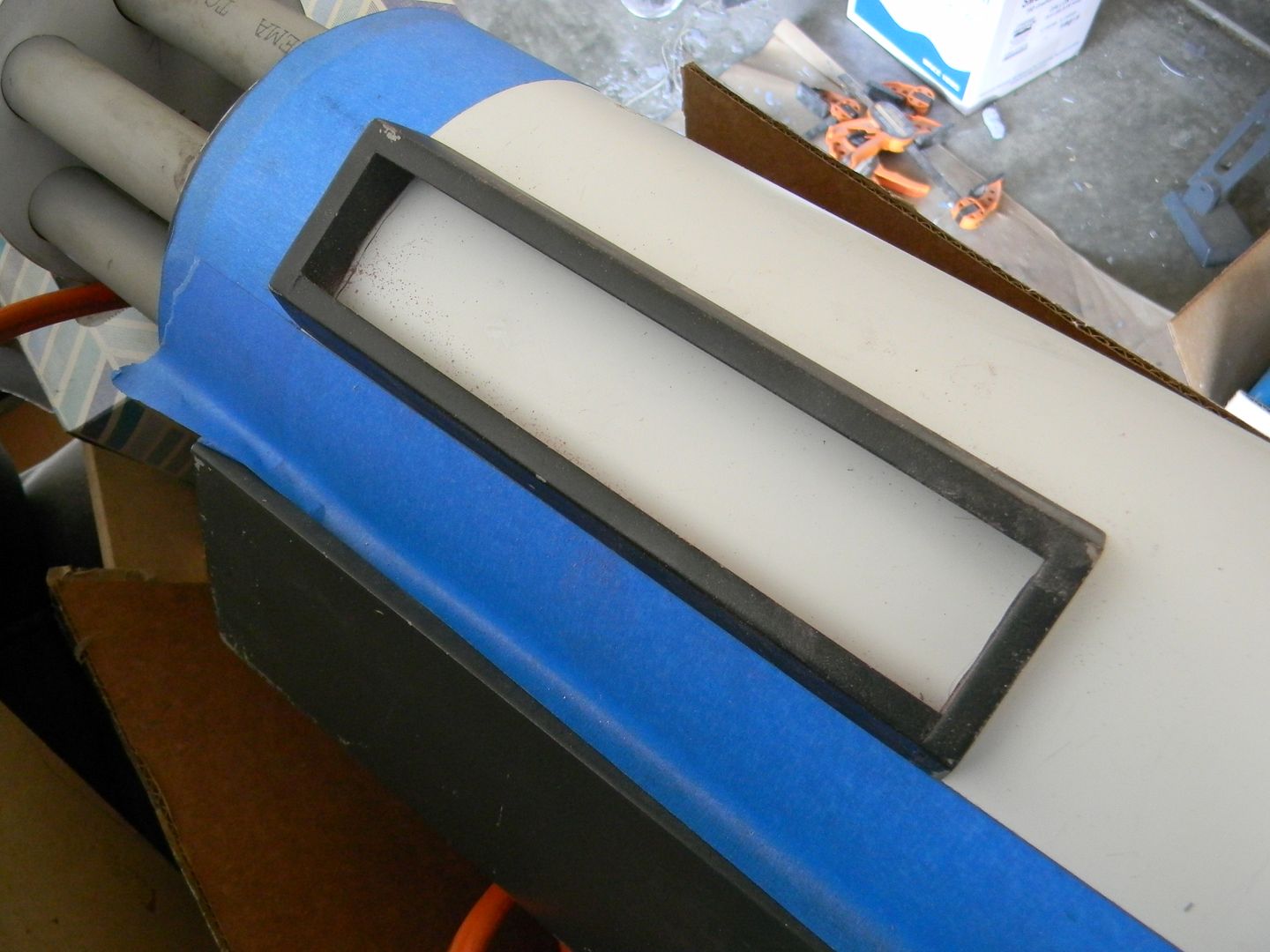
I cut the hole for the frame mount. Its harder than it looks, because if the hole is too small, it obviously won't sit. If the hole is too big, or crooked, a gap might show and there is no way to patch it and still preserve the curvature that is supposed to be there. I simply marked and measured, using masking tape edges as guides. Great success. Is nice. 
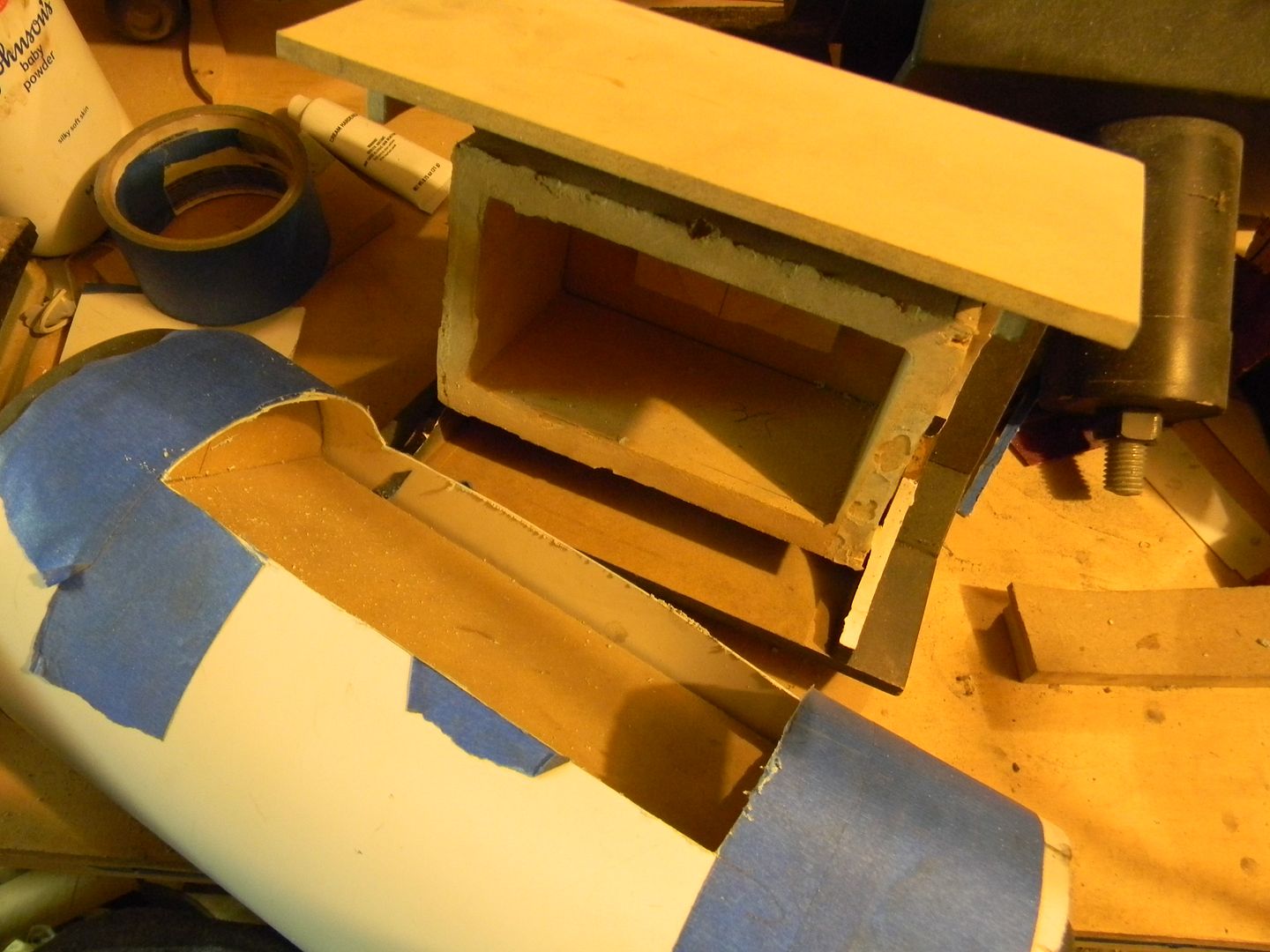


 I caked on some wood glue and hopefully it will last many years. 
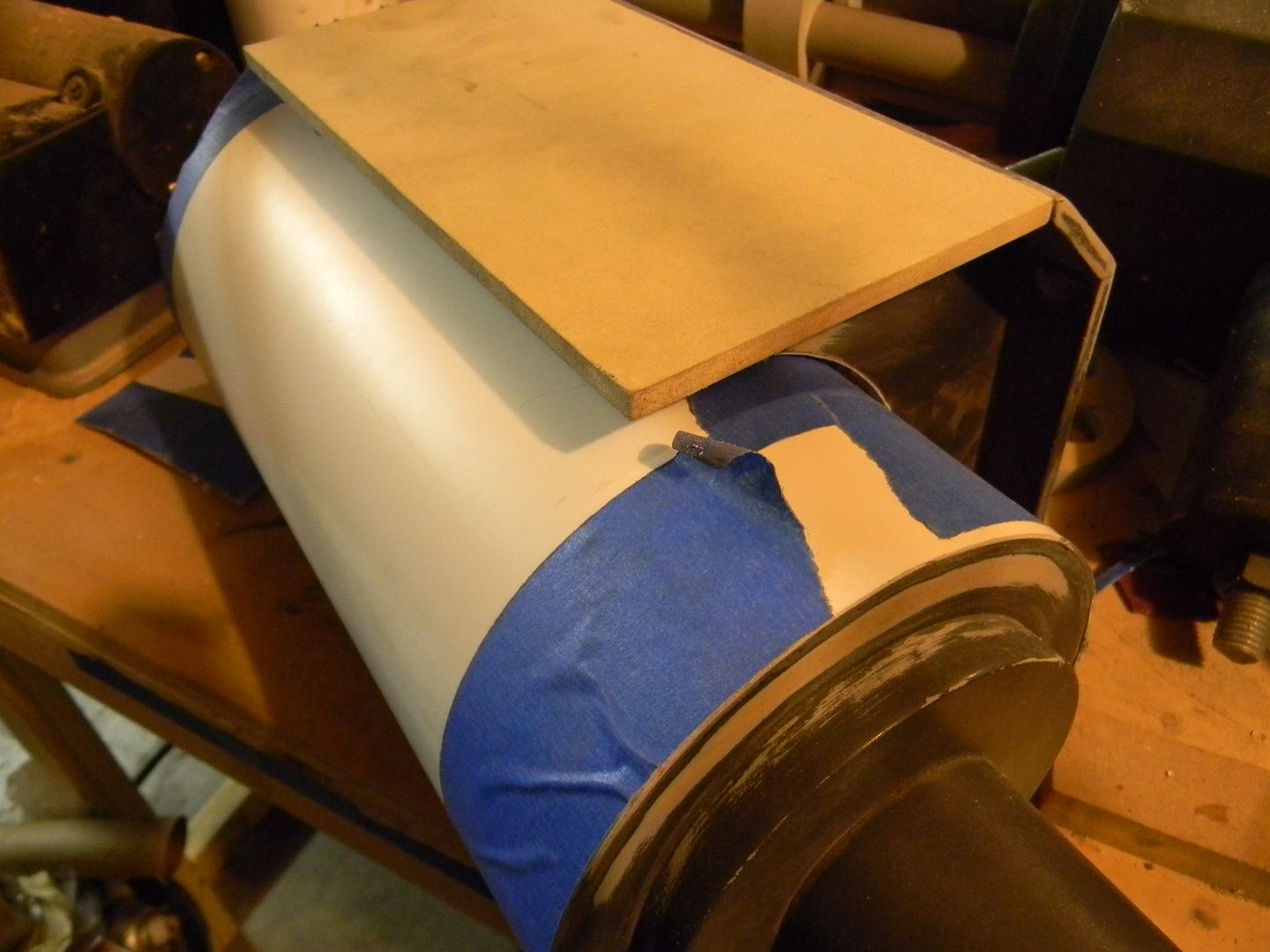


The holes for the magazine well was much easier to measure and cut. After copying the other gun, I glued the salvage magwell on top of the new skin and cut out the hole. 


Welcome home, you 8 year old piece of MDF.

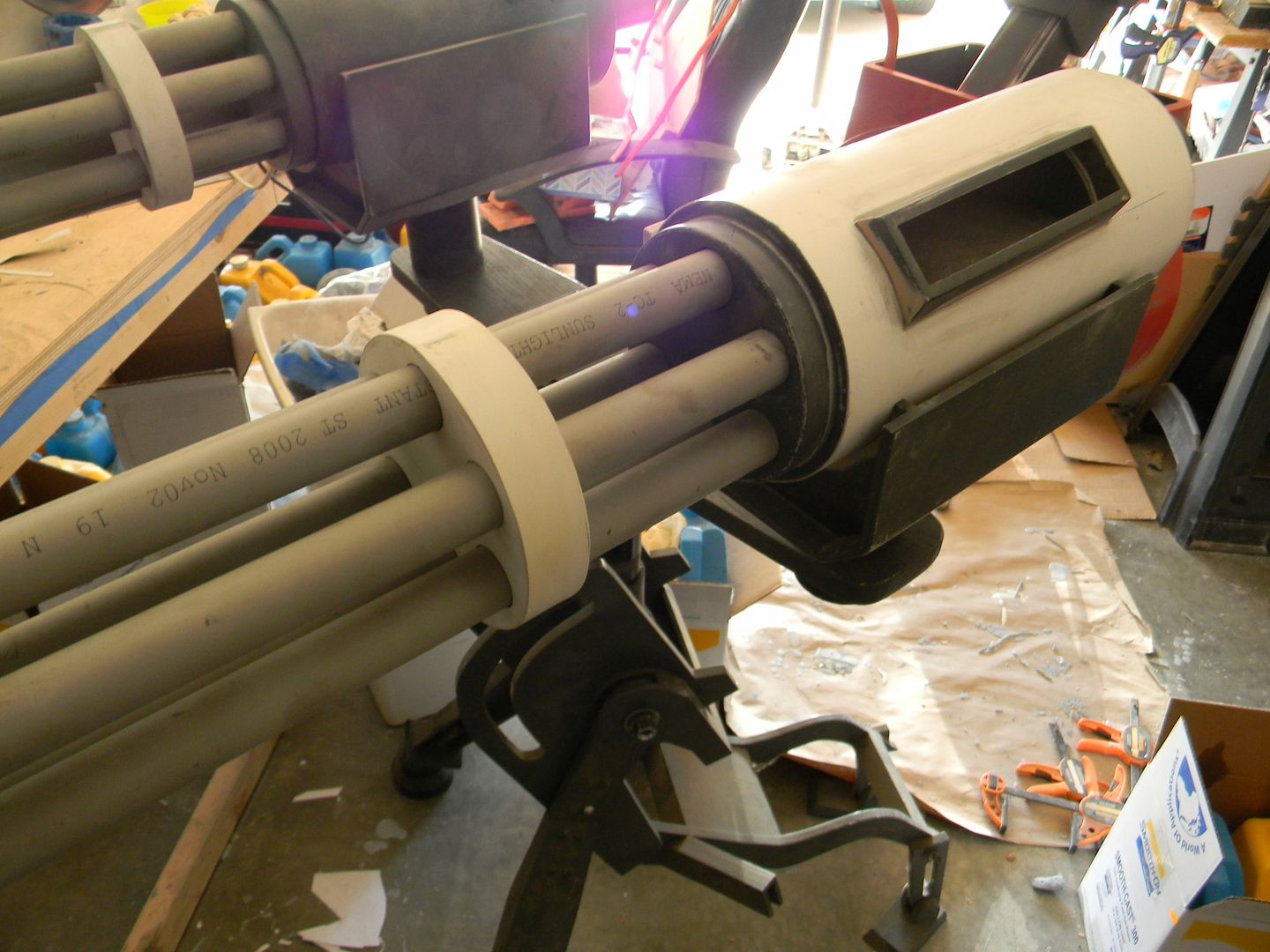
I once again had non-distorted miniguns! The other side needed moderate filling and sanding to preserve.


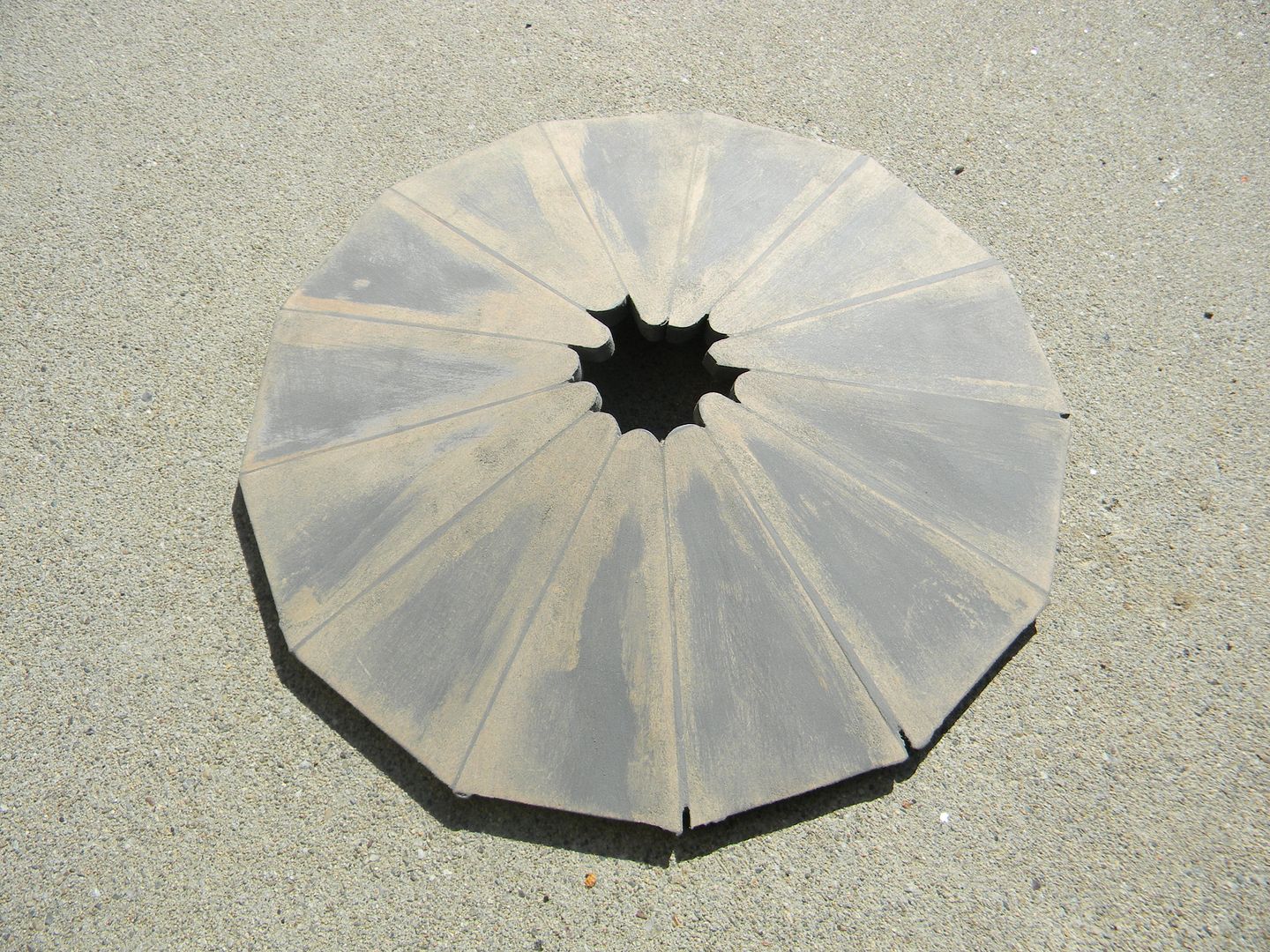
I skimped on photos for the rear most legs. Surprised? Anyways, this was kind of a pain. I didnt want to just use a plate or a saucer. The feet in game have a very angled but subtle look to them. I cut one out on a scroll saw, adjusted it as needed, and made a bunch of copies. I did some half-assed math to do this, but more than anything I'm pretty sure I just got lucky that it all fit together. The inside circle doesn't matter since its getting cut out for a PVC coupling. 


New guns mounted, new feet taking shape.
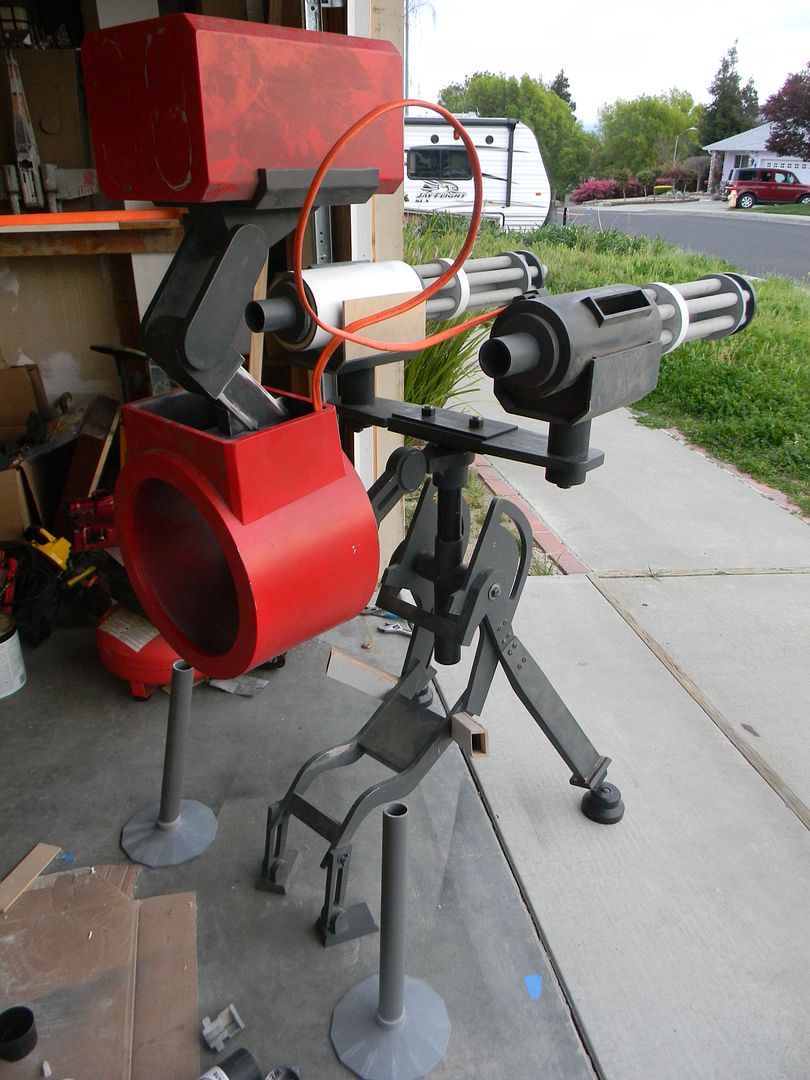


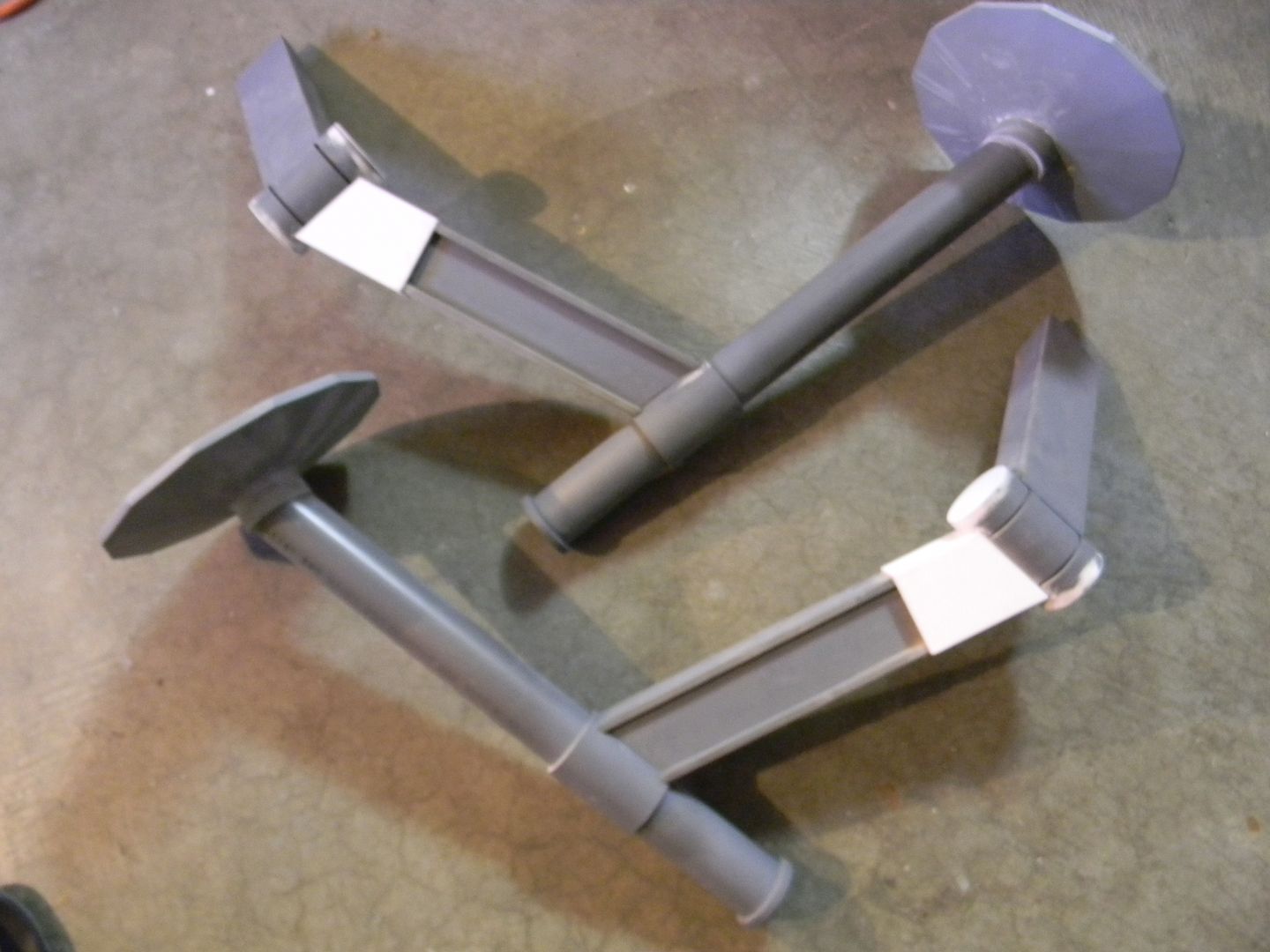
These rear legs....were a complete pain. No amount of screenshots could give me the correct angles at which they meet. They are kinked on at least 3 axis' and nothing is perfectly horizontal or vertical to reference off of. It took a lot of temporary gluing and real world fitting/frustration to get these right. 


Time to paint (Again) and make some ammo belts! Before I forget, Those rings on the barrel are made from 1/2 inch MDF. Except for the white ones, which are styrene to keep the weight down. 21 year old me didn't own a hand drill, and certainly not a drill press. They were ALL drafted by hand and cut by hand on a scroll saw. It was a ton of work. The styrene holes were sanded out with a dremel. 
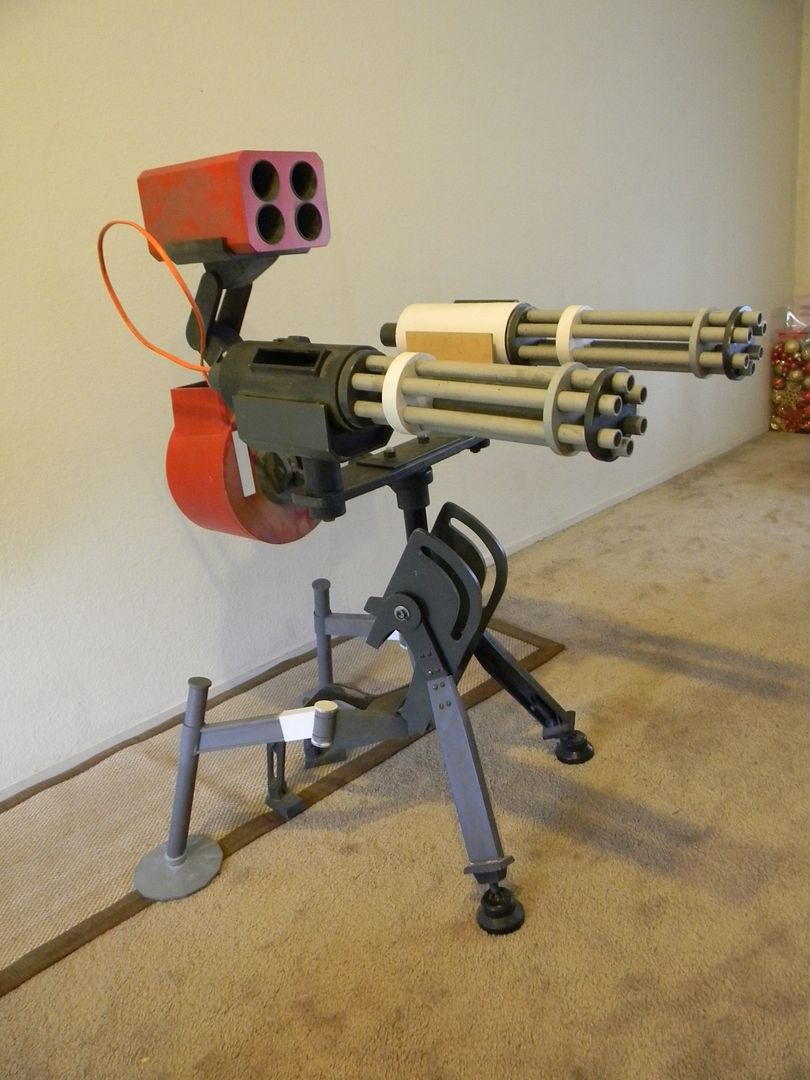


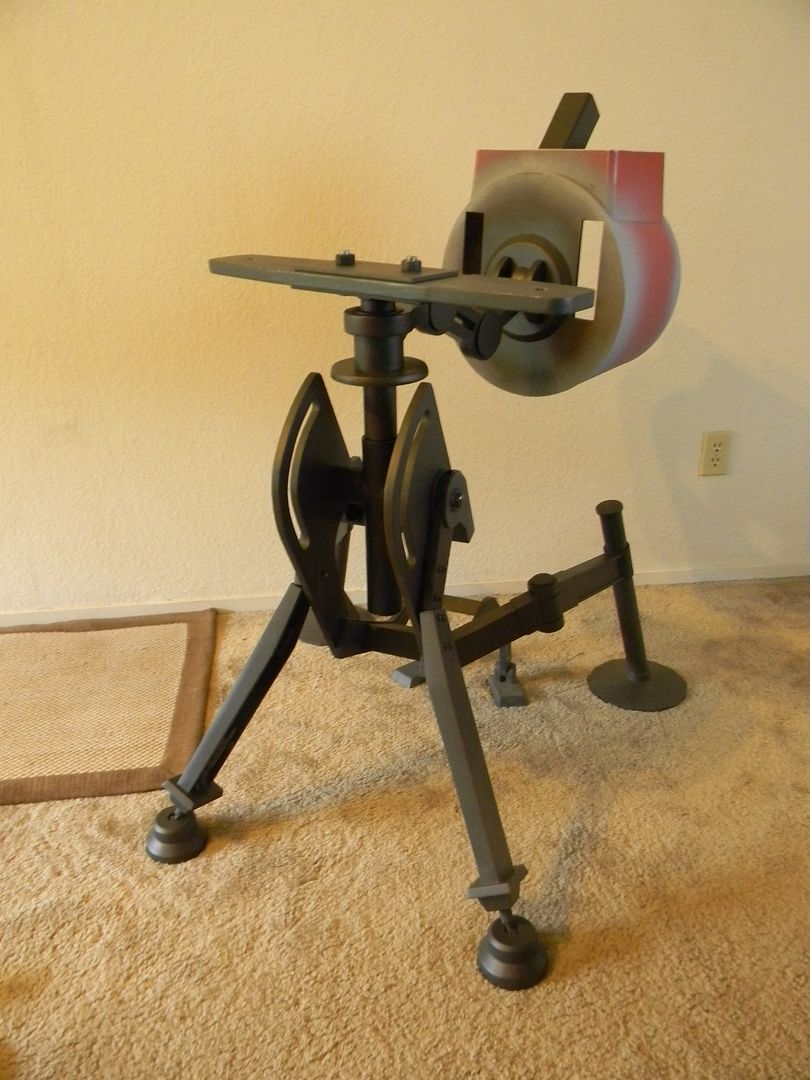
Not only was the old paint showing its age, but the company that make the paint doesn't offer it any more so the new parts wouldn't have matched. It all got sanded, primed, and painted. Again. Which is a few days of work by itself. 


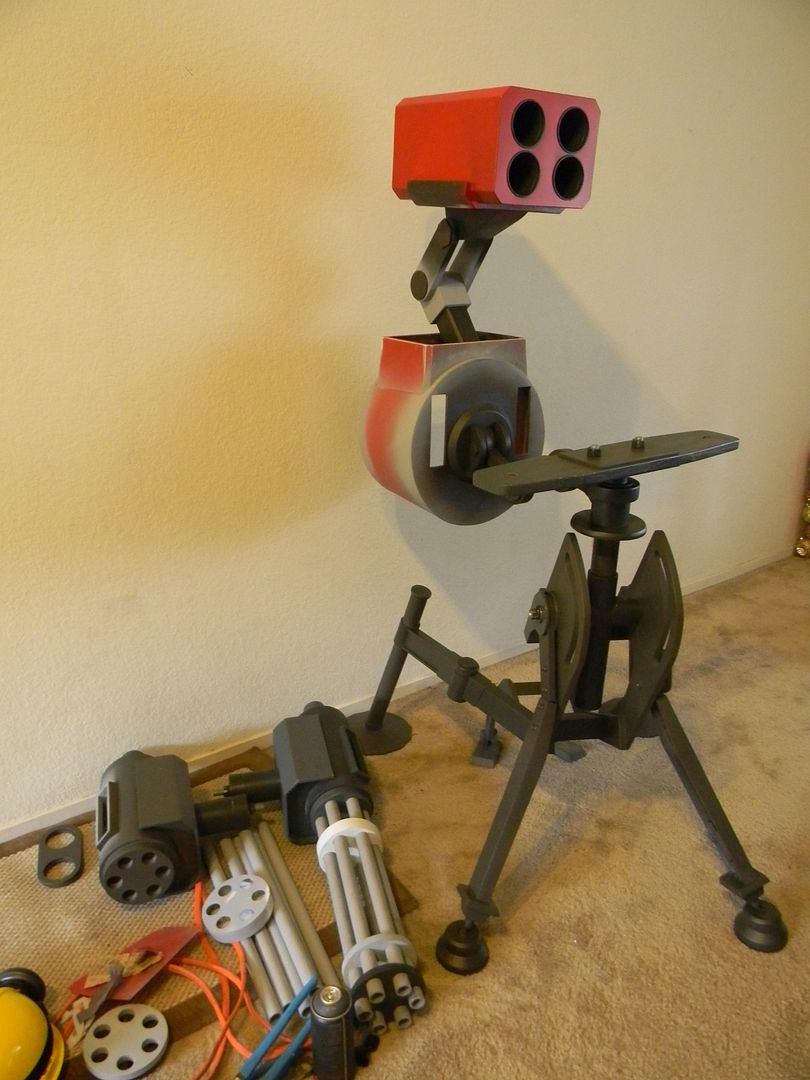
The ammo belts were hastily made from EVA foam, and were the only rushed part of this build. I wanted to get it ready for a local convention, called Silicon Valley Comic Con. Do I need to mention for the Nth time that I didn't take pictures?

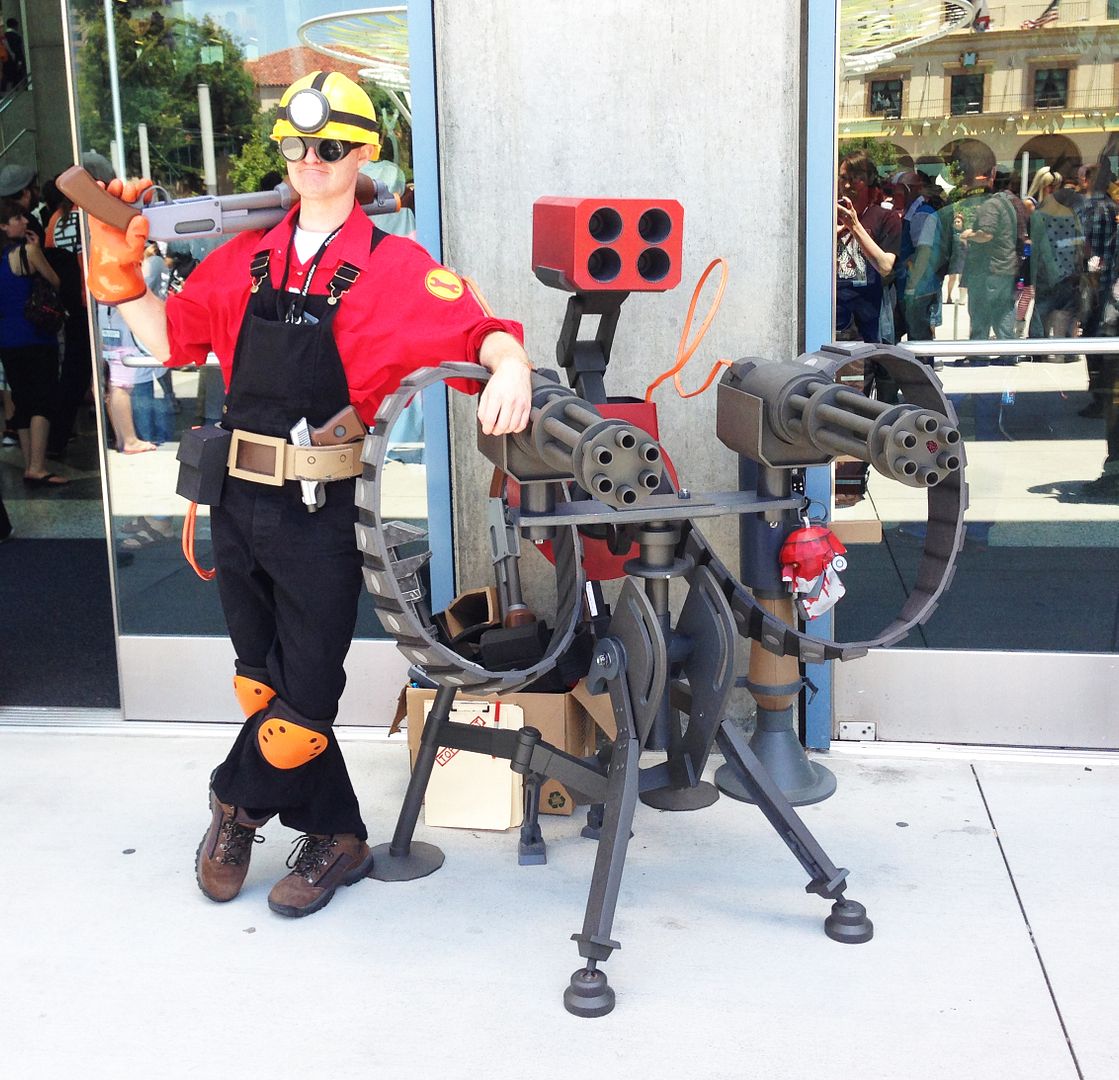
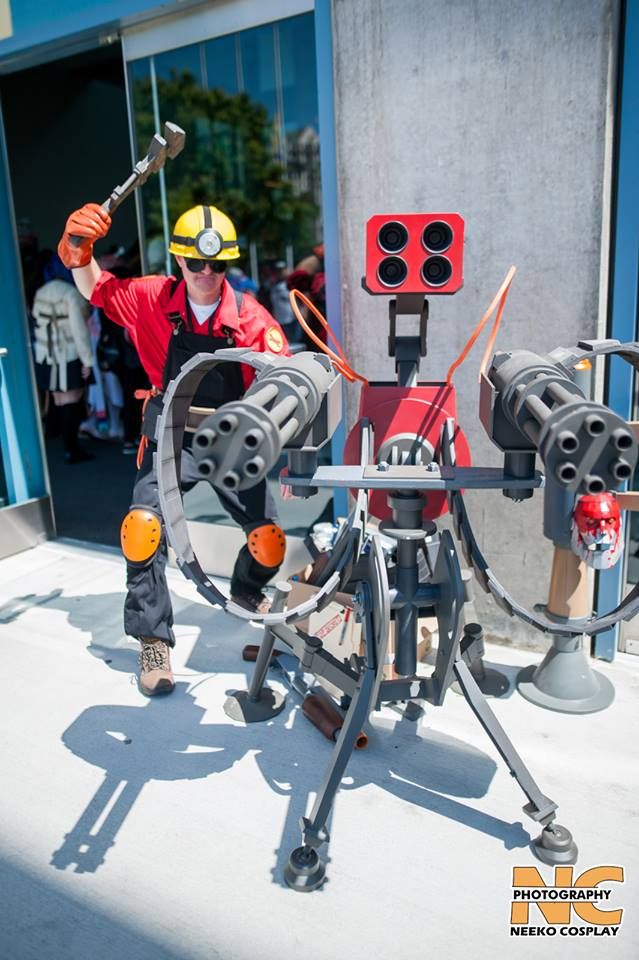
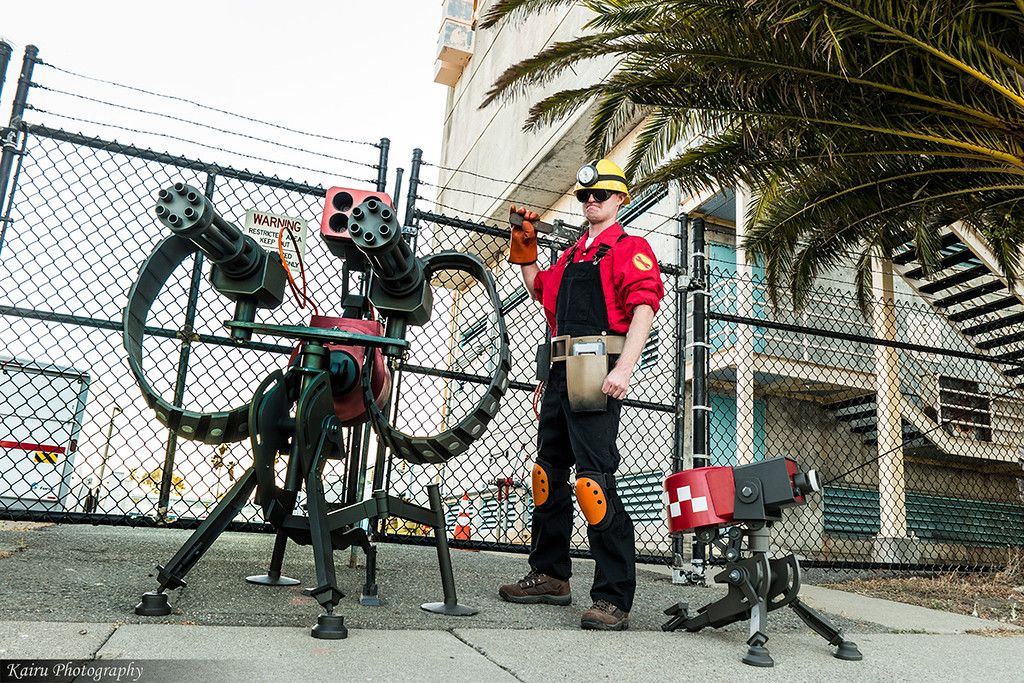
The results are nothing short of spectacular. Not only is this fun to have at a convention, but this bad boy greets guests in my living room. Every day. So worth it. 

Photo by Asian Treehouse Studios.
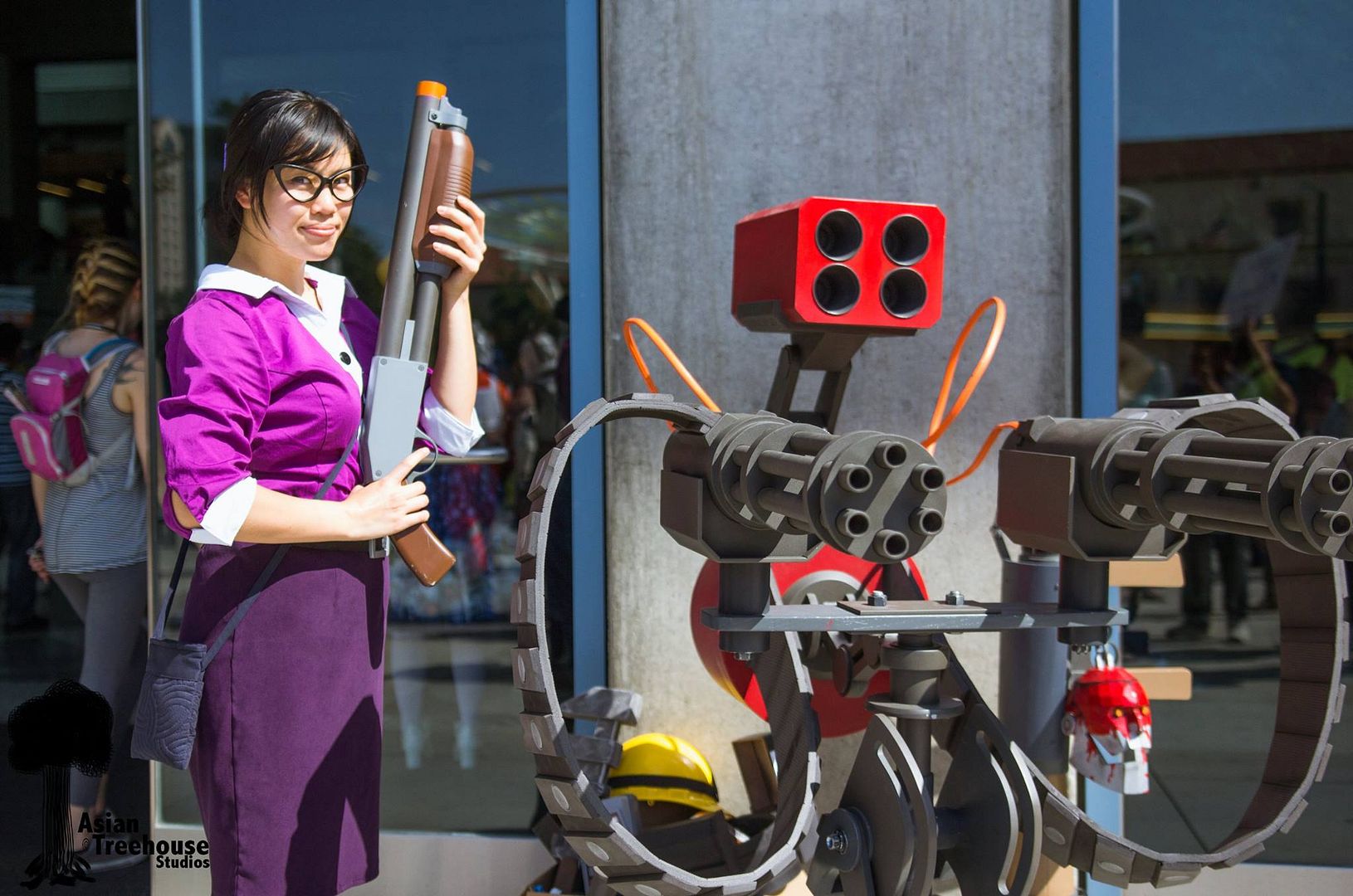


Photo by Kiel of Kairu Photography


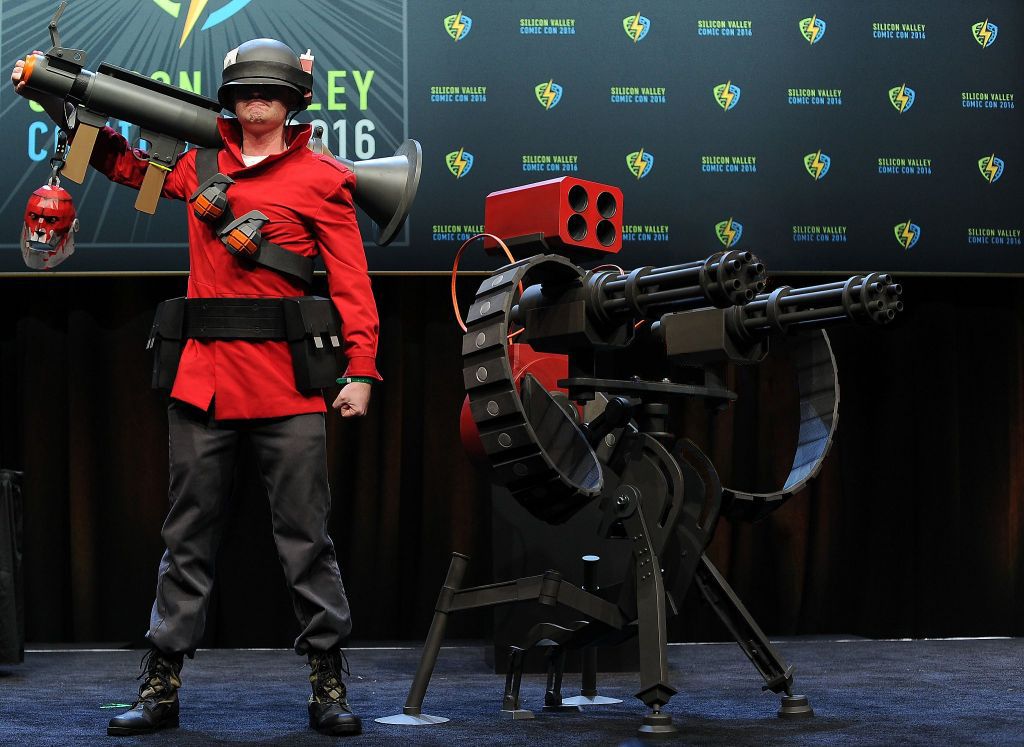
I entered a costume contest for my first time. I wore my soldier costume instead of my engineer, and brought the sentry.... 


The result was my first award! hooray!
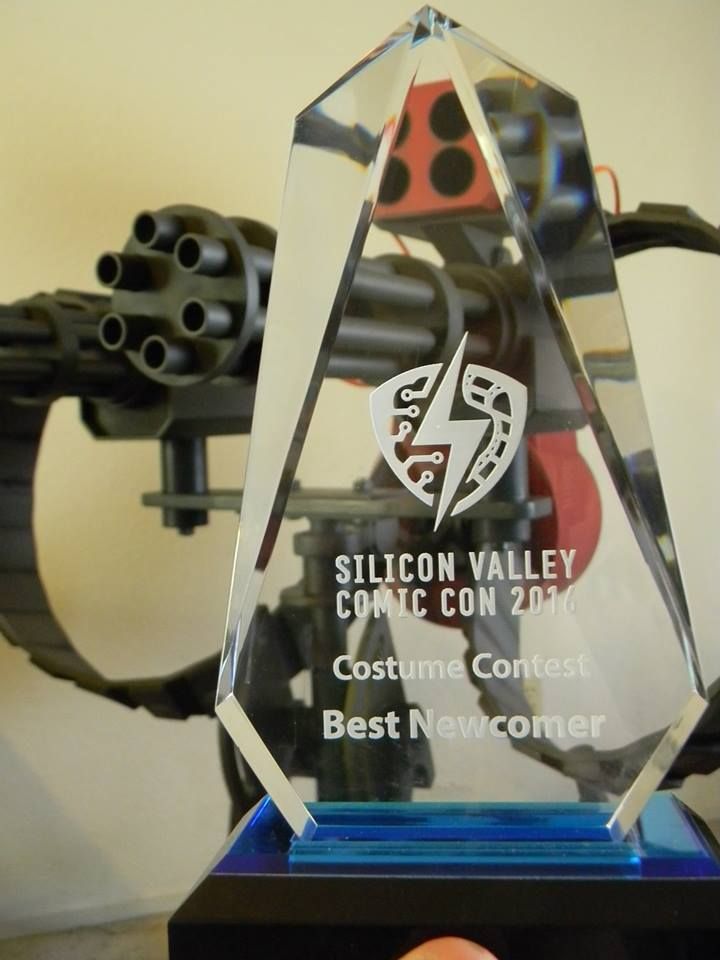


Yeah, I don't think I can top that, but this isn't the end of my sentry gun builds...


Tuesday, May 10, 2011

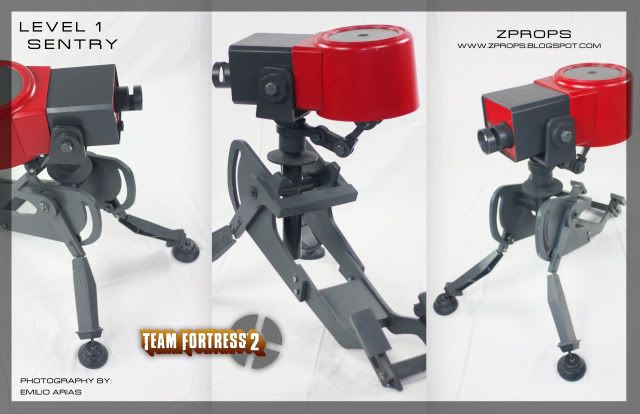
Team Fortress 2 Level 1 Sentry Gun

As one of my most recognized past projects, I decided to kick-start my props blog with this project.

This was not a commission, I just woke up one morning and decided that I had to make this thing.


heres a video for you more visual people:


I have added the red LED since these photos, but it does not show up in daylight photos anyways.


before paint:


here's the build:

Step 1: the base. The base/frame of the sentry is the most complicated part. Not only is it annoying trying to take a million in game screen shots for reference and trying to translate it into a mechanical drawing, but its also very difficult to get the "modular" function I want. My sentry is fully adjustable, can disassemble completely with basic tools, and its fully upgradeable. (yes, there is a soon to be level III) I started making a template for the frame which contains the tracks for the legs.


I used a drawing compass at a fixed point to get the swivel tracks for the legs done correctly. the rest of the measurements and proportions are eyeballed from reference. I did the rear half of the frame next. After the templates were done, I traced them out on 1/2" MDF (medium density fiberboard) and cut them out on a scroll saw.

Step 2: the legs. The sentry legs in TF2 magically extend when upgraded. I wanted a real version of this instead of having to switch out legs every time I upgrade mine. I had a bipod from an airsoft gun lying around that I wasn't using. its made by UTG for those who wanted to know. I disassembled it so I could use the legs individually, and I needed to make some changes.


here is a picture from back then, "test" fitting the frame with the bipod legs.


Then I realized the whole thing was about 30% too small and started over at a larger scale.

I remade the templates, and cut out the parts again. after that, I cut out the rear feet assembly, and the incomplete front leg assemblies. The fold down rear feet use wingnuts so I can quickly adjust them. the front legs are angled out by bending some 90 degree L brackets from home depot. (literally 100% of the materials of this project are from home depot, except for paint.) The bipod legs were temporarily secured with one bolt through the L brackets on each side. They sort of flopped around because I wanted to move on to other parts of the sentry and would re-visit them later. A 1/2"X 10" carriage bolt was used to secure the frame and the front leg mounts. some small 1/4" bolts are used on the feet, and the mid section of the frame where it bends and can be adjusted for level 3 positioning.

progress at that stage:


Step 3: center post linkage

This part was made completely of plumbing and electrical parts. I think the PVC is 1 1/2 inch. It had to be the exact width of the frame, because when I tighten the carriage bolt, the post is supposed to stay at the angle it was tightened at. It holds the whole weight of the top assembly, where most of the weight is. I had to make inserts for the T square so that the carriage bolt would stay centered, and give it enough friction to stay in place.


carriage bolt fit test


A larger coupling and a disk I cout out was added for accurate detailing (I did the disk over because it ended up being too small)
I used a pot metal electrical flange to secure the PVC with the perpendicular MDF pintle mount.


Step 4: the pintle mount

The thread on the electrical flange was not long enough to go through a half inch of MDF for the pintle mount, so I used a 1/4 inch sheet and then reinforced it and cut out a section on the top layer to leave room for some metal L brackets for reinforcement.


I did a test fit with the vertical parts and the L brackets


A large clamp with scrap wood as spacers was used to glue them together firmly (holes were drilled in the mounts before gluing them)


The holes are for 2 big 5/8ths inch bolts and a huge MDF washer on each side.


this is where the project really got exciting!

Step 5: the barrel housing

I had to do the housing twice since the first version was too big. (well, actually it was the right size but it was too big for the ammunition housing that I found)

heres the front face being glued to the bottom plate. I used PVC to support it during drying time. the hole is obviously for the PVC barrel


The edges were cut at 45 degrees for added detail.
I made the sides and drilled the holes for the mount.


Heres a picture of the rear frame being cut. I left room on the corners to run bolts through to the ammunition cannister frame.
(my precious Ryobi scroll saw pictured here)


progress at that point:


rear frame installed:


I made the last top section removeable.

step 6: the ammo canister

this was the hardest part to find. basically, I was looking for a bucket with the perfect diameter at the bottom, and the perfect angle for the sides. I settled on a red rubbermaid bucket from home depot (a bit pricey, 11$ for a small bucket?) there were some paint buckets and plastic plant pots that came close, but had too much texture, holes, whatever. and they just werent the right size. I marked off the section I wanted to cut and sawed away.


I matched the frame off the barrel housing.


The curved parts that connected the frame to the ammunition housing were a pain to do. they were both curved, and angled, and it was hard to measure the curve off the bucket for cutting out the parts.


I ended up re-doing that part since the bucket was too tall and sat too high.

I made nut holders for the frame so I could easily connect/disconnect the barrel housing section.


progress at that point


Step 7: revisiting the feet

The sentry's front feet have a ball and socket joint. I took the rubber end caps off the bipod and glued some modified wooden doll head ball thingies to them.


They already had holes drilled in them, all i had to do was dremel grooves for the cross member going through the bipod legs.


Installed:


The feet themselves were 4 layers


The top layer was beveled inside


and out


so that the ball would stay inside the foot.

The notch on the outside is to allow the foot to position at more extreme angles (level 1 especially)


progress:


Step 8: ammo canister linkage and acess panel

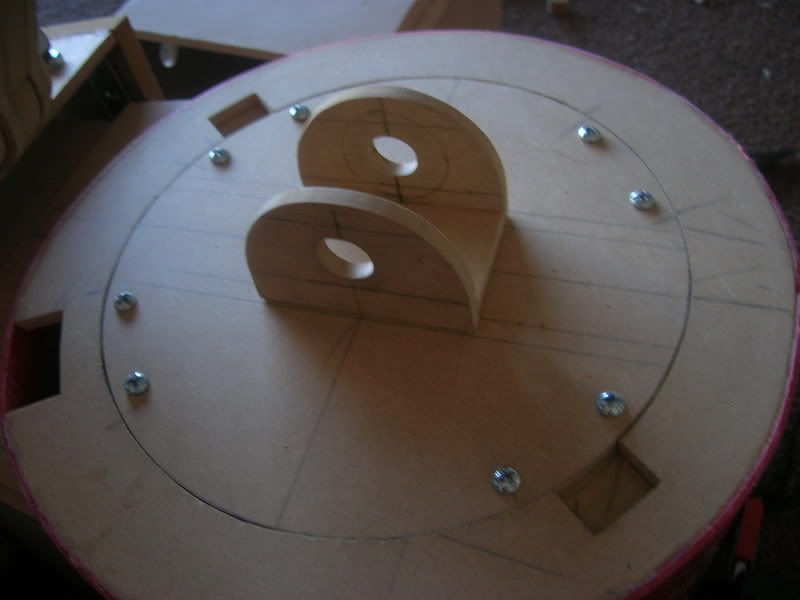
Because I originally had planned for this thing to be servo controlled and have a paintball/airsoft gun installed, I needed a quick way to get into the thing without completely tearing it apart. I decided to make a cover on the bottom of the ammo housing that could be easily unscrewed. the cut outs are for ease of removal, as well as making it easy to rig an external controller/power supply.


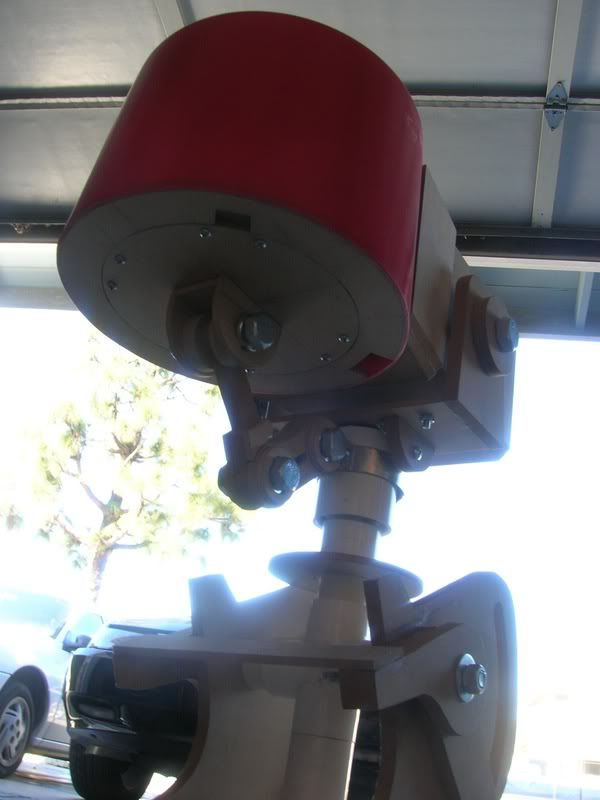
With that done, I could start the final bit: the linkage.

I needed this section to be industrial looking, convincing, yet low enough on friction to not fight the servos, yet have enough friction to help keep the back end up. It basically consists of several MDF parts that were carefully drafted out and sandwiched between some carriage bolts.


that just about concludes the build. the entire thing was sealed in filler primer, sanded to about 400, and sprayed with Montana gold "slate" and "steel" colors. the red is Duplicolor vinyl red.