Showing posts with label custom. Show all posts

Monday, December 29, 2014

Gundam 0083 90mm GM Rifle

I had some major surgery at the beginning of the year and decided I needed to make something during my recovery. It had to relate to my other projects, and be relatively easy. I needed to be able to do most of the work from home, as I wasn't supposed to be driving much. I settled on a Gundam rifle.

Some Gundam rifles, especially from the Universal Century timeline, are based loosely on real weapons. In this case, I chose one based on the L85. I love bullpups, but the L85 is ugly as sin. The Gundam rendition is pretty cool though! Luckily, I scored a Chinese made airsoft springer on ebay that was broken and didn't have a magazine or any accessories or about 15 bucks. Perfect.

Since anime guns vary in look between drawings and screenshots, I settled on the Master Grade Rifle that came with the GM Custom. It was my favorite take on the rifle, and resembles the L85 most closely.

Basically, I had to merge these two rifles.


 The stock had to be hacked down, with the "wedge" shape eliminated. The cheek guard was not salvageable on the airsoft version, as it was far too flat and rounded. The entire sight and carrying handle assembly had to be scratch built, as well as the top and bottom of the foregrip. The magazine would have to me custom made, and the magwell moved back further. Lastly, the grip had to be relocated and the misc. plates and details made.


I stripped out all of the internals, and the "weights" (some are lead bars, some are compressed sand wrapped in a rectangular wrapping. The cheap airsoft springers are notorious for having these.) I hacked off the top of the foregrip first and scratch built the receiver extension out of styrene. The vent holes were covered as well.


I got sidetracked and made some hand armor while I was at it. As I said, I was making this from home, so here's a progress shot in my workshop (The kitchen)


I continued by wrapping styrene around the edges of the carrying handle frame. I also covered up some sections in the front of the foregrip that got hacked off. You can see the tons of screw holes that will need to be filled in later.


I visited the shop (against my doctors advice) and cut out a few MDF parts all at once. The buttpad was one of the first. here it is installed with the now wedge-less receiver. The magazine was made out of styrene, and the misc. detail bits molded into the receiver were cut out or relocated.


Some more MDF and styrene details on top of the foregrip being blocked out.


Some tedious styrene wrapping.


I wanted this thing as light as possible, so I even made the cheek guard parts layered for minimum weight.


The grip was lowered and all the odds and ends started getting filled in.


A few more details, screw holes, and gaps before paint!


These were taken my my friend Eric from the ever popular Impact Props!


I painted the rear sights and some inserts black to give it a more modern look.


Thanks for looking! More projects here: Zprops

Tuesday, June 10, 2014

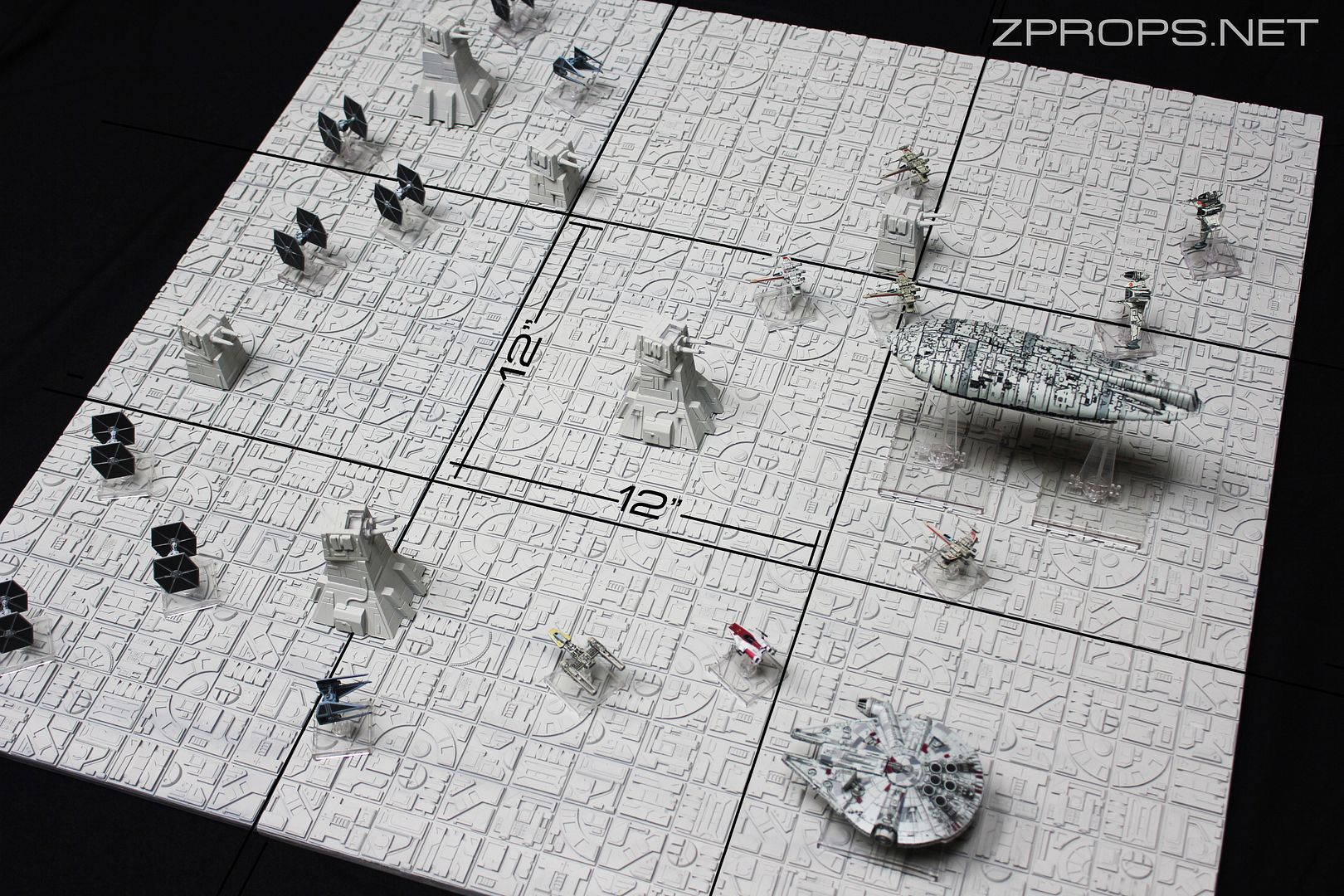
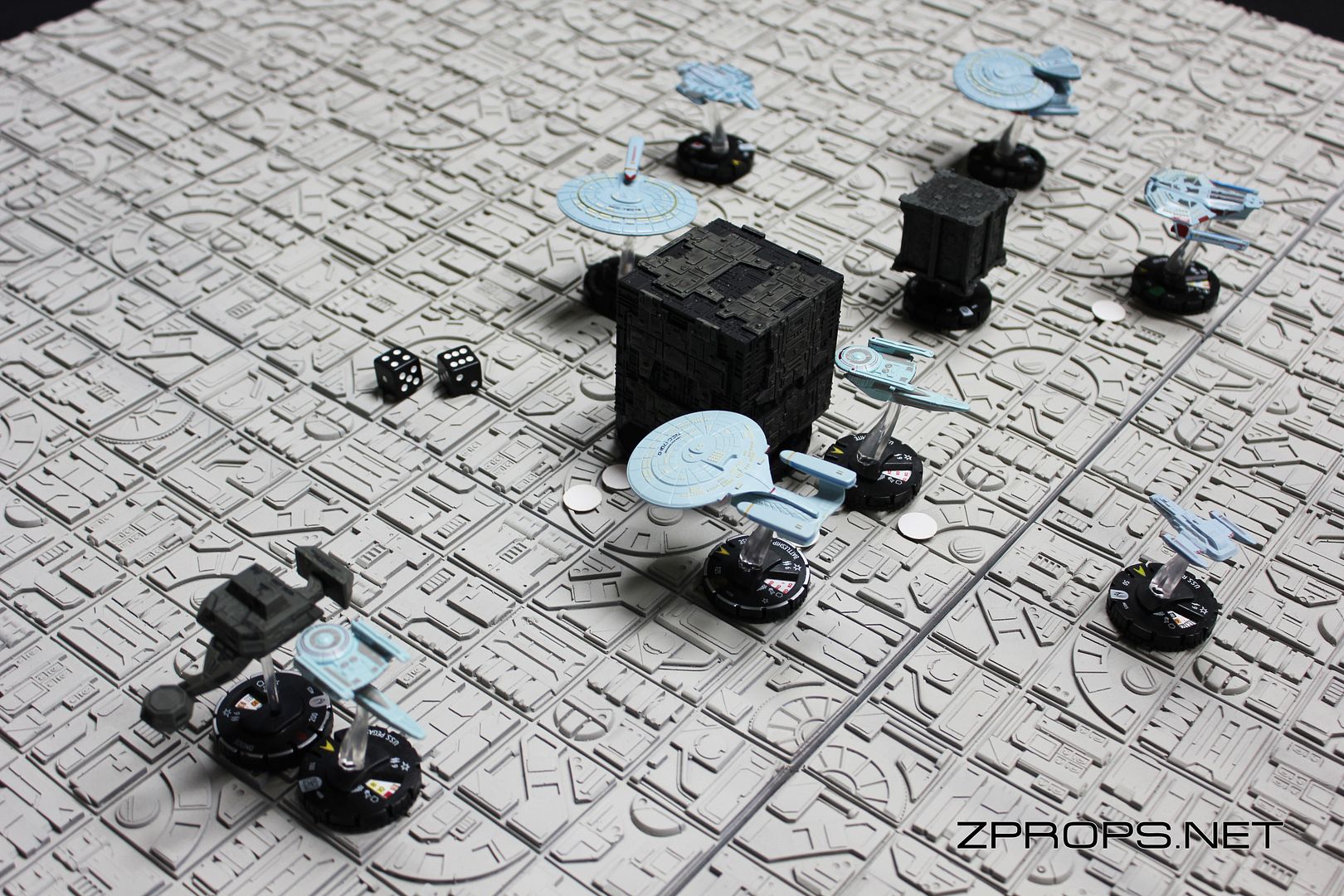
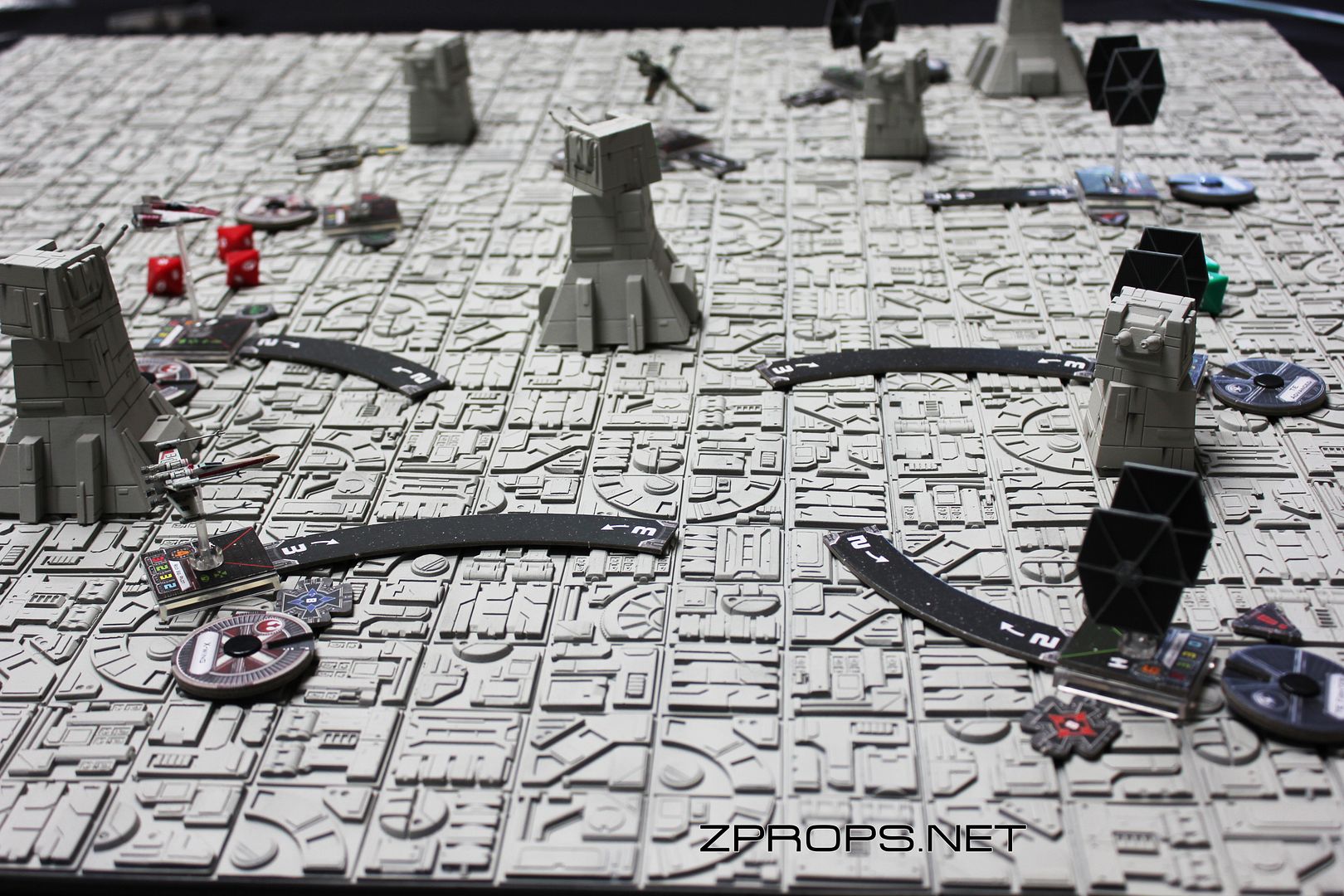
Planetary Tech Station Terrain Set

The Tech terrain set was a lengthy process. I spent about 2-3x hours on this set compared to the previous one.

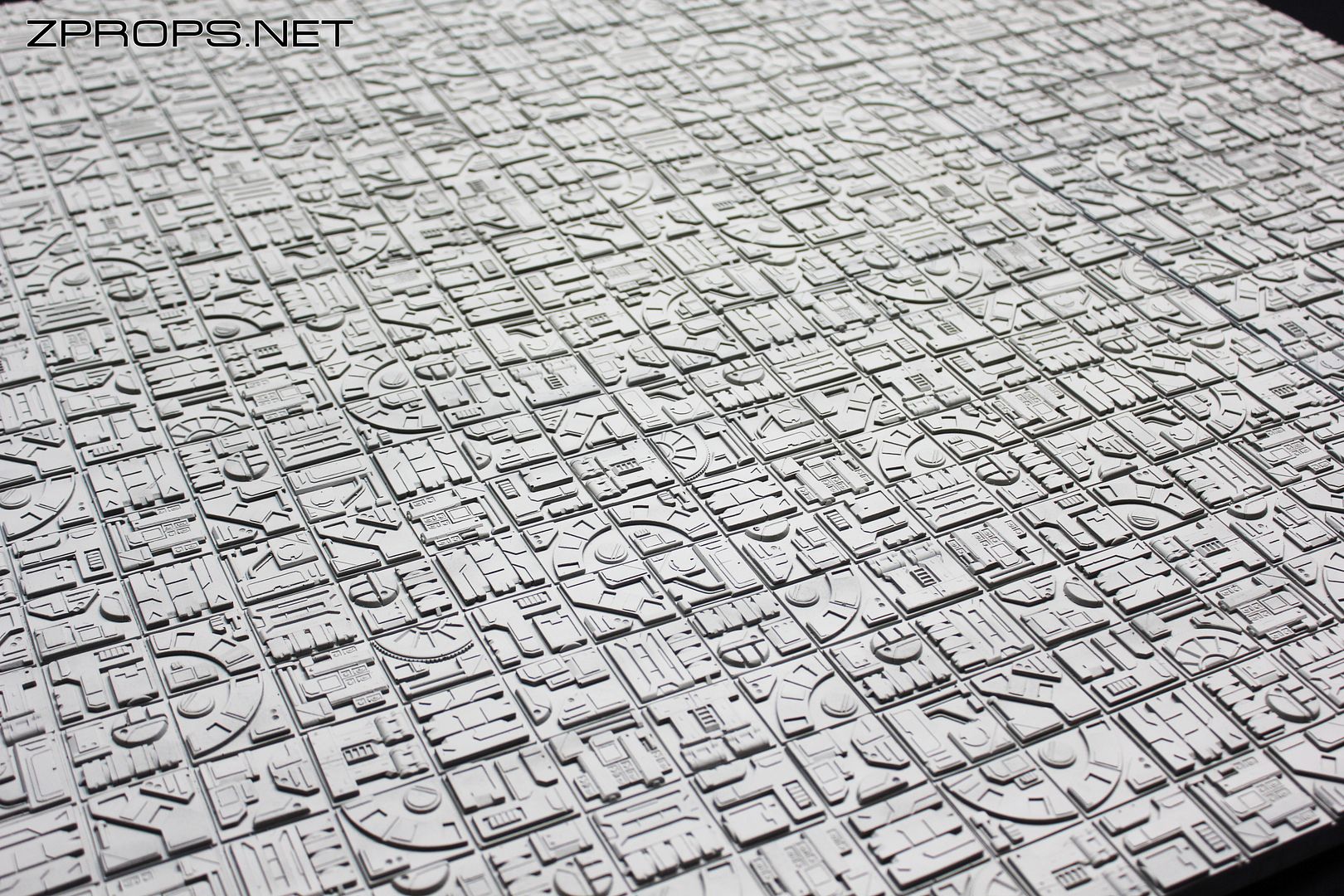
I first decided what thickness I wanted the set to be. Like last time, I used a 1/8th inch piece of MDF as the base, but decided I wanted a clearly visible grid. I decided that building a grid on top of the panel would be easier than trying to scribe an even grid.

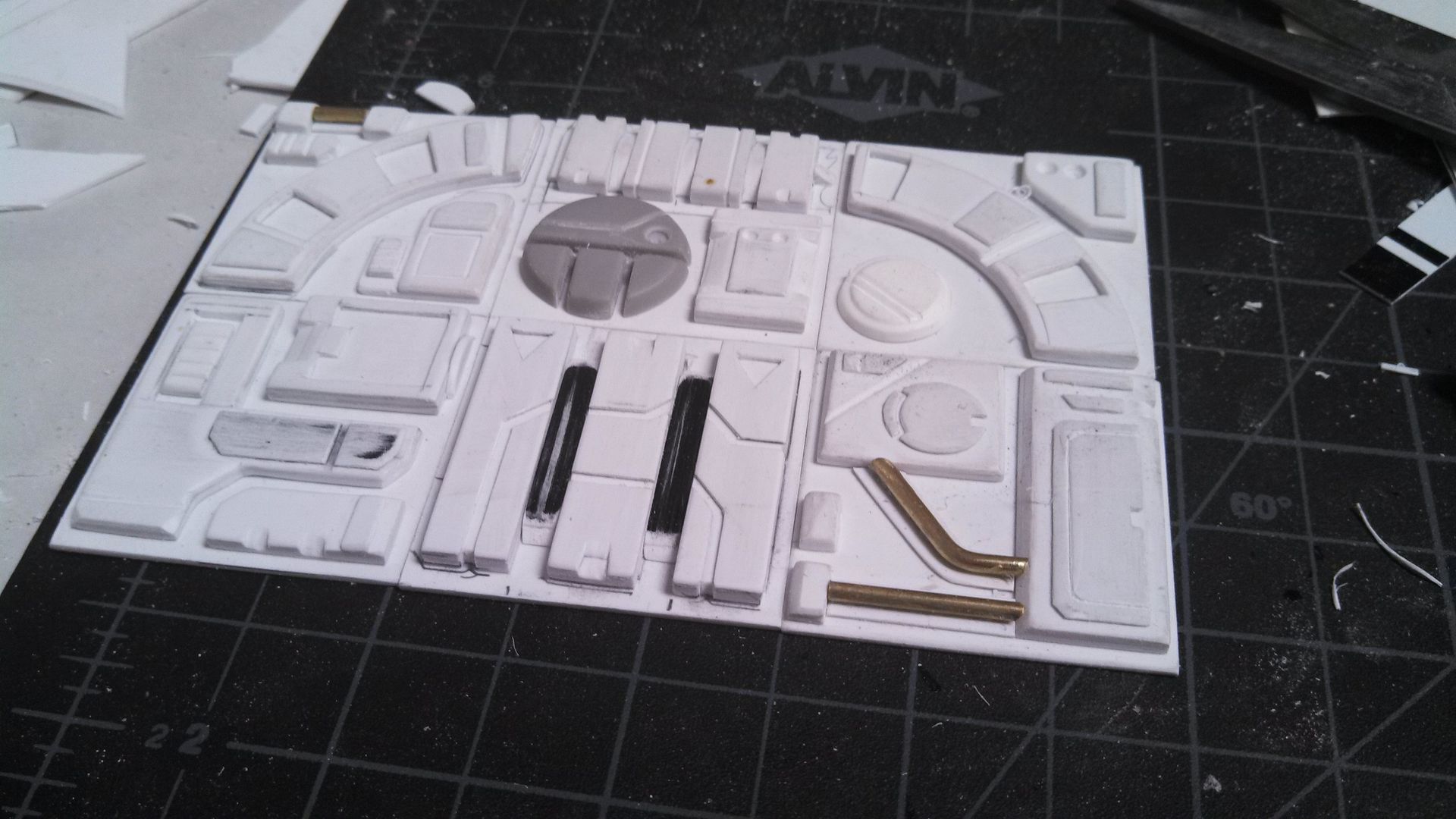
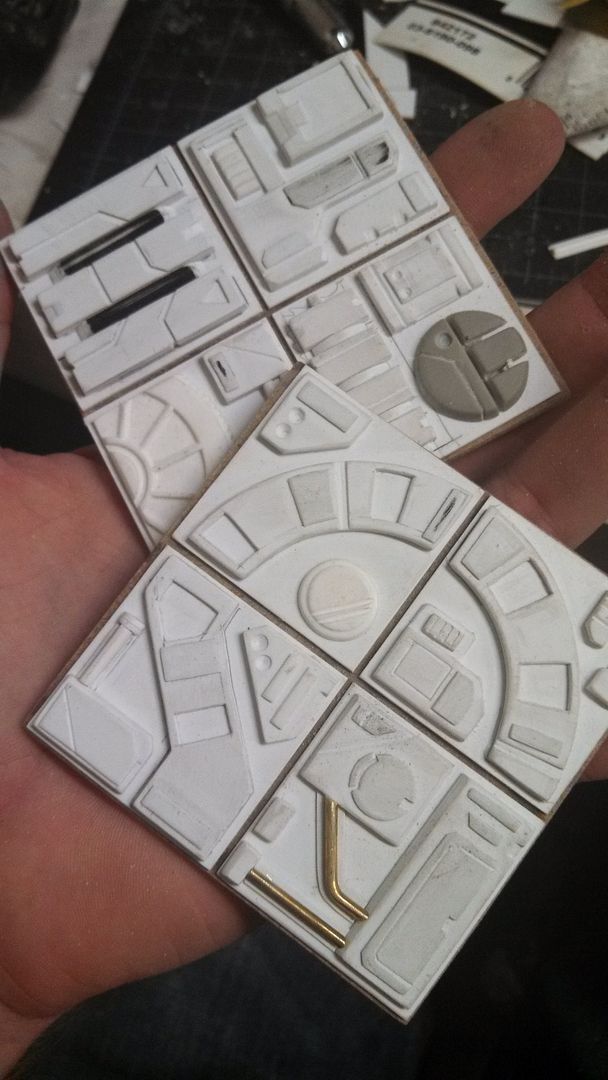
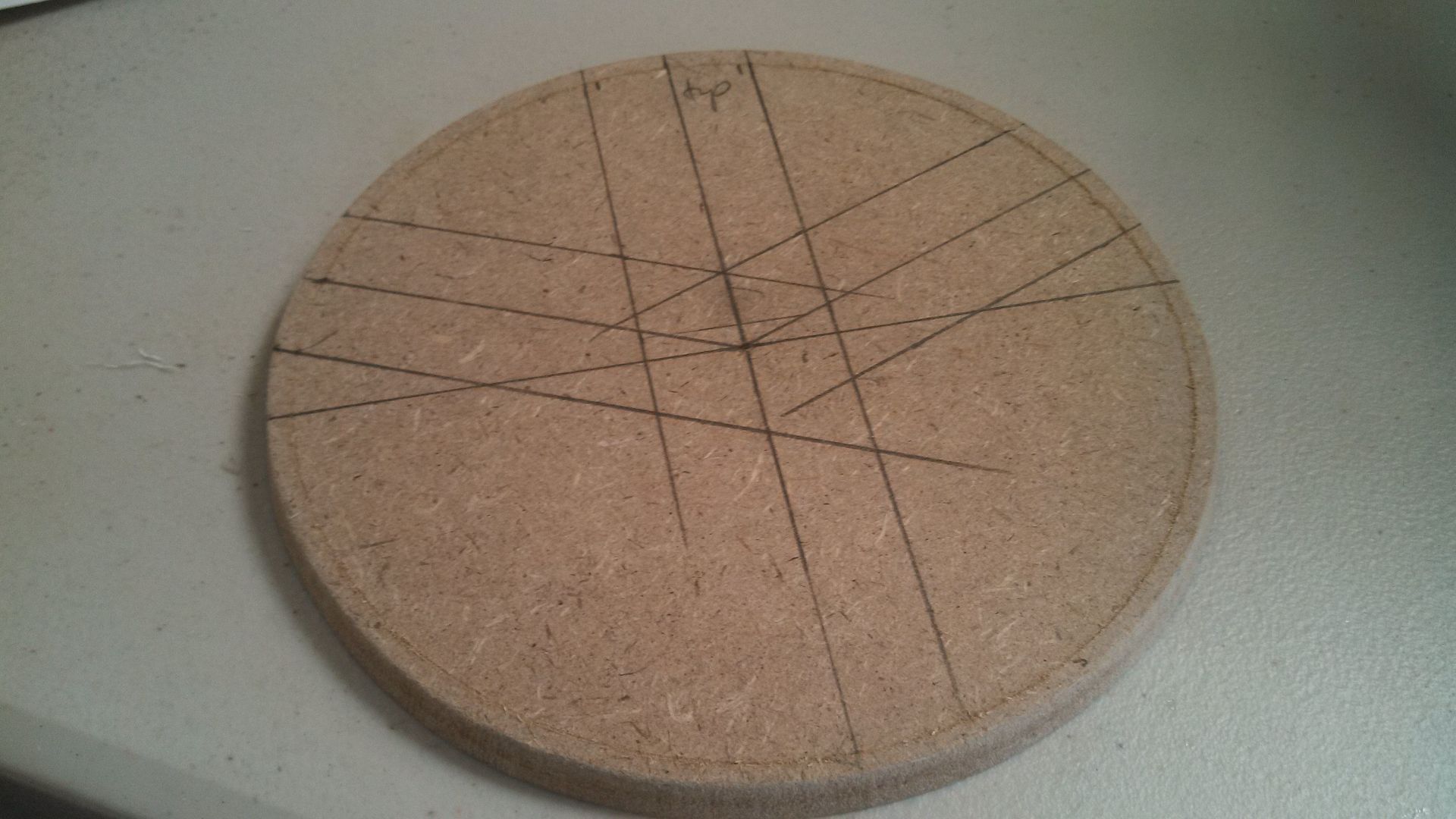
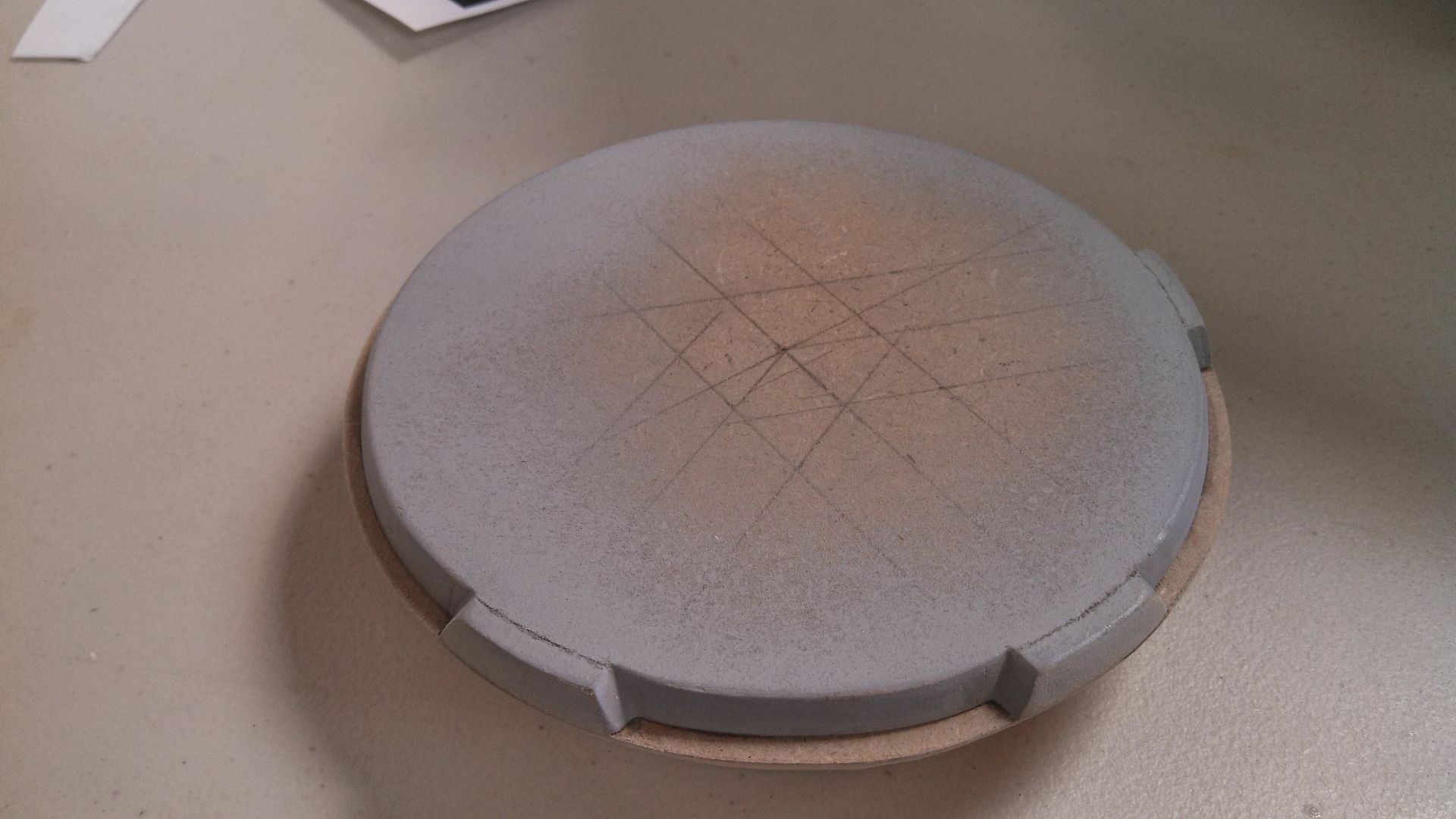
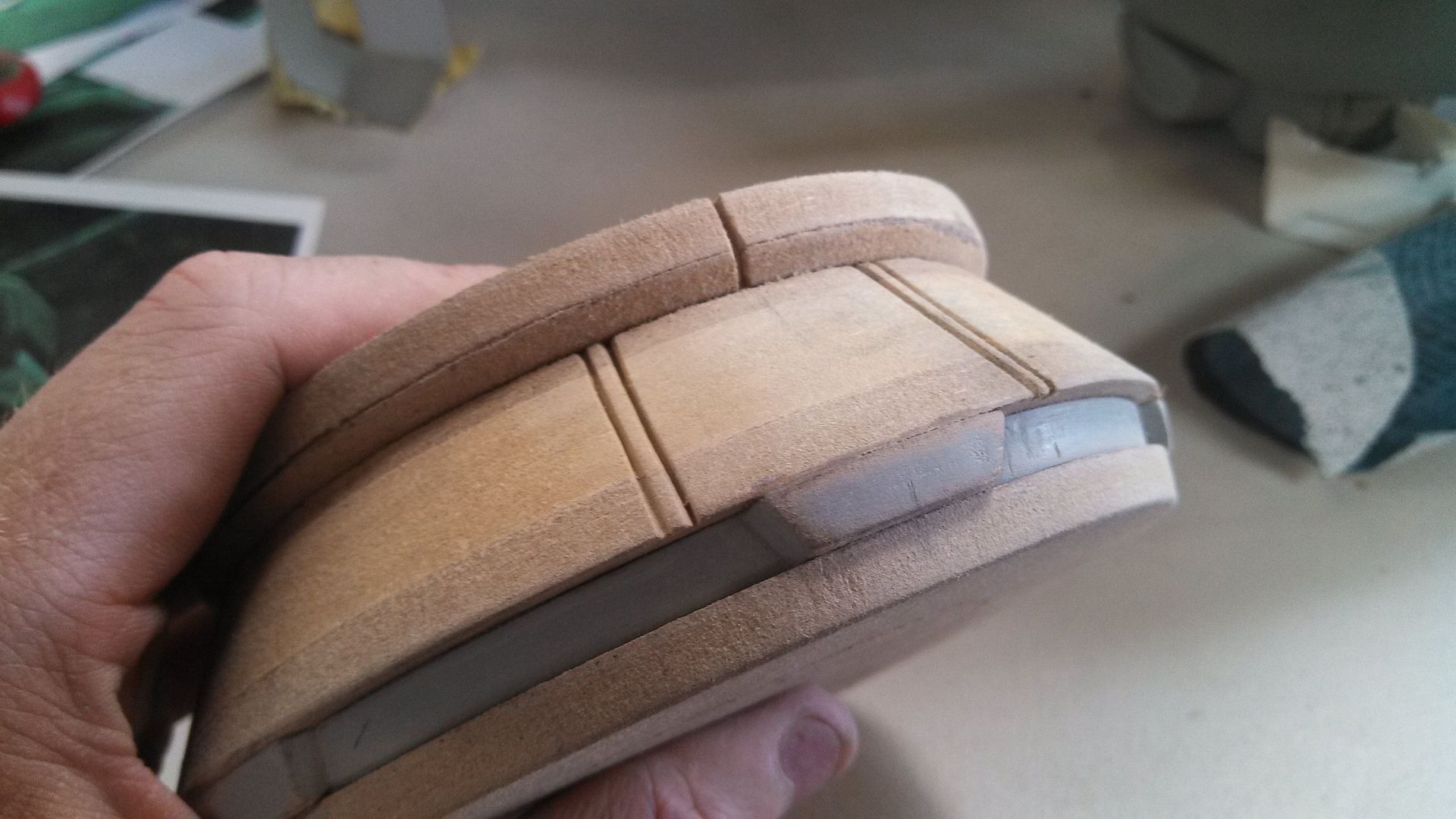
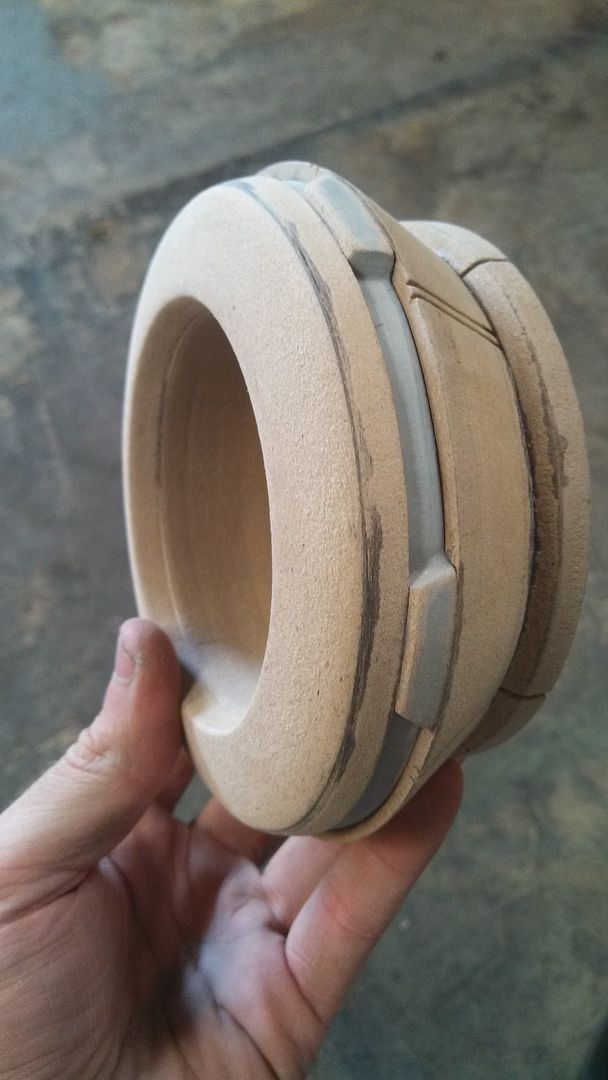
Each detail section is built on a small, roughly 1.5 " x 1.5" piece of styrene. I was initially going to make 8 different detail tiles, cast them, and glue them to the panel. I think I ended up with 12+ different ones though. Here were the first six. The grey round part is cast from a mass effect gun part and then modified to blend in. The brass is...brass.


I got a consistent height by layering three pieces of styrene together for consistency. A smaller layer of styrene was used for the final, detail layering.  I could have made the raised detail larger/deeper, but the result would have been a higher cost. Certain details had to be cut out of the top layer before gluing them to the bottom layers, such as the inset details on the semi circle bits.

I had the idea for coasters ahead of time, so I figured I'd make the molds for those first, and then use really thin casts as bits for the full sized panels.


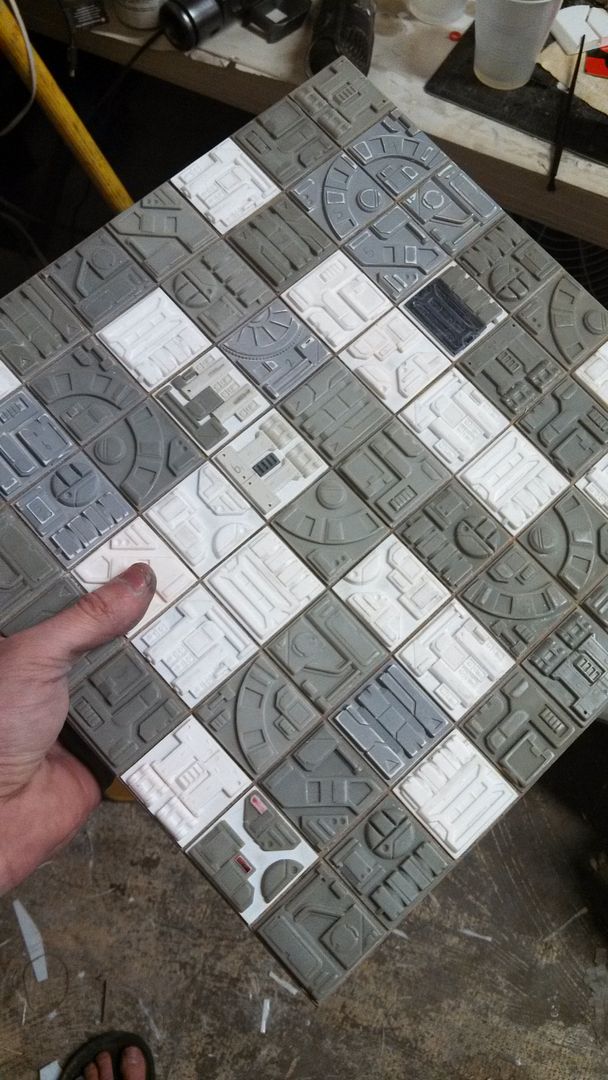
I glued the masters (Blue-ish grey bits) down to the board, then filled in the rest with casts of the masters (White bits and brown-ish grey bits)


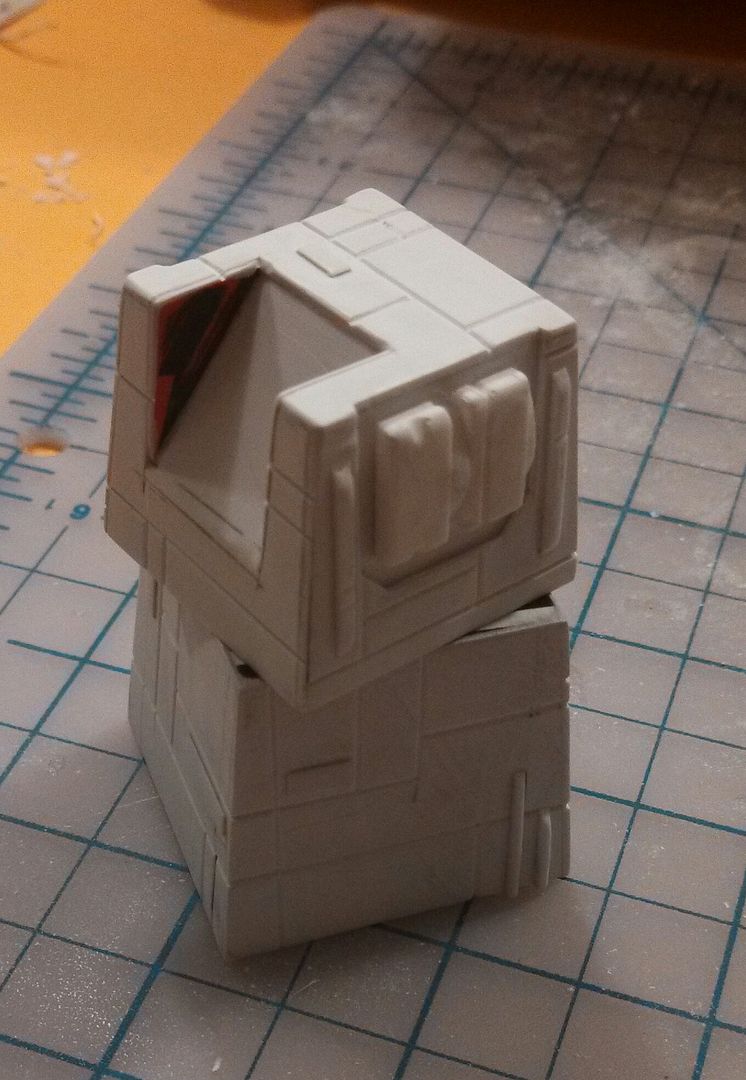
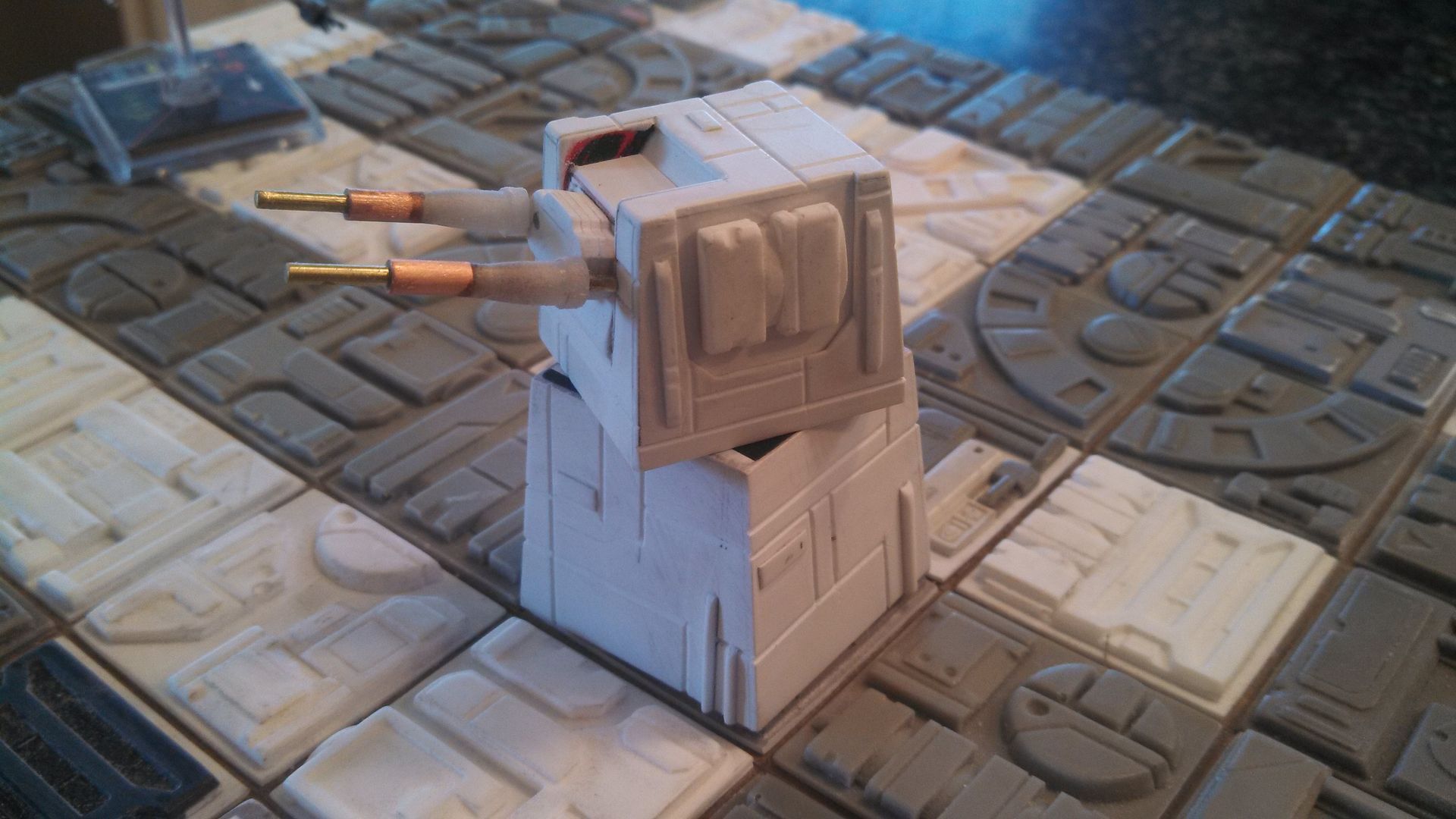
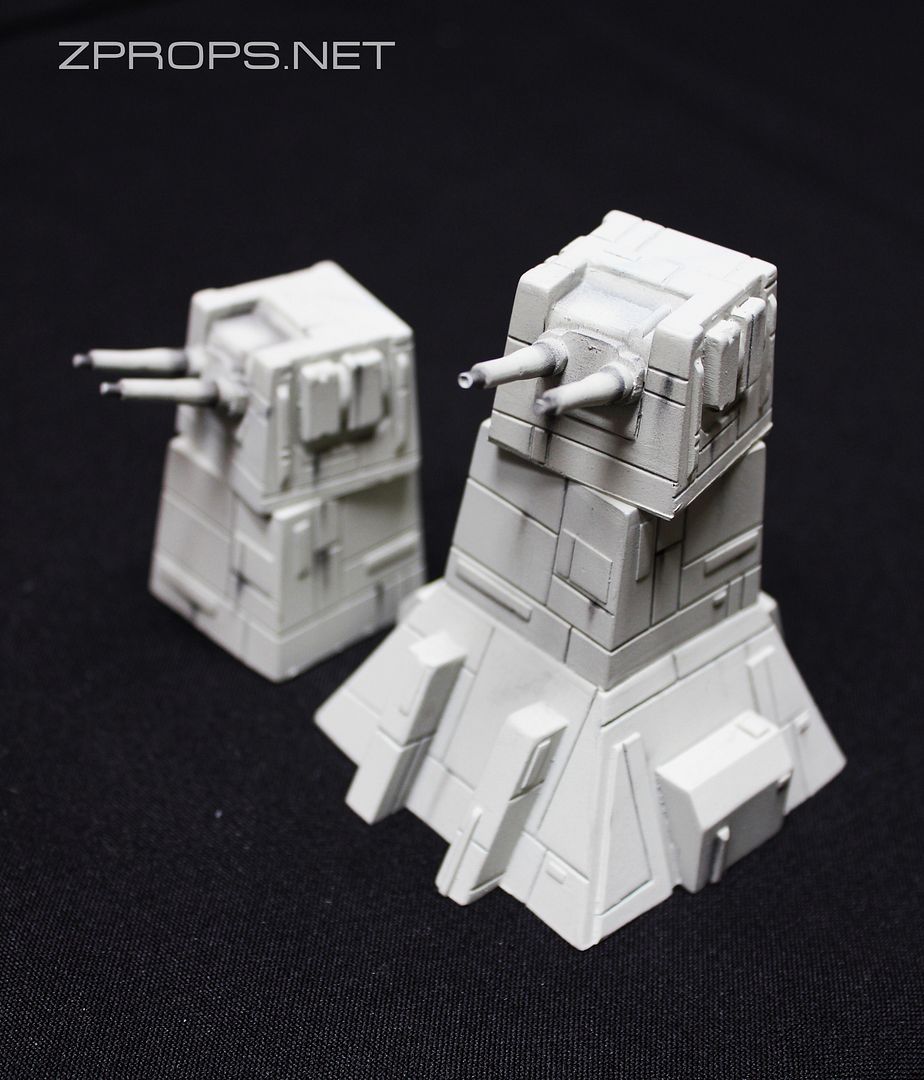
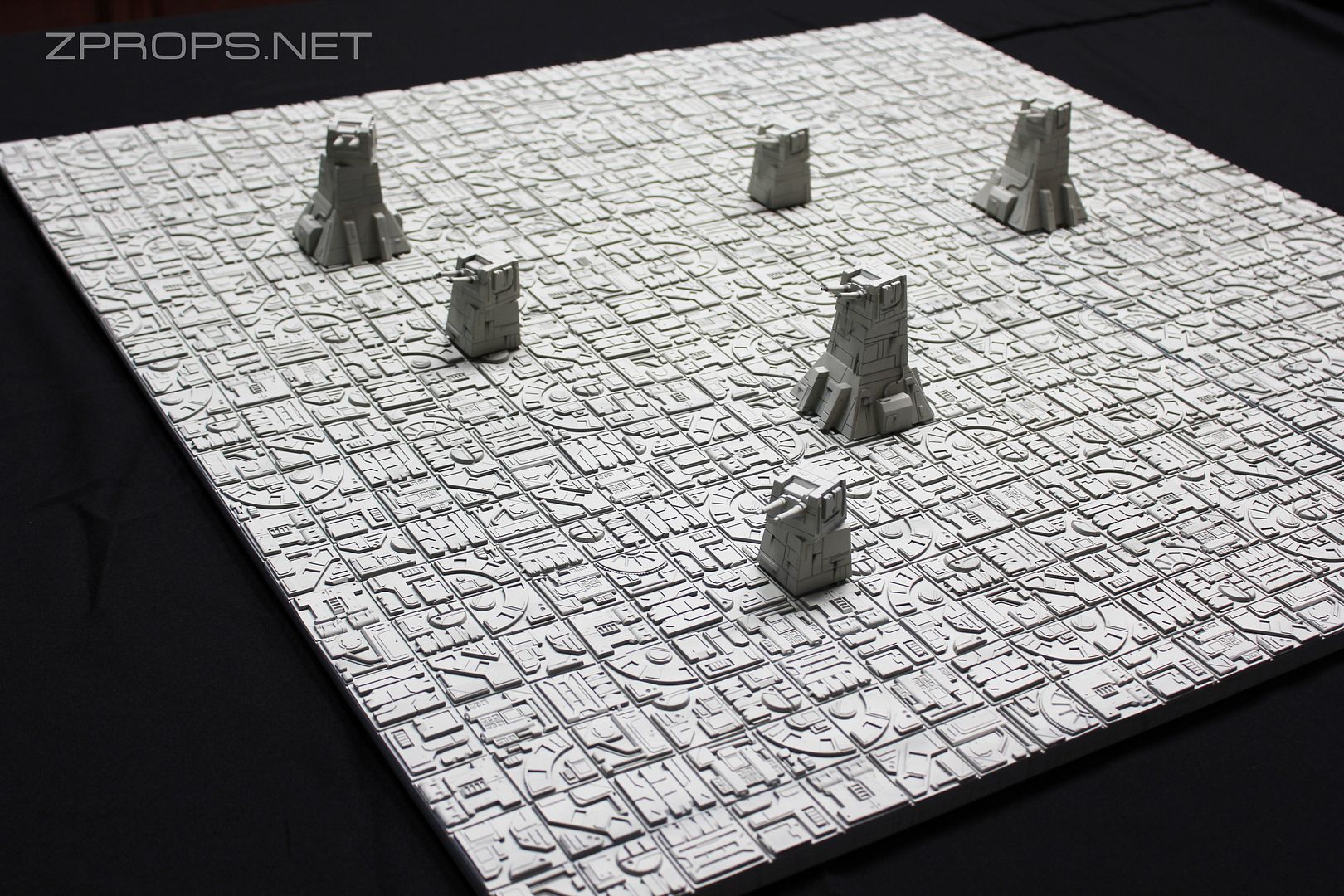
With that ready for molding I moved onto the turret. I initially decided on an incline face for the barrels, but changed it later. the entire turret is carefully scribed and sanded styrene, with the side bits on the top cast from a section of detail from a panel mold. It kind of reminds me of the details on a Bradley tank turret.


The Barrels were made from brass rod, and bits from leftover super glue bottles.


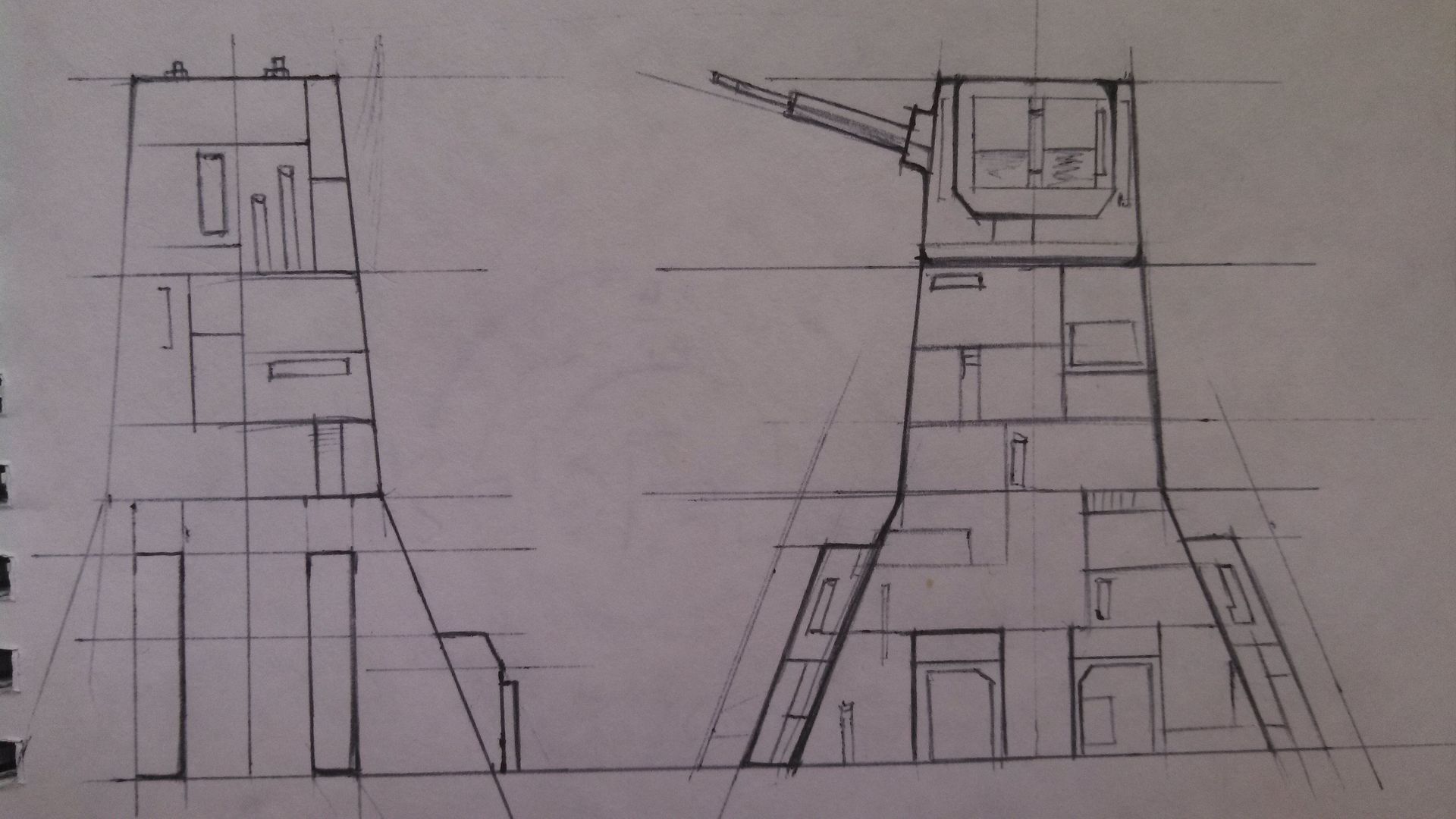
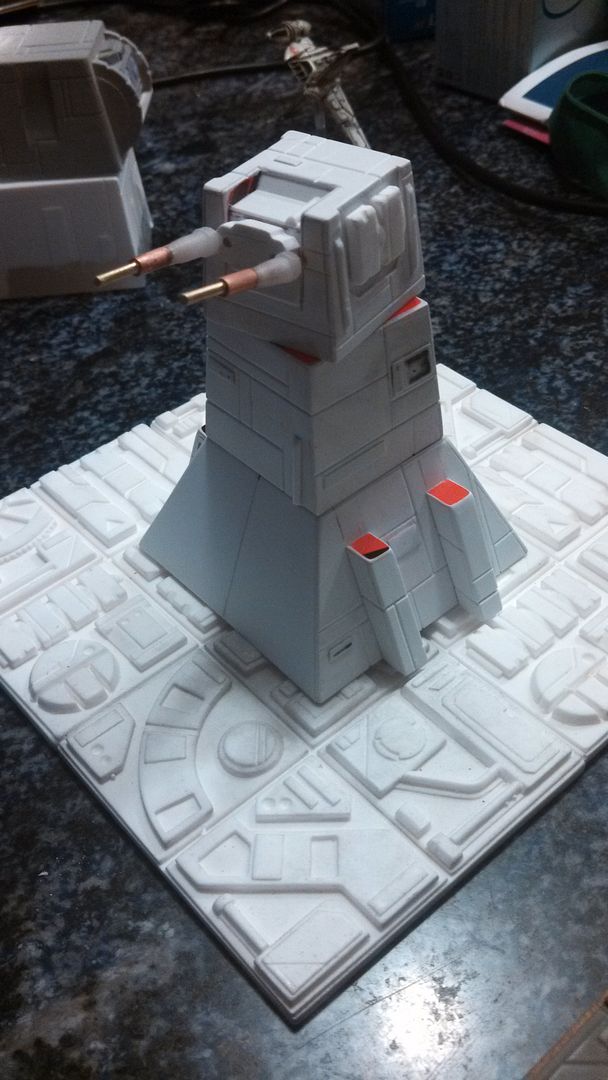
For the large turret, I really wanted a distinctive/unique look. I sketched out what I wanted and get to work. For this I had Star Wars (Of course) and the Gundam universe as my main inspiration.


Almost done with the base piece:


These were the first casts. (ran out of ink, but they were getting painted anyways)


They were painted over with grey primer, and then colored with a color called "Camouflage Grey".
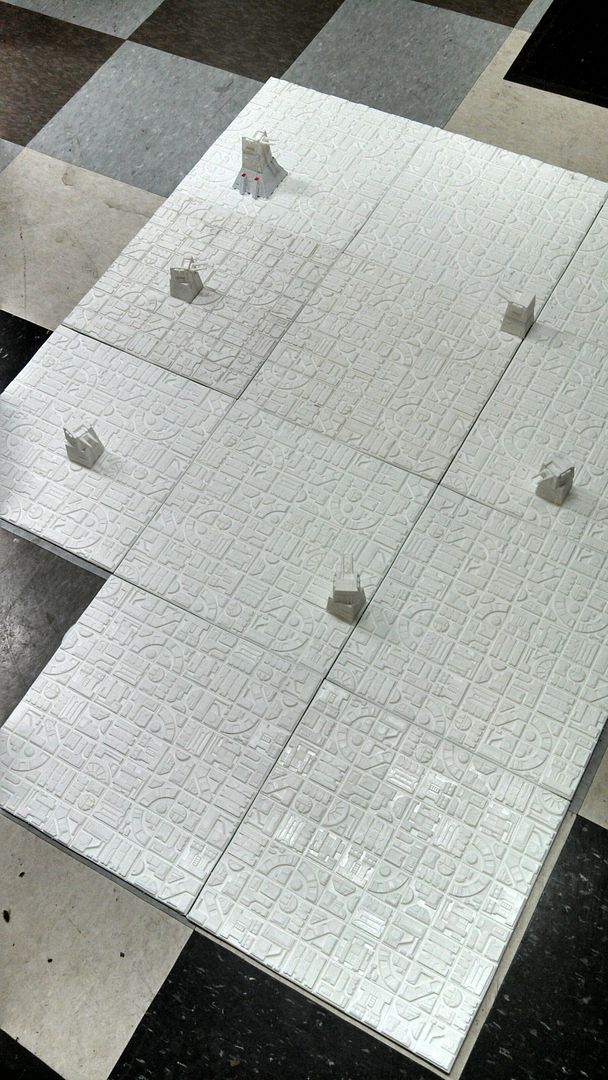
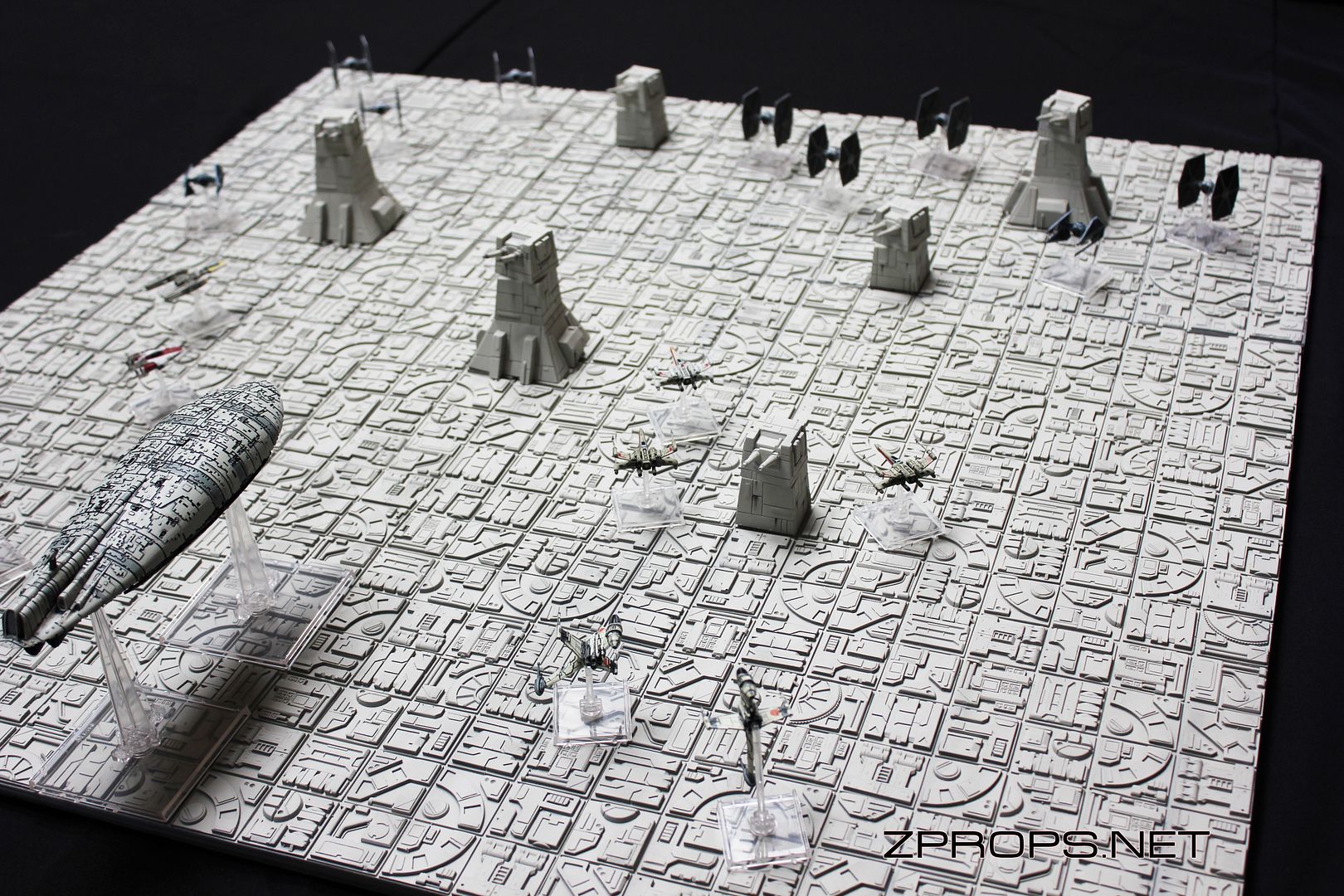
I mounted them to some wood along with some painted up tiles, and the results are spectacular!


If you like these sort of projects, you can see more at my [ main website.]

Tuesday, July 30, 2013

Starcraft II Terran Command Center Part 3 of 5

With the bulk of the assembly mapped out, I could focus on refining the assemblies and doing general detailing/paneling. The only major construction left was the underside. This had to be left for last, as the plan was to have a panel that drops down from the bottom, for access to the custom mounted motherboard, power supply, etc.
I did a really lose fit to see how much room I had to play with.


If you look closely, you can see that this part has some really large corners sticking out. In the game model, they "clip" into the models of the individual feet. Instead of attempting the giant headache of how the corner of a rectangular prism (with a draft angle on it) would intersect the bottom of the corner assembly + the knee joint at a 45 degree angle, I decided to completely avoid the issue all together and leave a small space between the parts. I'll just call it artist's discretion.

It got refined a bit into this, but I couldn't lob off the corners until I knew exactly how far the feet spaced.


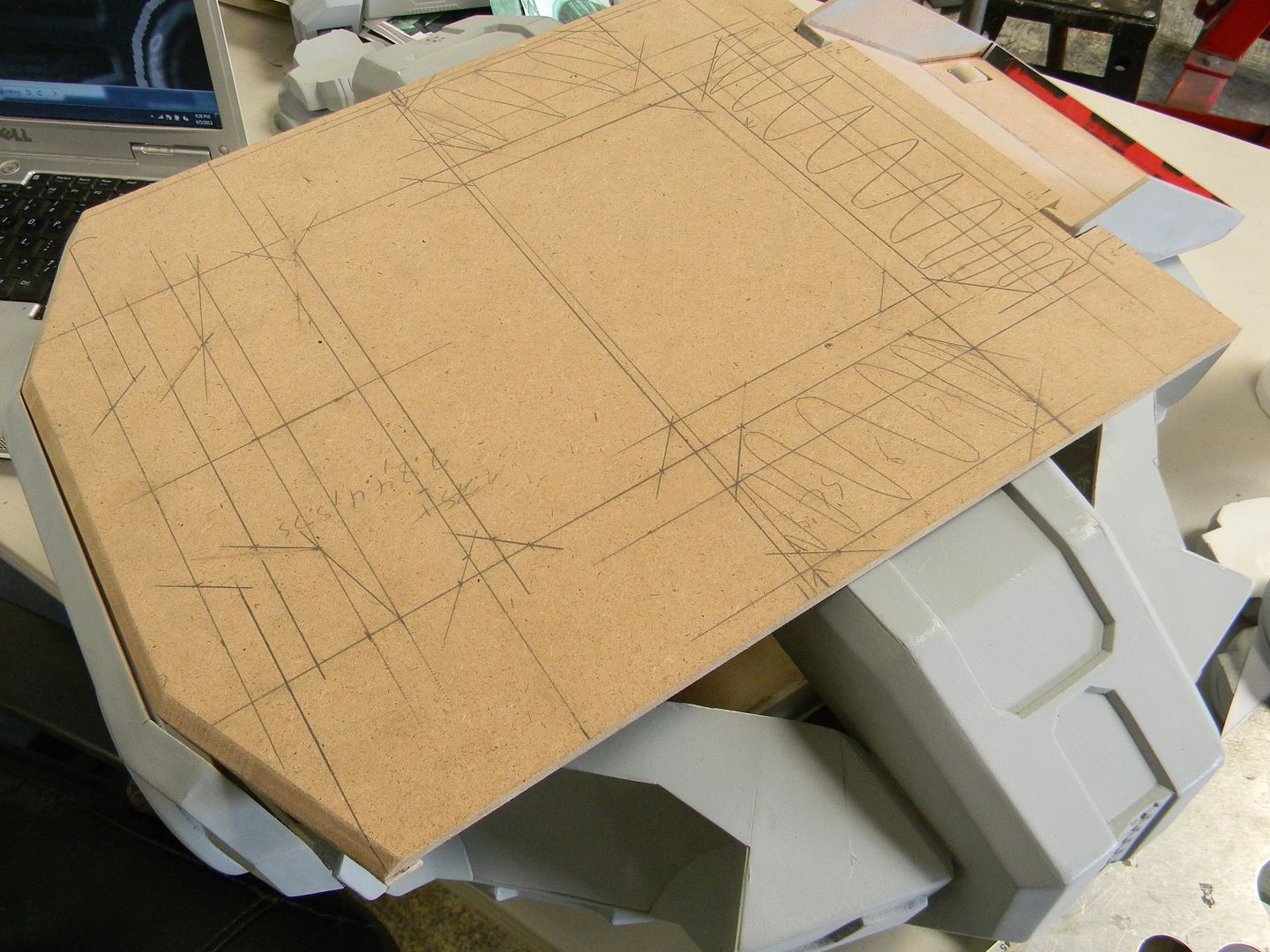
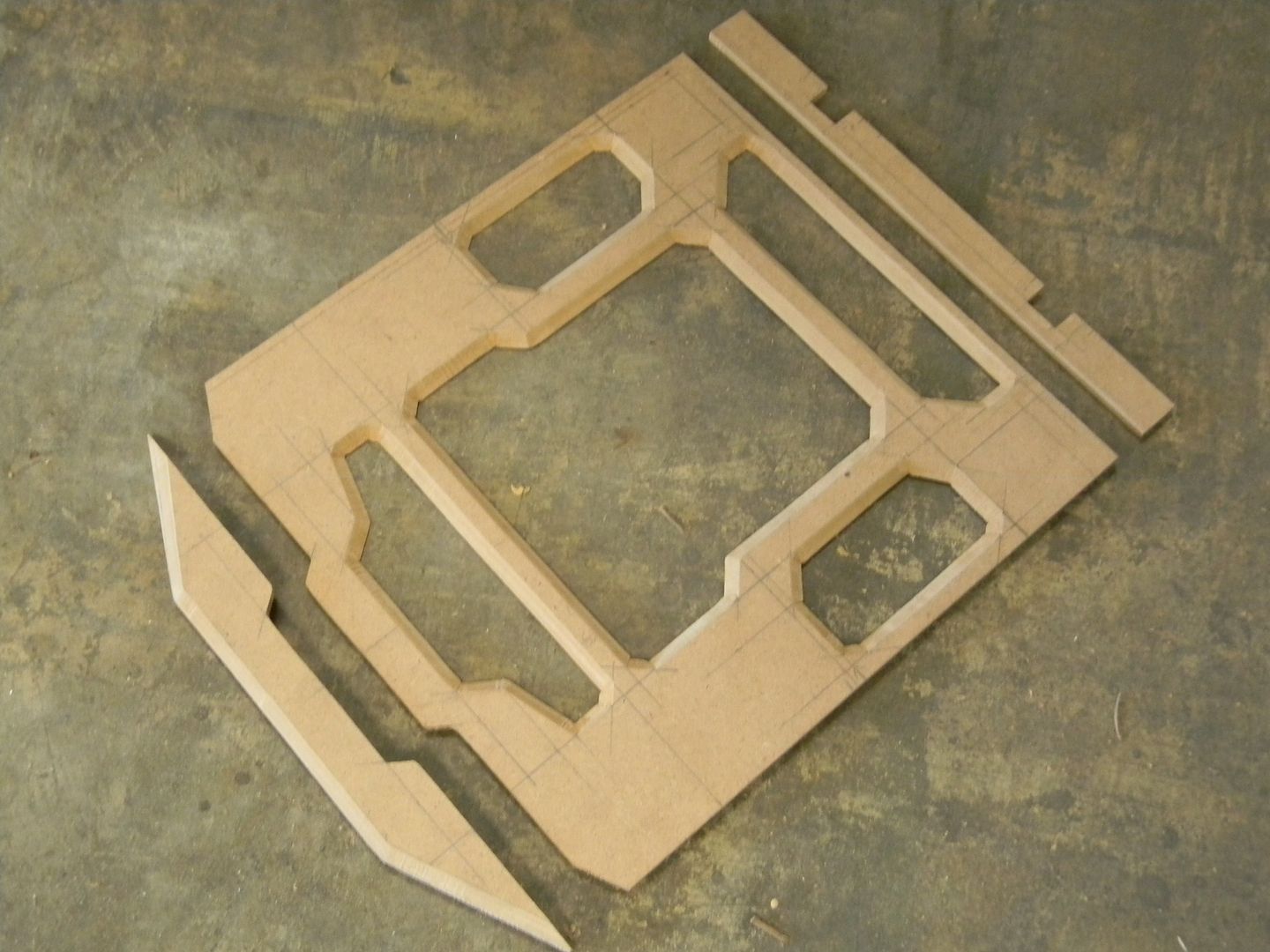
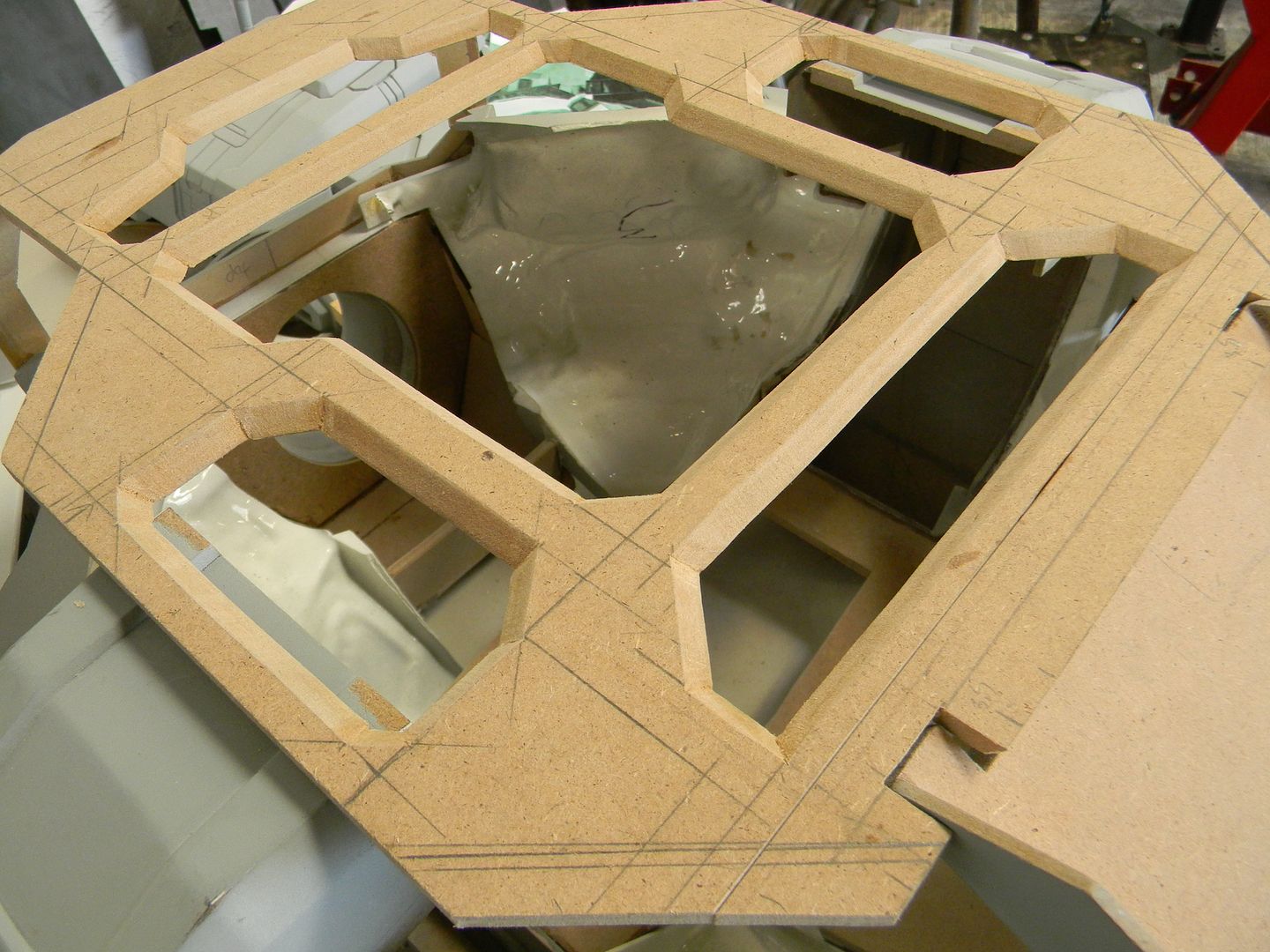
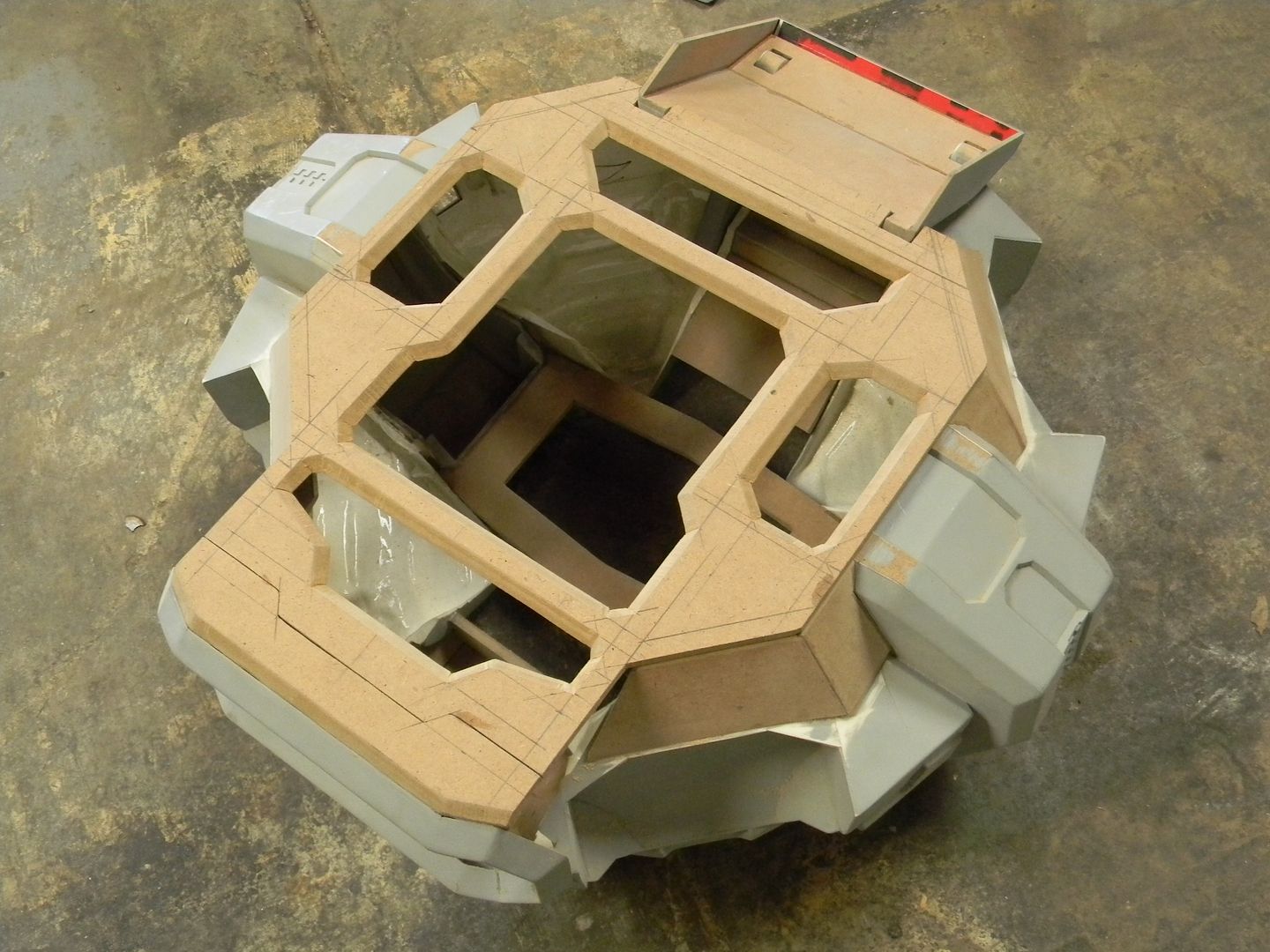
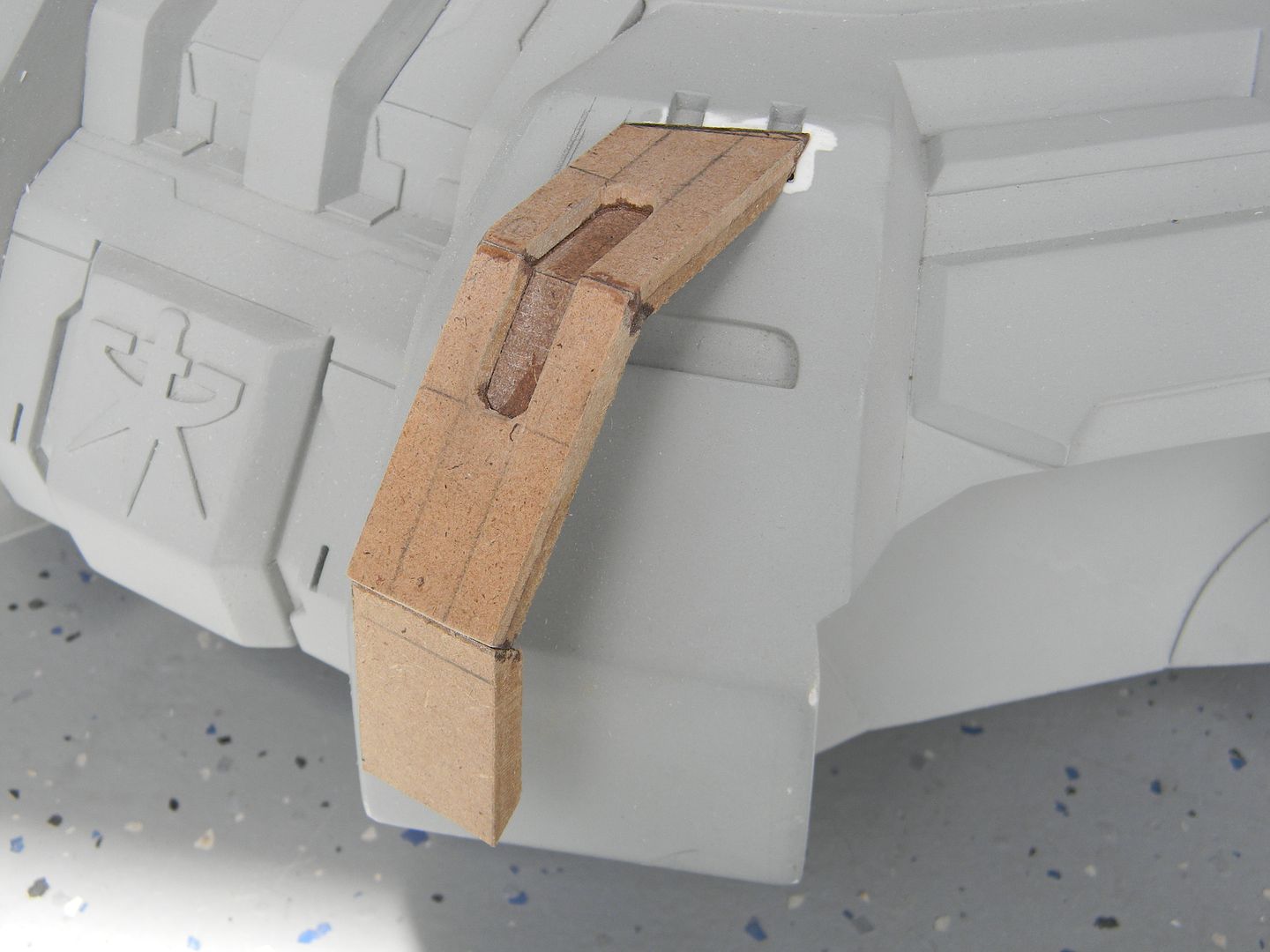
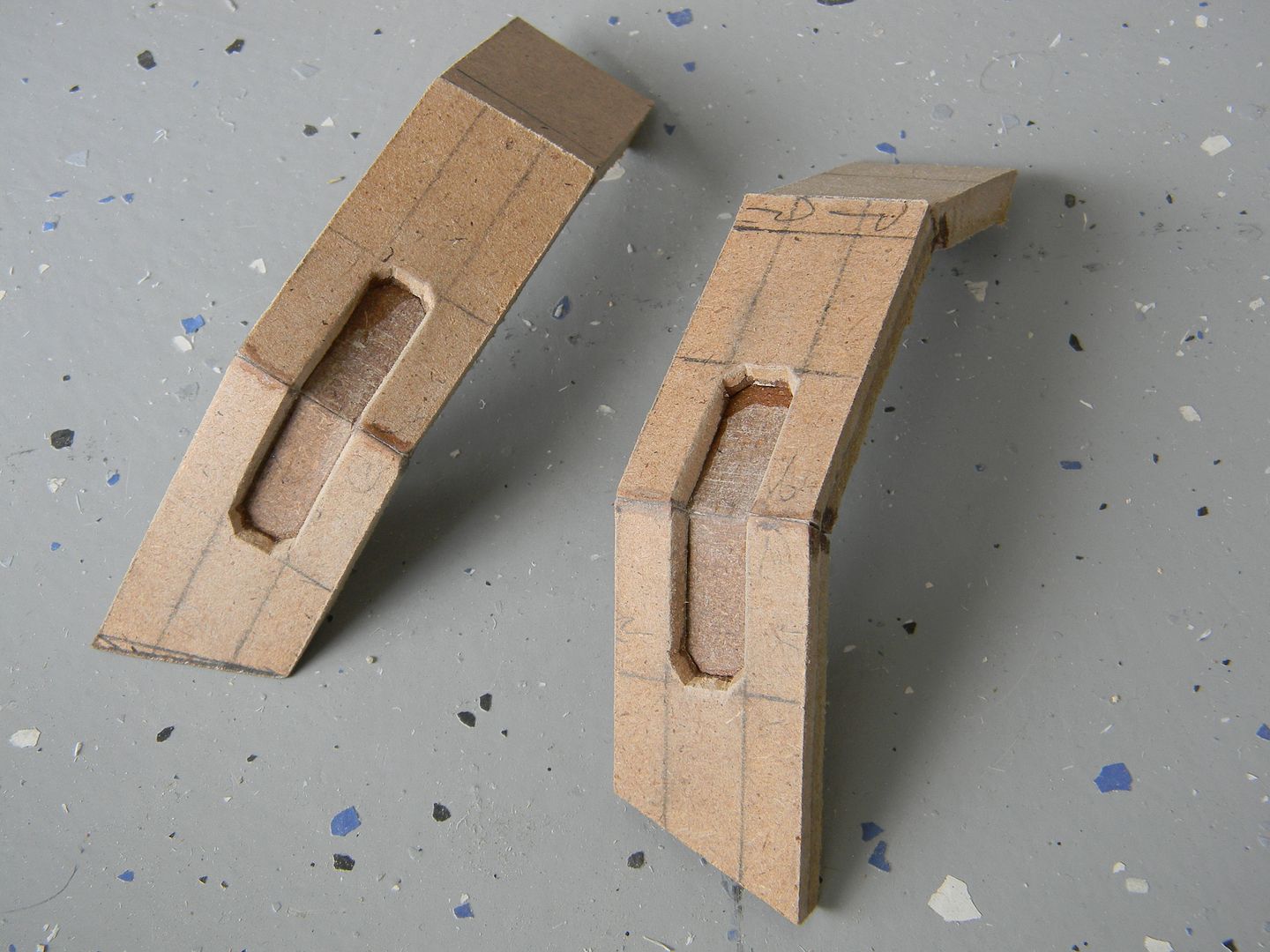
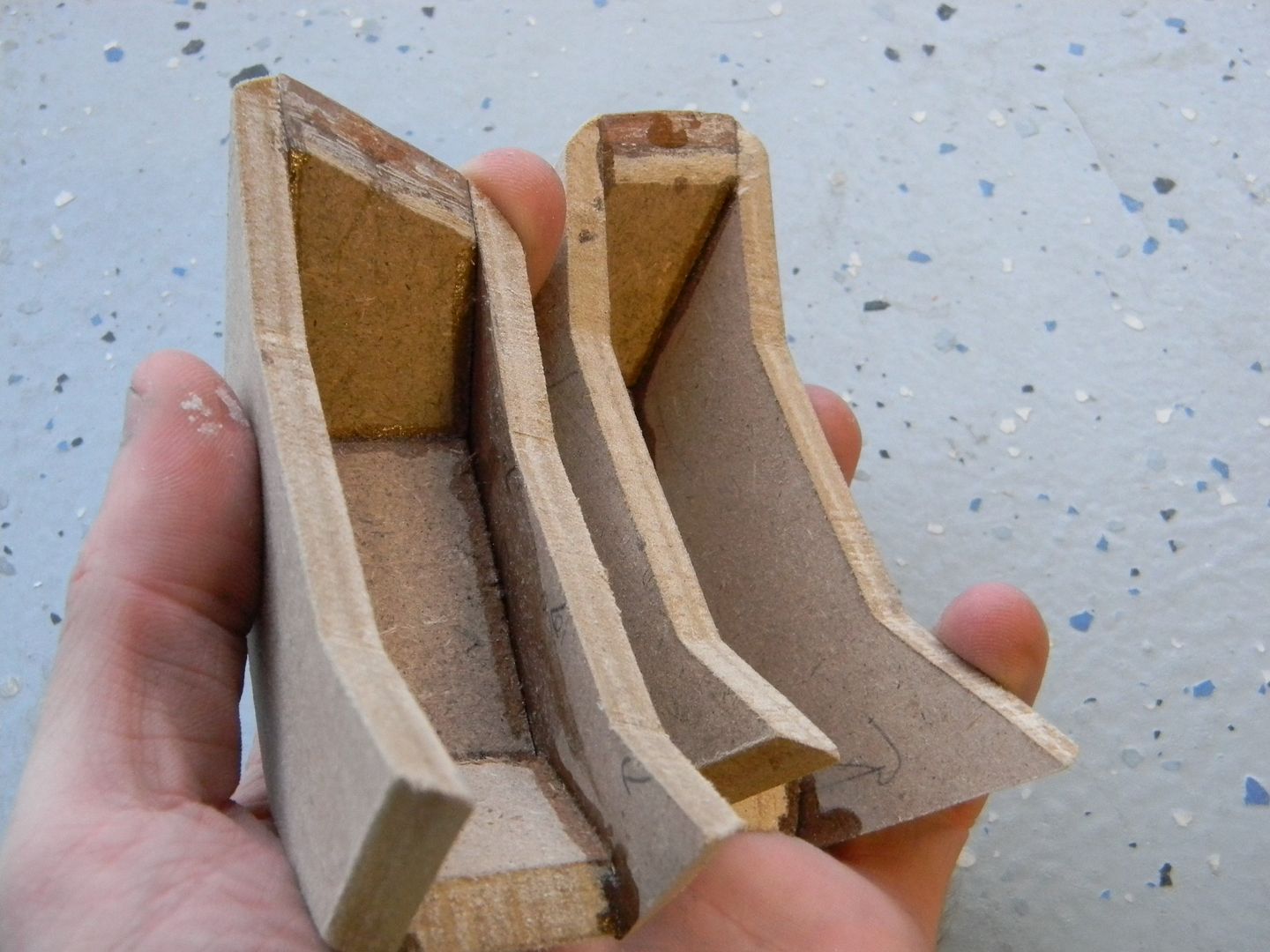
The front and rear slivers of MDF were glued to the frame of the command center to help frame the center part. The center part is the part that is removable and holds the motherboard, etc.


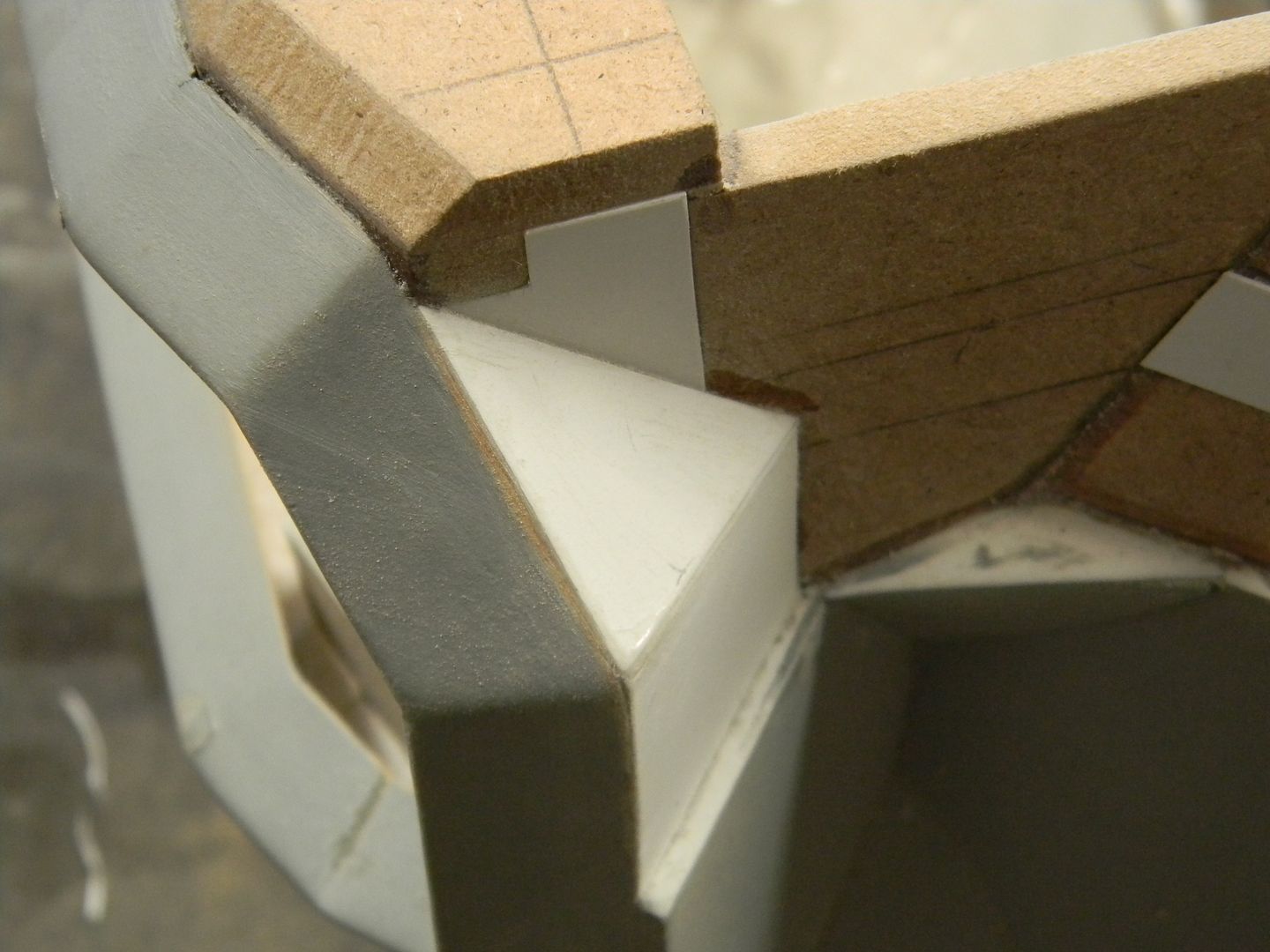
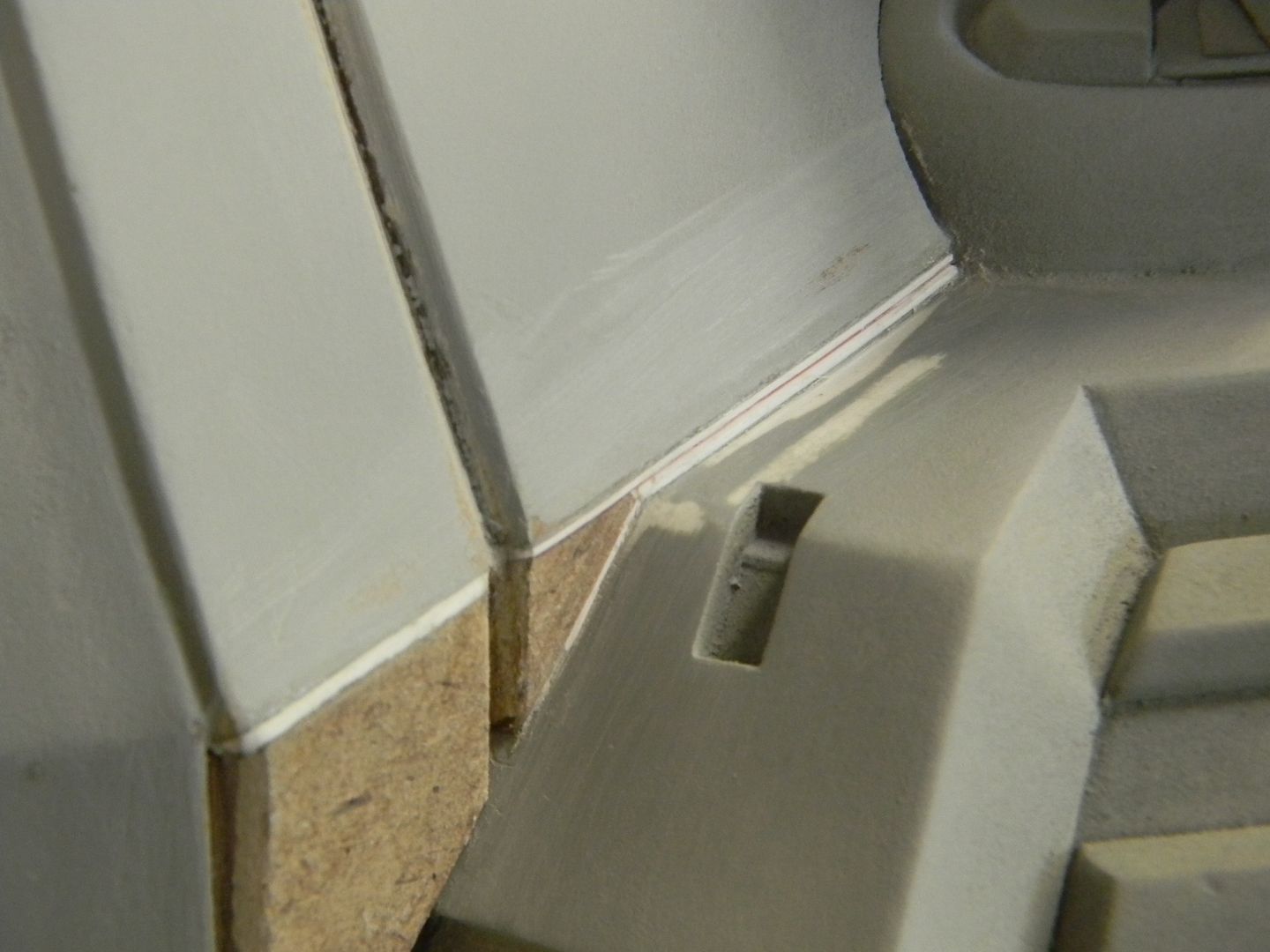
Next it came time to tidy it up. These panels proved quite difficult to measure with all of the angles going on. On the bright side, the ramp keyed up perfectly!


The tiny little underside areas were carefully filled with sheet styrene. This is near the thruster housing.


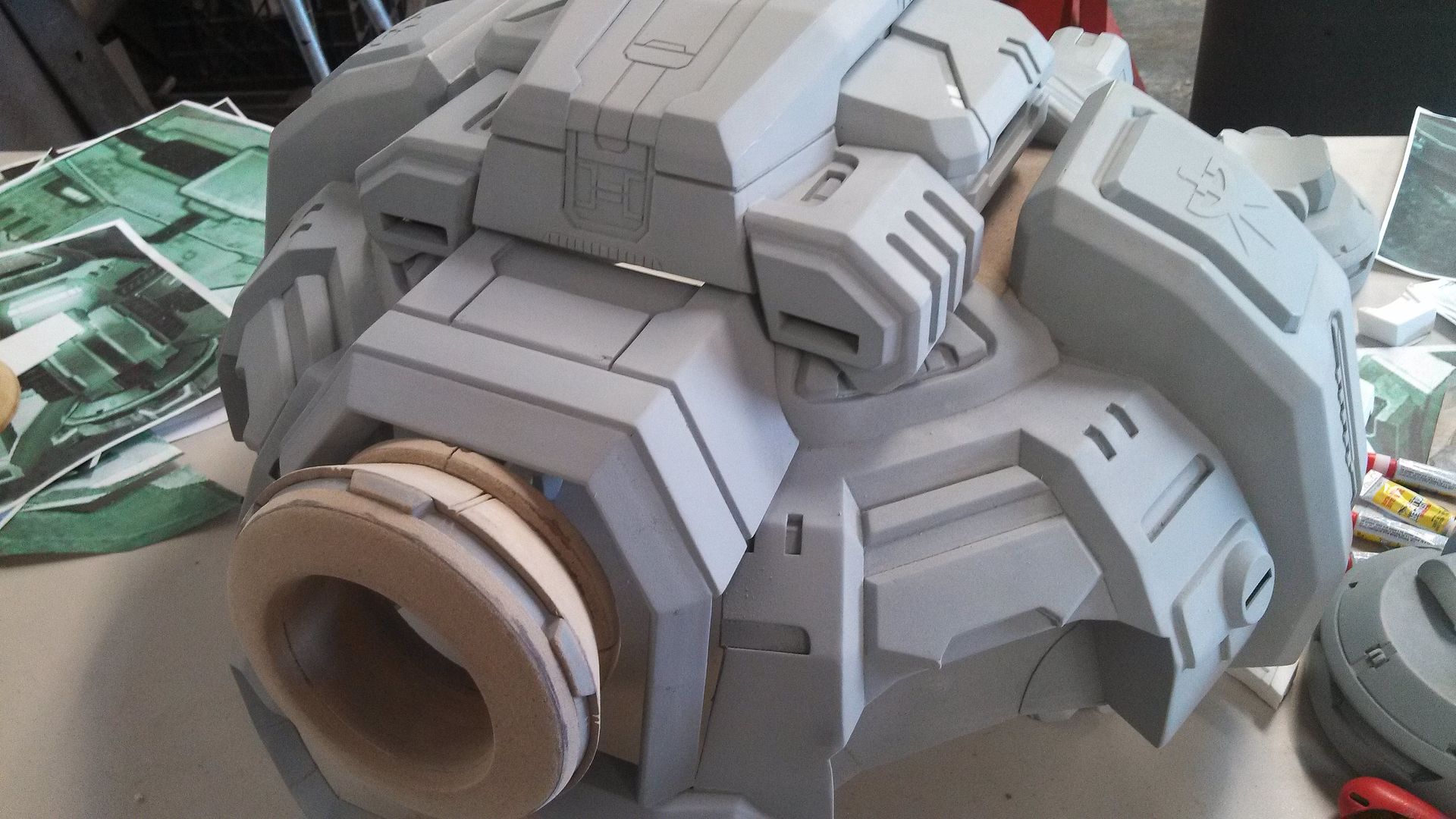
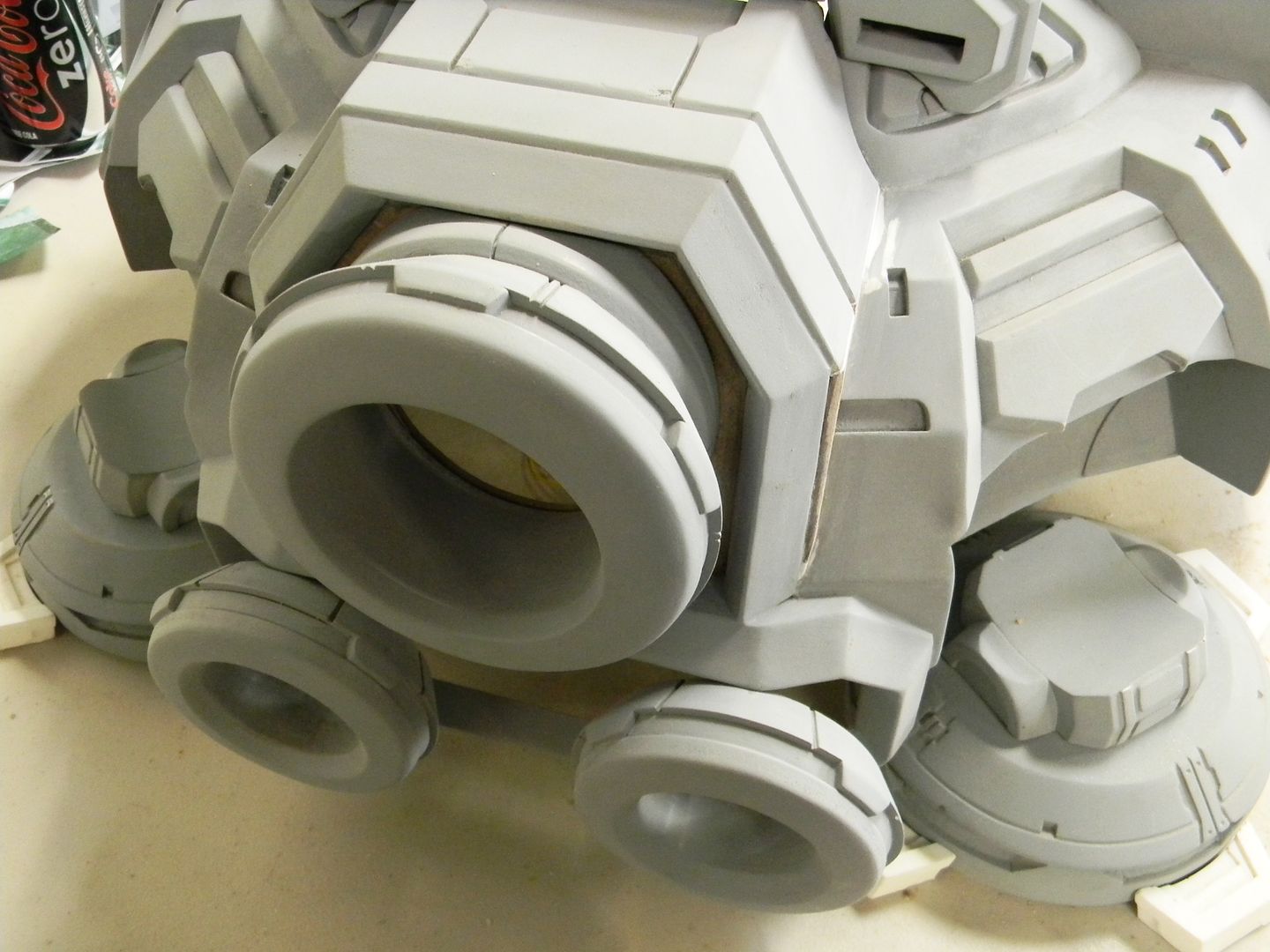
With the underside mostly sealed up, I could get back to some sub-assemblies. The thrusters are the defining part of the rear, so I wanted to get those done next.

Sort of like the feet, I went slice by slice, beveling and sanding before assembly. I did the main thruster first.


The lines were done with just an exacto and the folded edge of sandpaper. 


The rounded taper on the end was just done with a sanding drum on the dremel.


Some more progress on the housing, as well as trying out the new thruster! looks imposing. In game, the inside of the thruster tapers in and has some cool details, but since this is the port for the main exhaust fan, I did a straight cut to accommodate the largest amount of airflow possible.


The little guys were next.


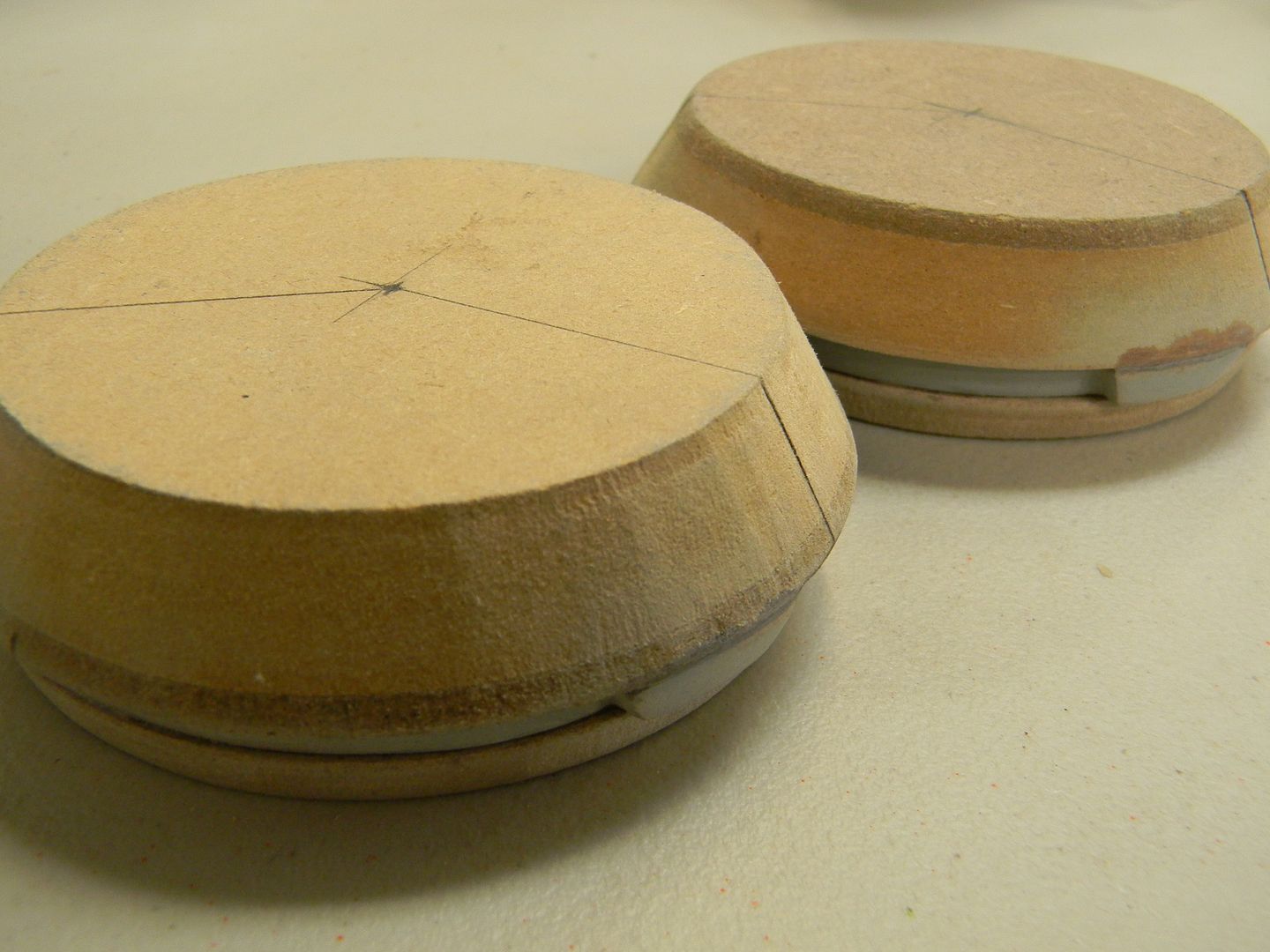
Looks like cheesecake....


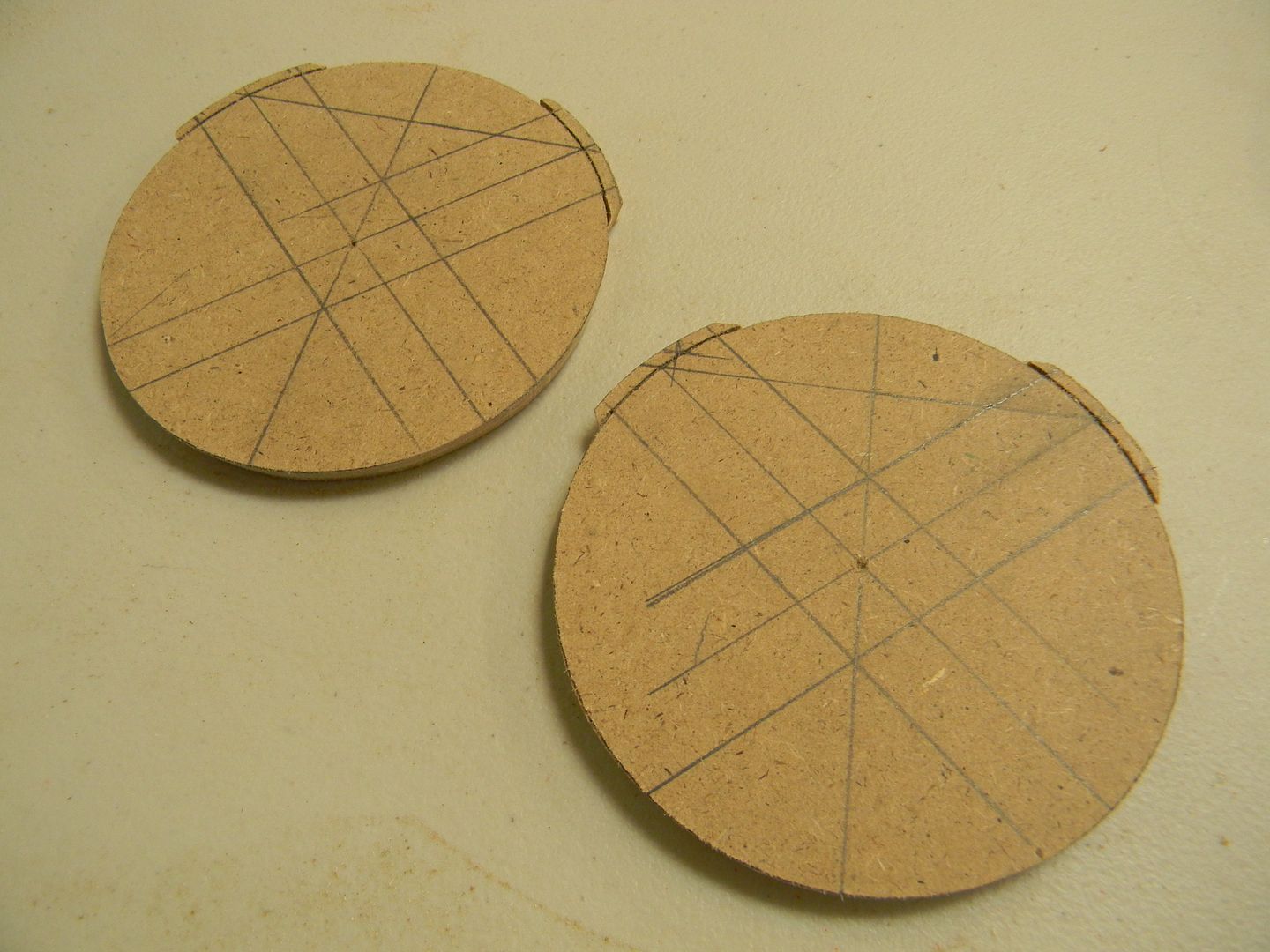
I used to use a drafting compass for this sort of thing, but realized a sheet metal one was much better as I could simply grind the line I wanted to cut. If I scribe it deep enough, it actually helps guide the scroll saw blade around the circle for a cleaner cut.

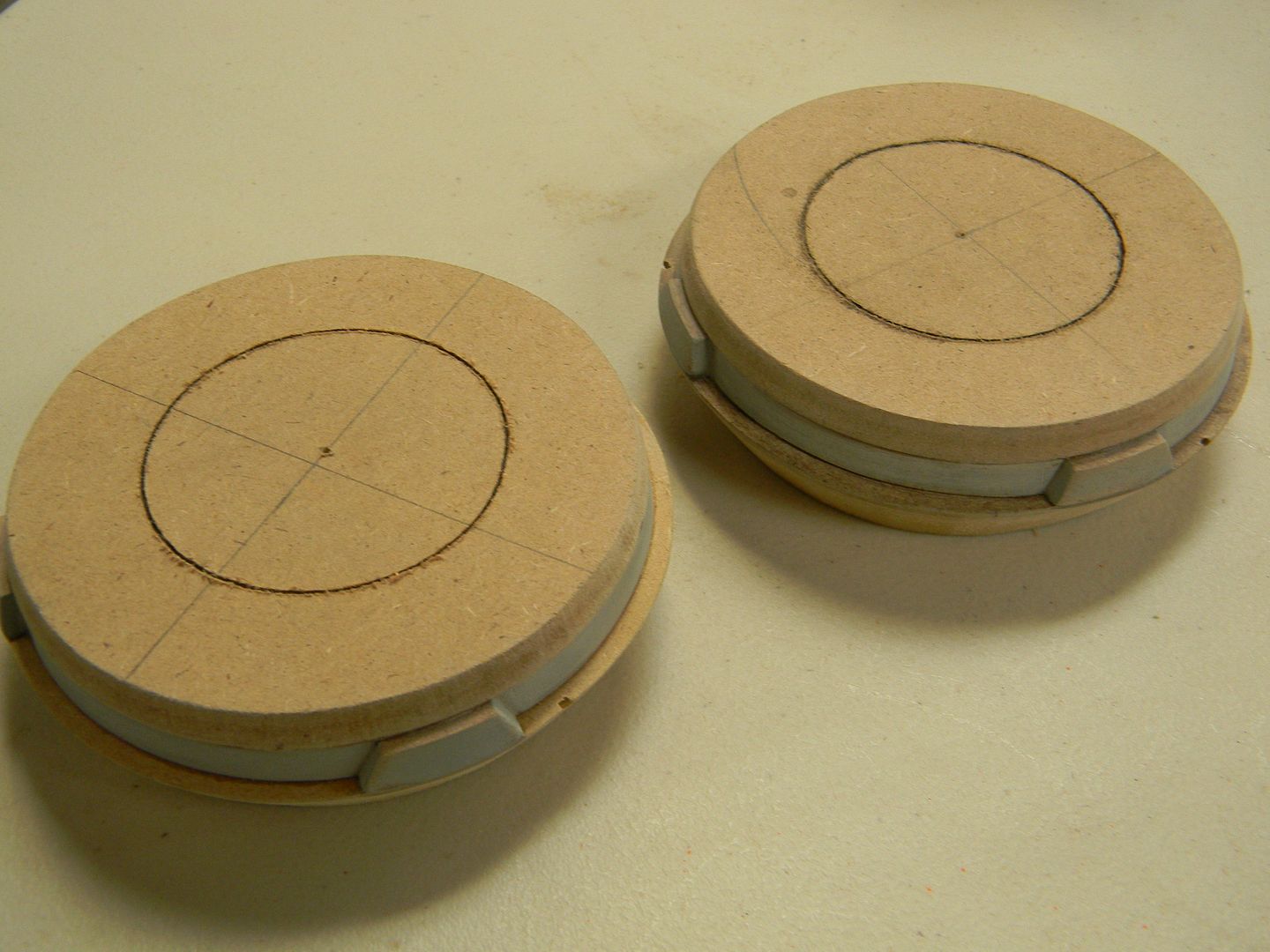
Cut and beveled.


Getting excited. Some bondo and filling the empty space should do the trick. There's so much chipping on the game model that I decided to avoid that entirely and thus made these stick out about .5"-.75" more than they should. Accuracy suffers a bit, but I avoided some huge headaches!


But, if you know me, then you should know that I hate Bondo. I use styrene to fill gaps instead. Its a bit tedious, but I absolutely hate sanding more than I need to, and this creates a much stronger bond between the parts than Bondo.


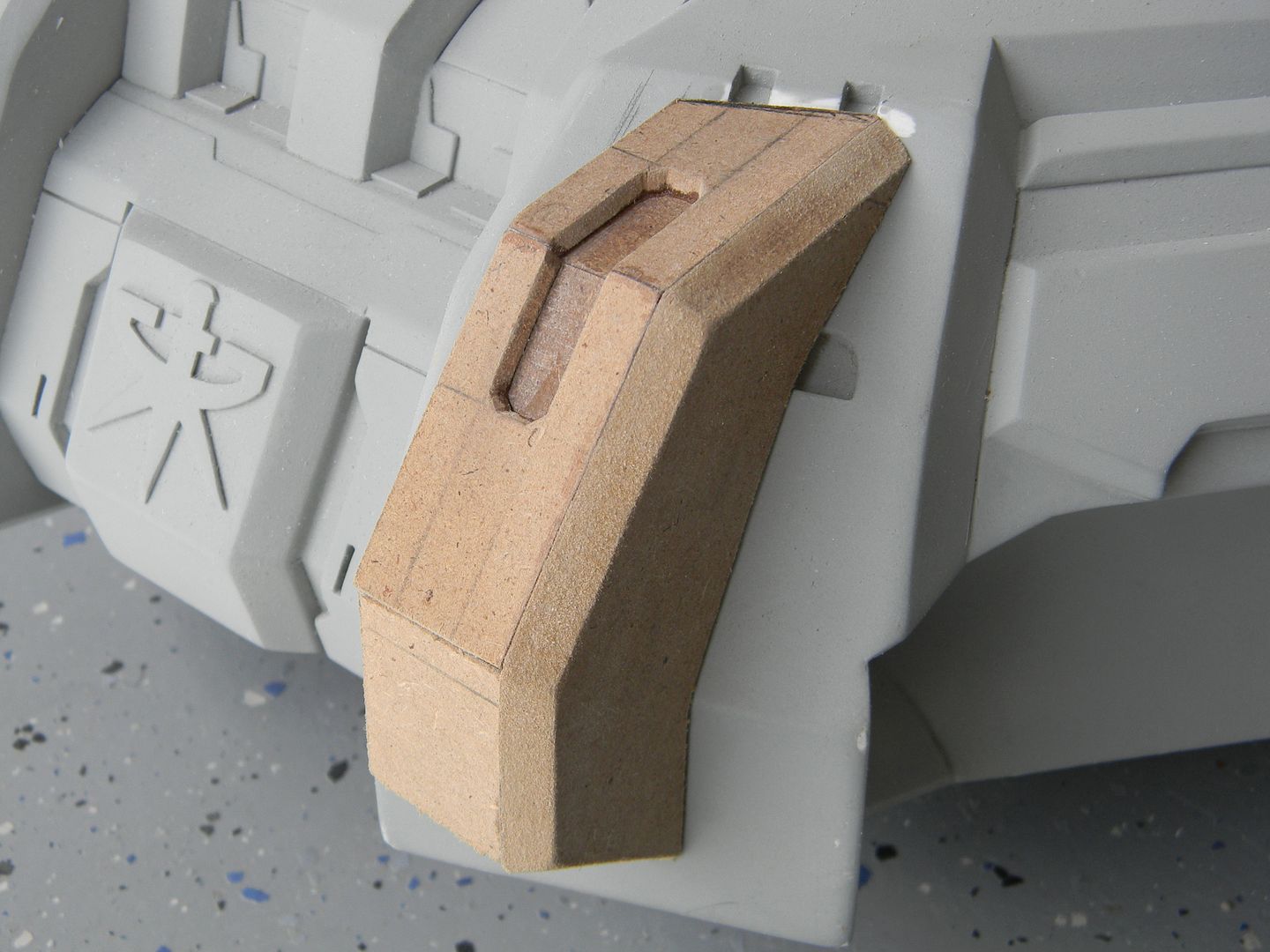
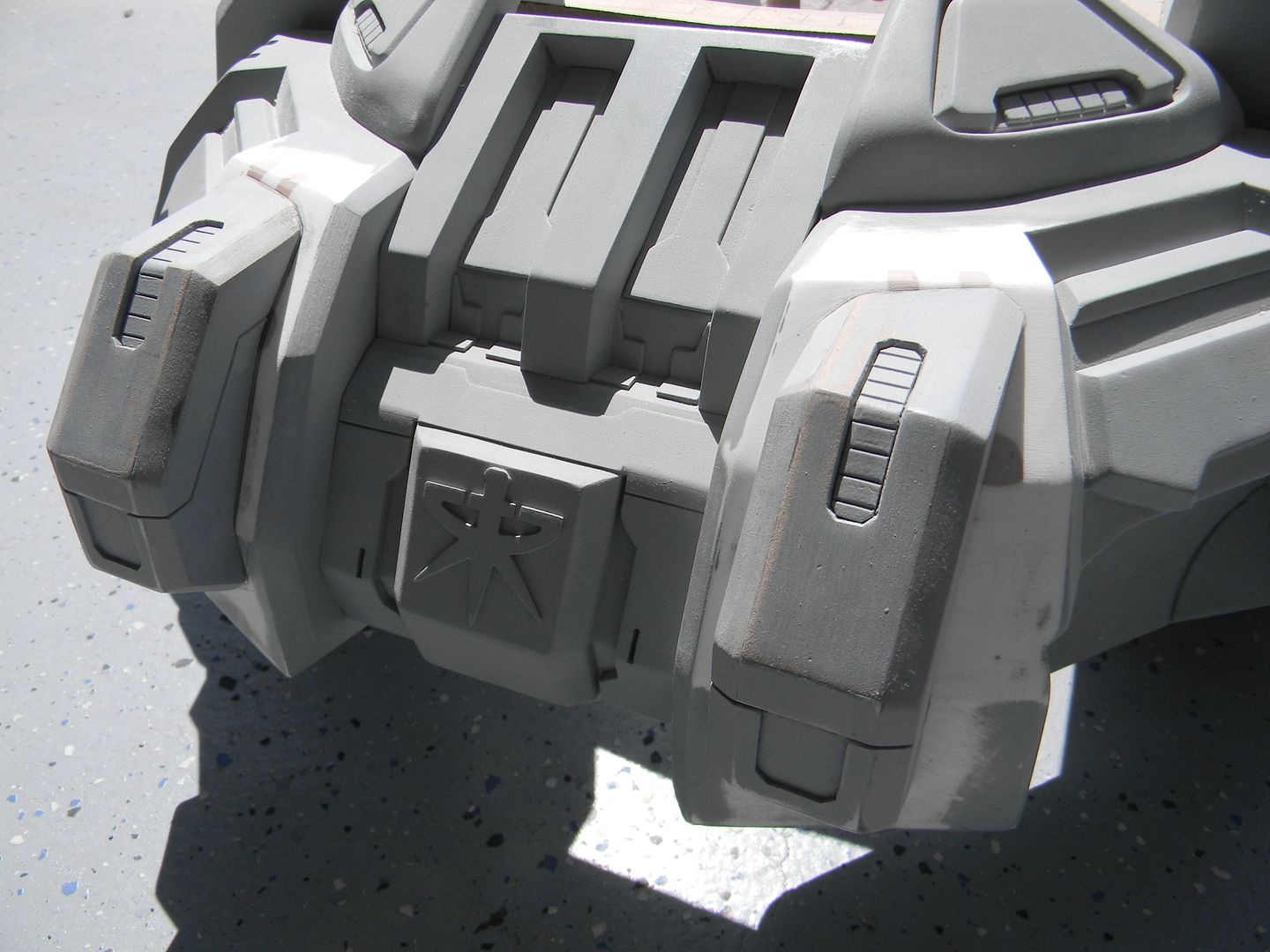
For the holes though, I have to take the plunge and get out the can, which brings me to the front. These little guys are some of the last cosmetic fabrication. I had to plane down the front panels first though.


The little brackets in the front were measured out before the sanding took place. This is just time management, I wanted the parts to bathe in primer while I did the sanding on the front. When you do this for a living, you'll be scrounging up ways to save time as often as possible!


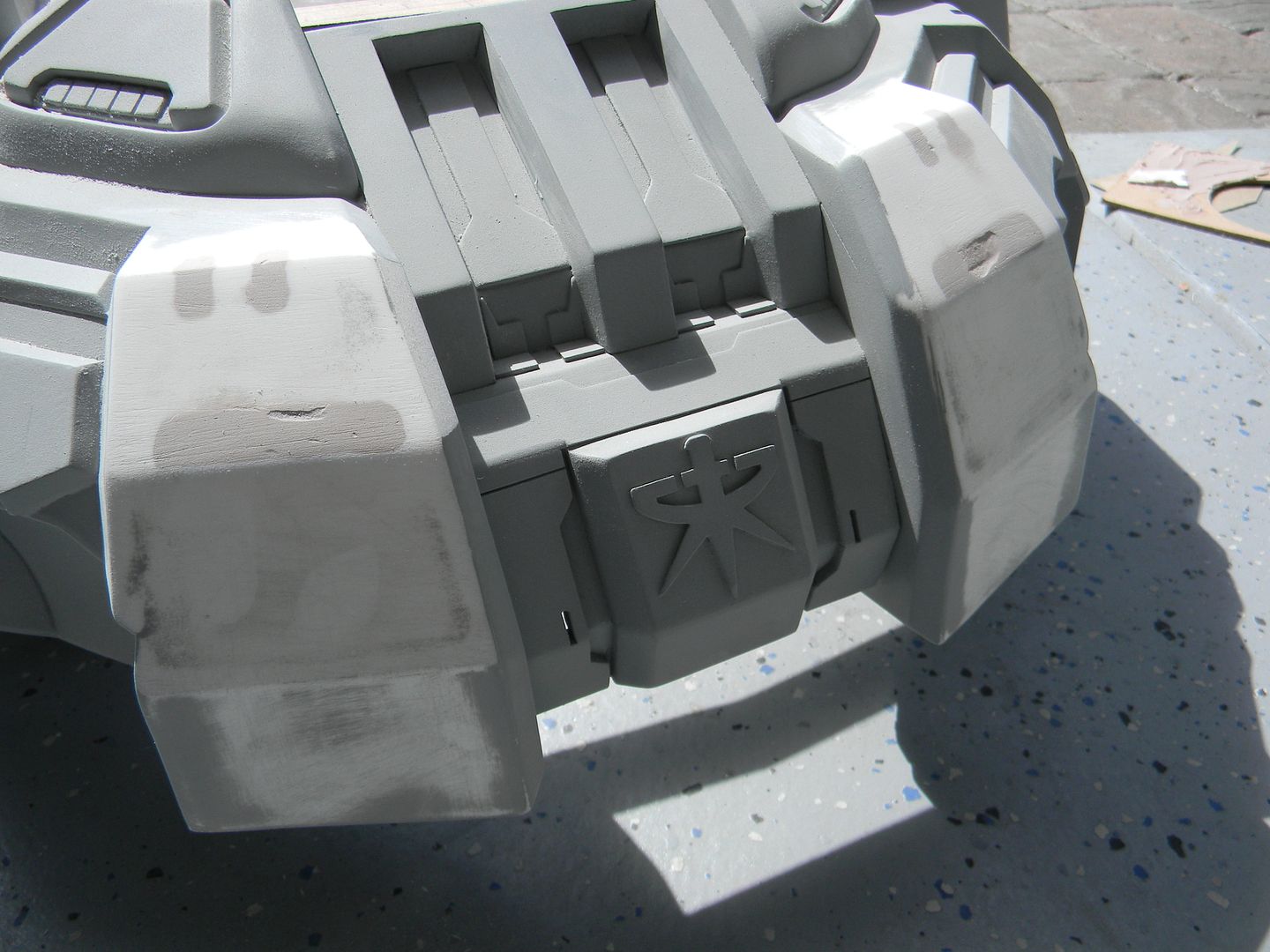
since the corner assemblies are mirrored casts, it was only fitting that I mirrored these panels before finishing them off completely.


Measuring and getting the cuts this flush was work.


That's because every cut is beveled to some weird degree.


They were detailed with styrene, and slapped on there!


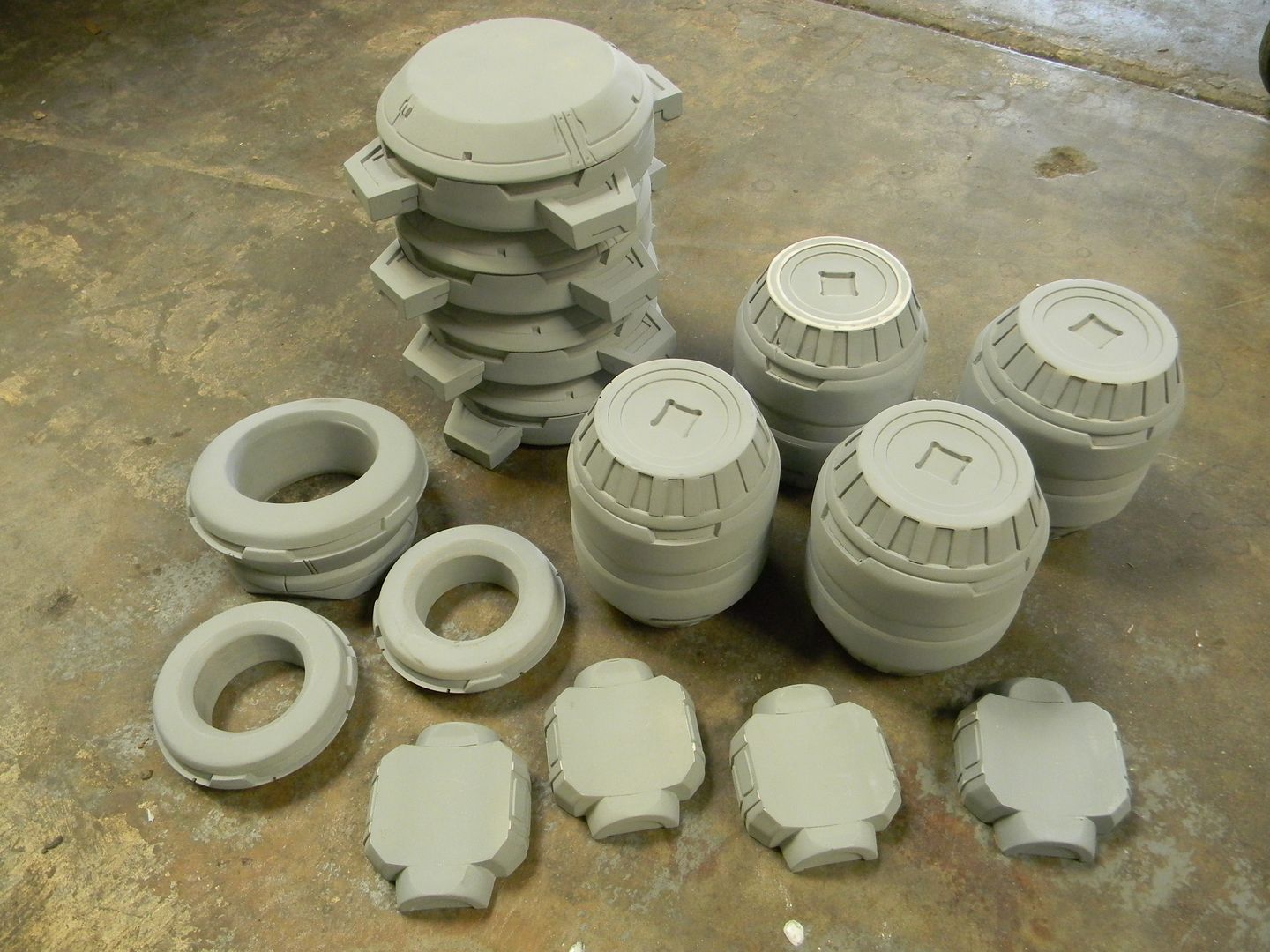
Getting close to done here. Time to cast the rest of the feet!


This pile was just begging to be put together. Its really rewarding seeing all of your casts come together for the first time, after hours of prep work. The thrusters were not cast, they were simply there for show.


Before Throwing everything together, there was some misc. detail here and there that needed attention.


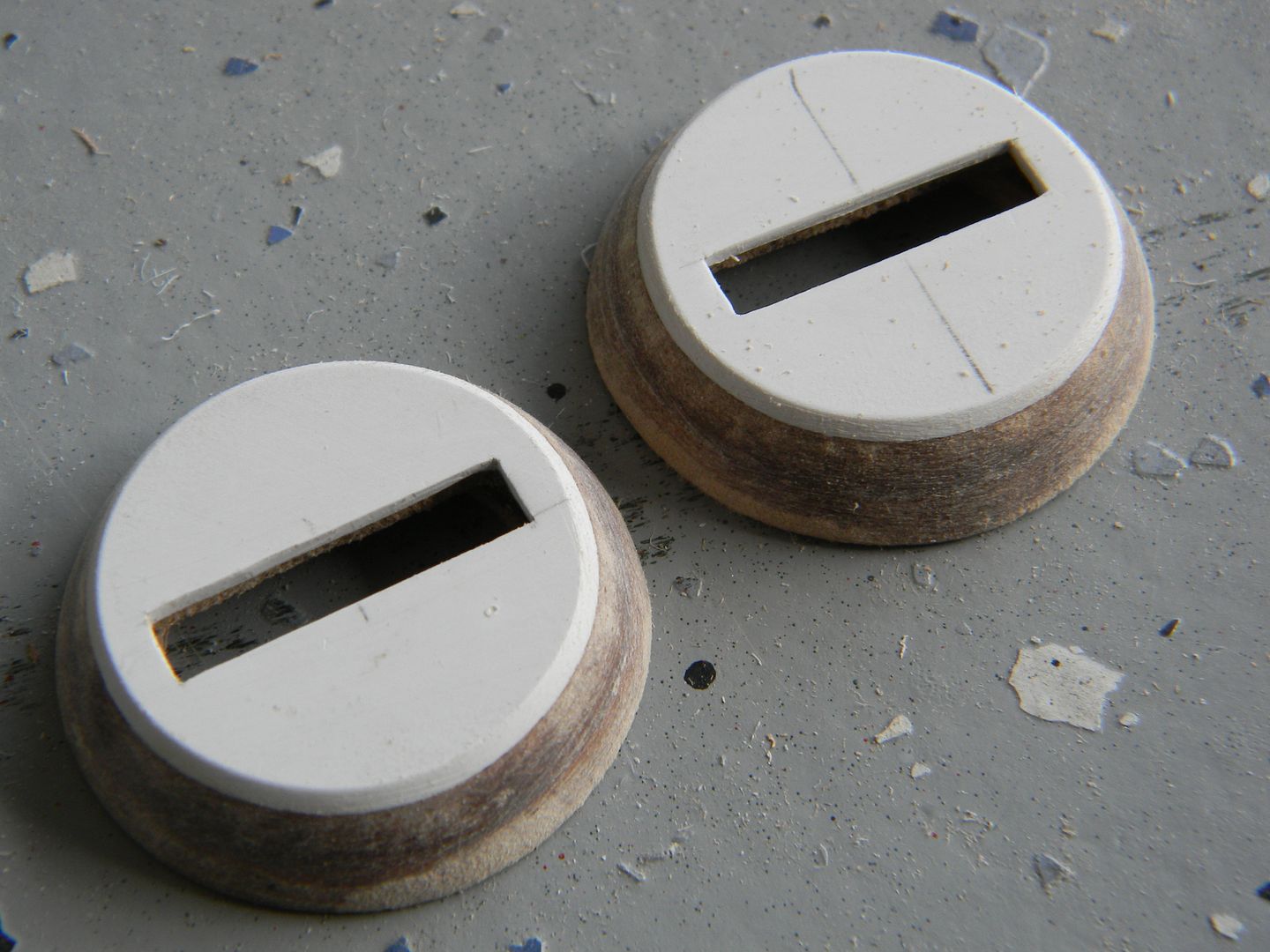
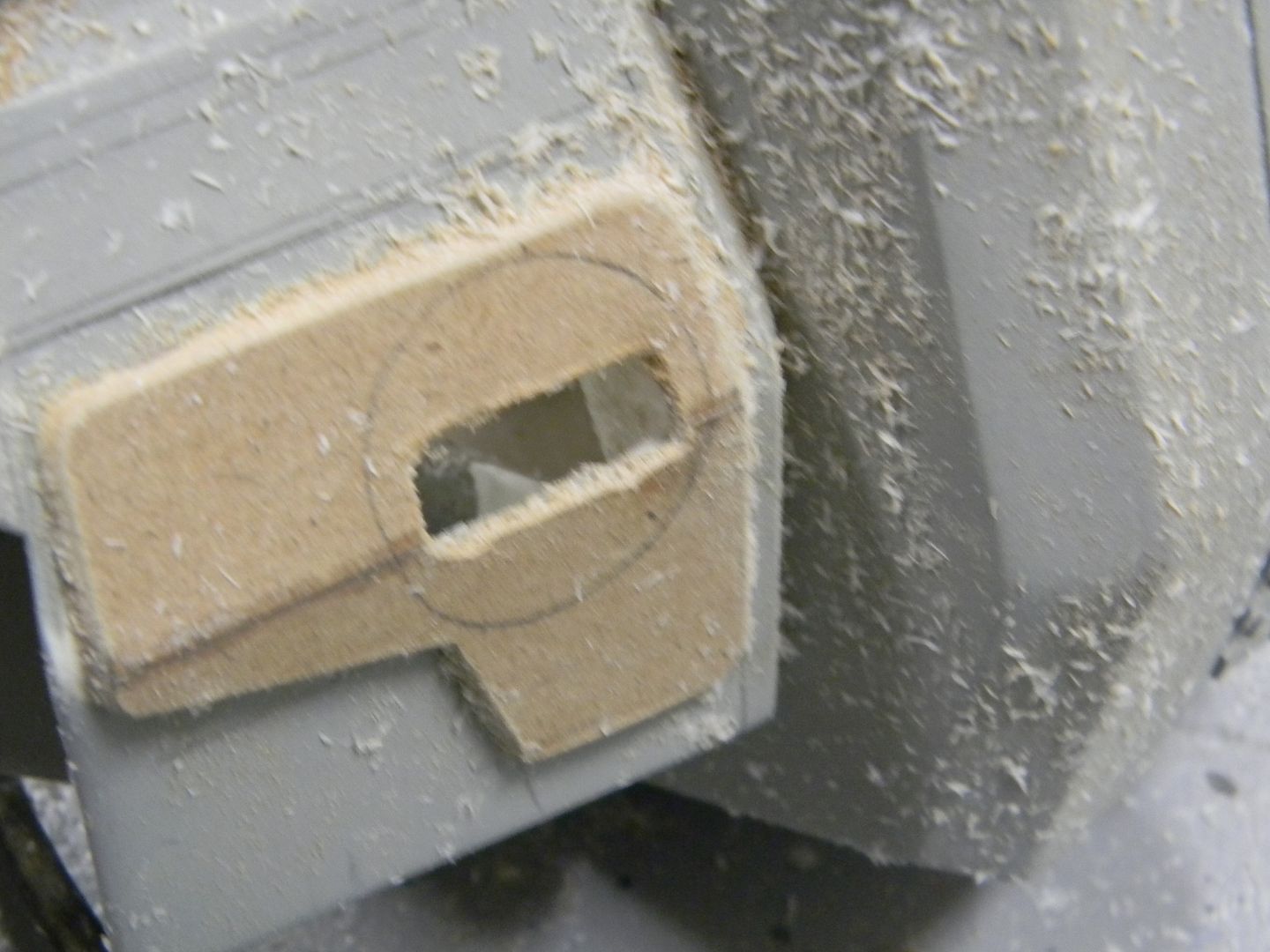
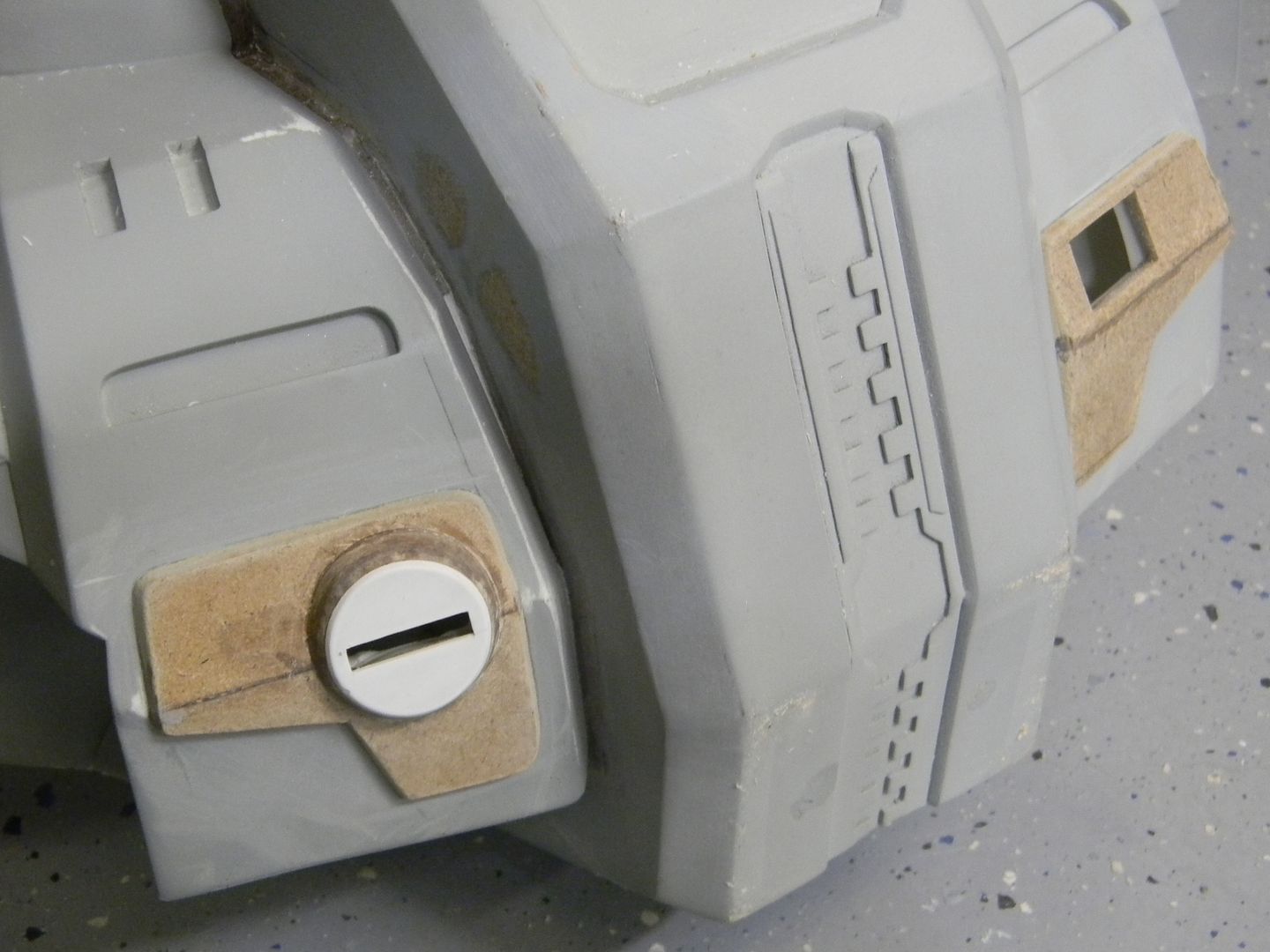
The little slotted round parts above have a tiny blinking LED in them, so I needed room for that to show.


The detail on the right is cut out to have a small temperature screen that displays the general case temperature.


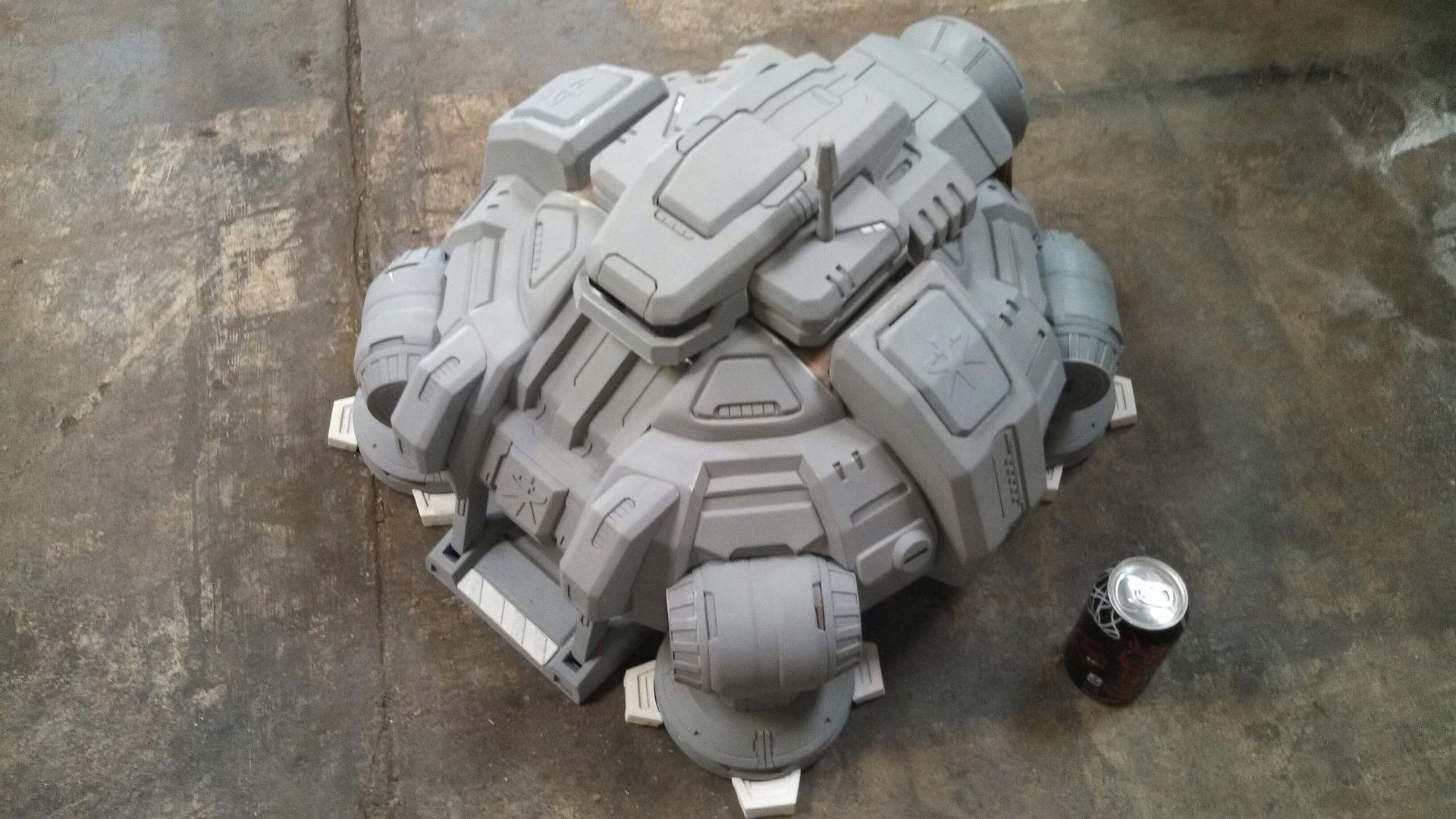
I think that's enough technical jargon, here's the result of all that hard work!


Scale insert sponsored by Coca-Cola. 

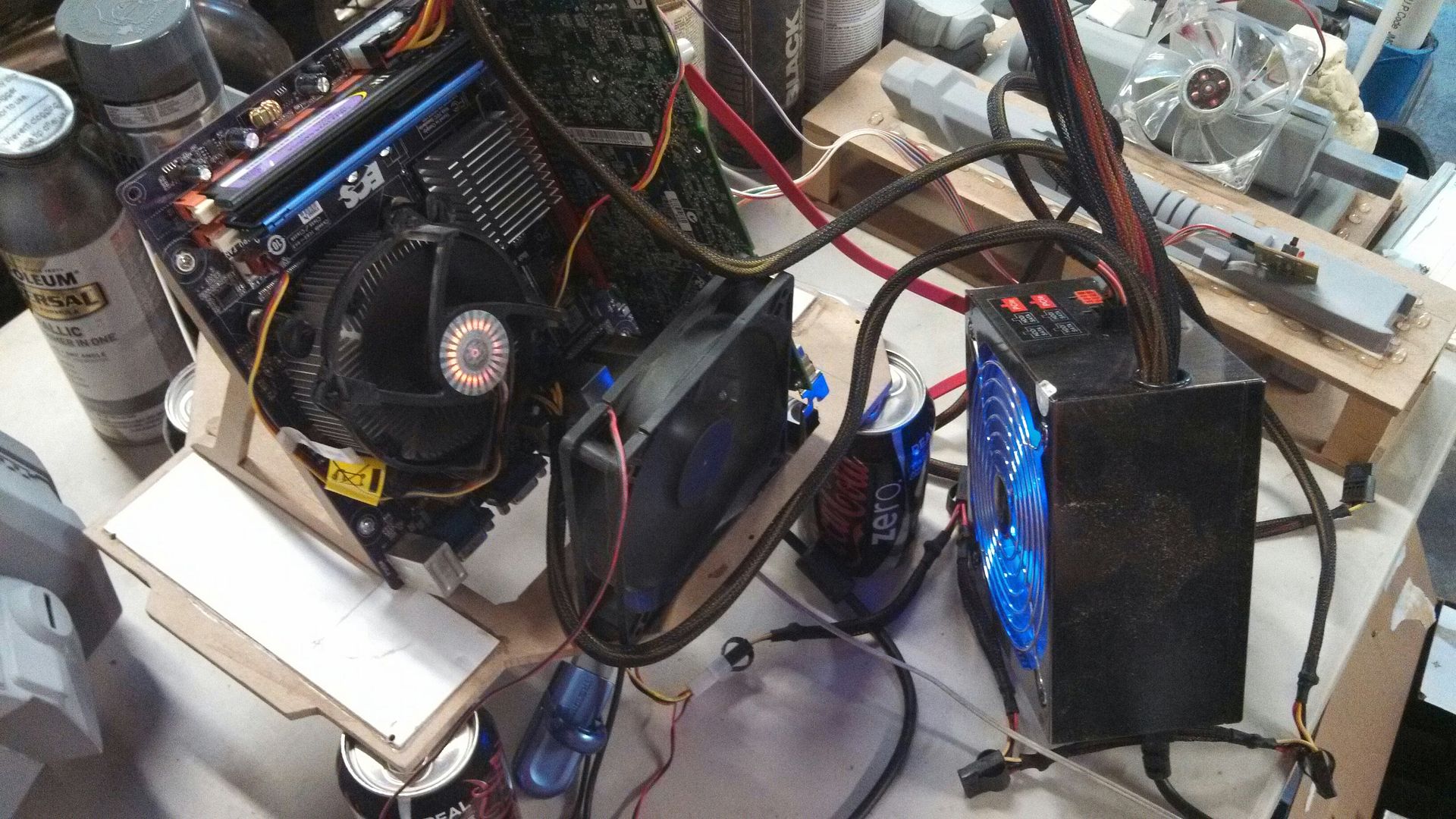
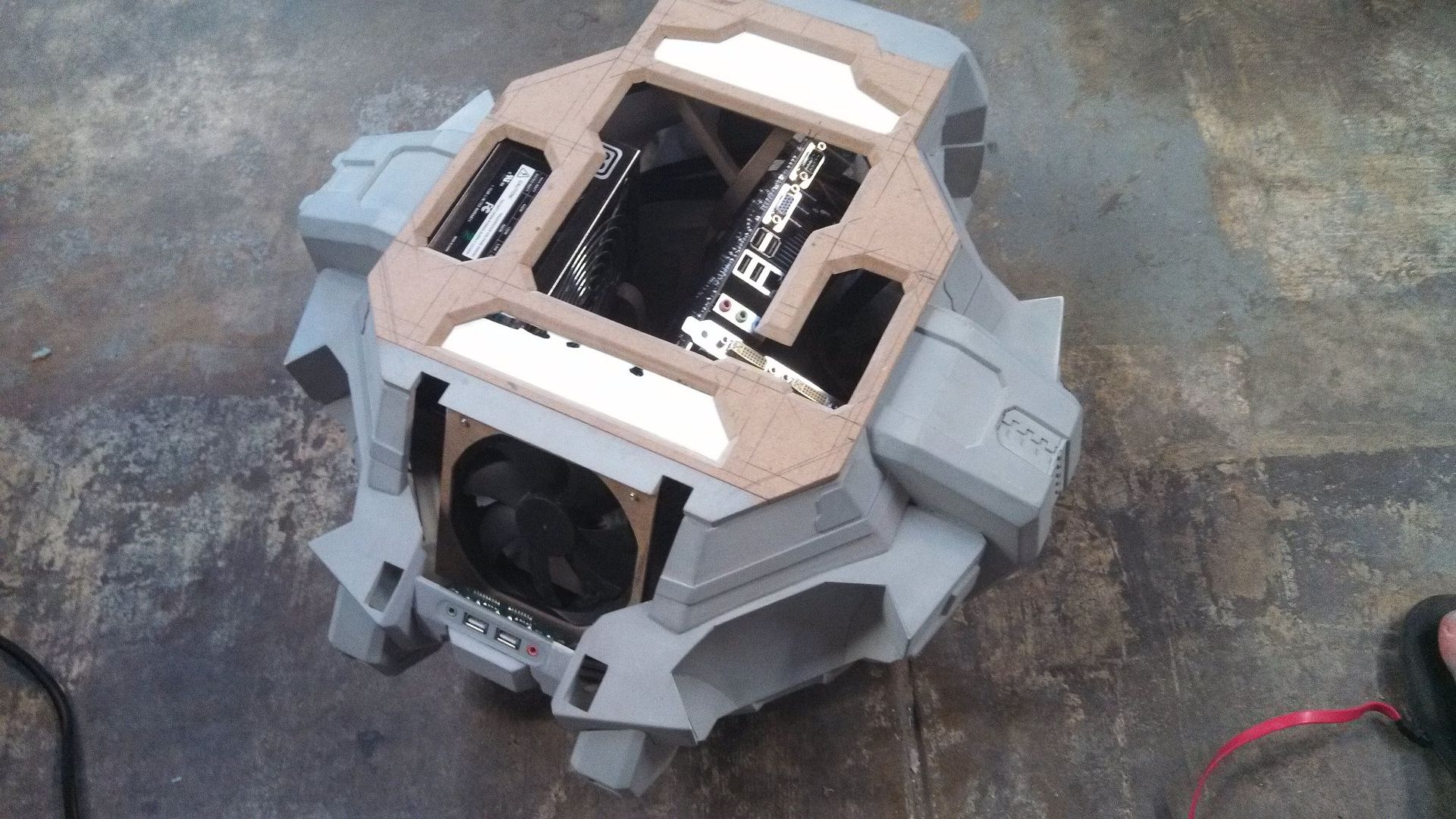
Here's a couple shots of the innards. While being in the early stages, the rig is actually quite stable and not a whole lot of changes will be made for the final version. The first picture is the MDF frame before it went in the case. It looks like a headache, but its actually not that bad.


The motherboard sits at about 110 degrees vertical, as it is too tall!


Video here! (Might want to turn your sound down, sorry 'bout that!)